A2A Protocol Explained: How AI Agents Negotiate and Collaborate in Multi-Agent Systems
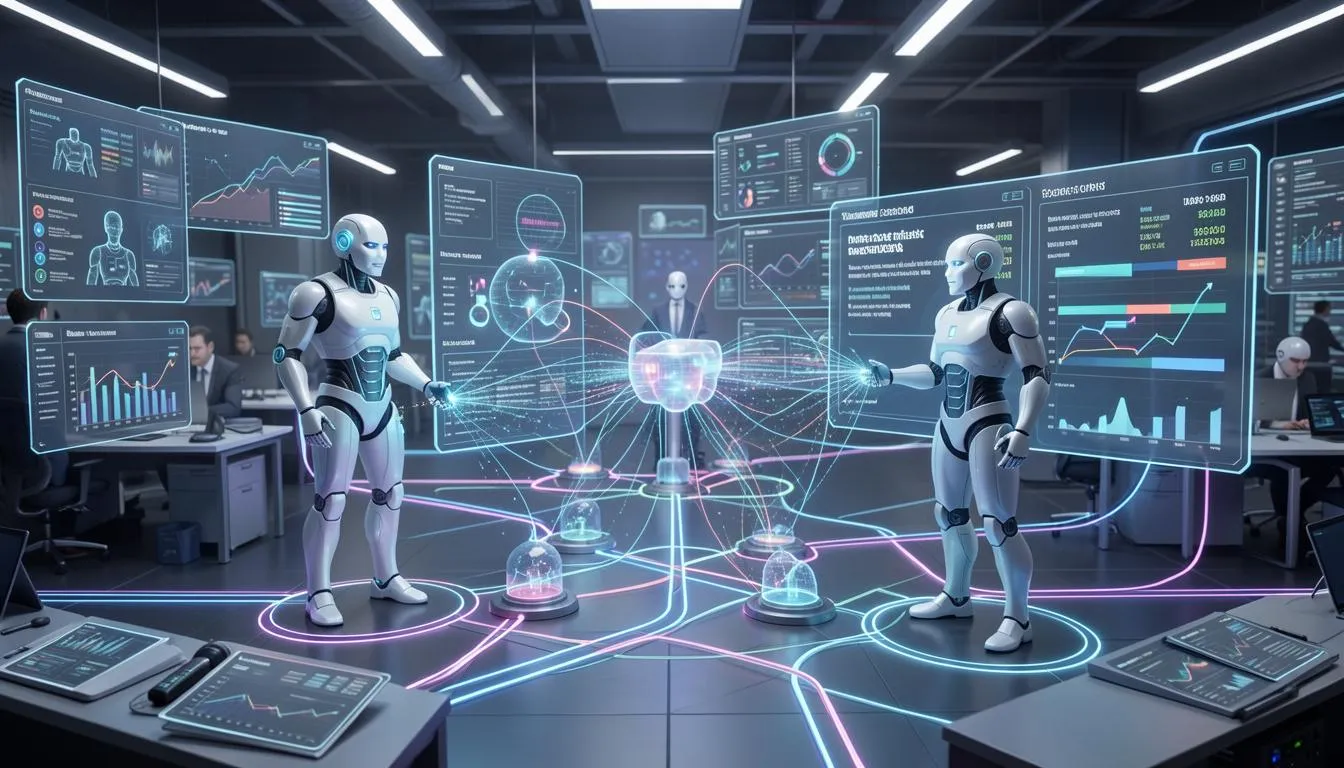
The “A2A” Revolution: Why Your AI Agents Are Better at Networking Than You
Key Takeaways
- The :contentReference[oaicite:0]{index=0} (A2A) enables AI agents from different companies to discover, communicate, and collaborate autonomously.
- Modern multi-agent systems allow specialized bots to negotiate, validate contracts, and complete complex workflows without human intervention.
- The :contentReference[oaicite:1]{index=1} (MCP) helps AI agents securely exchange data and context across platforms.
- Autonomous negotiation between AI systems is already transforming procurement, customer service, and supply chains.
- Businesses adopting agent interoperability early will reduce operational costs and accelerate decision-making.
- Case Study: The $200k Procurement Bot demonstrates how a multi-agent procurement system cut COGS by 14% without human negotiation.
What If Your AI Could Negotiate Deals While You Sleep?
Most business leaders assume automation is about saving time.
But what if automation could do something far more powerful?
What if your AI systems could talk to other companies’ AI systems, negotiate deals, validate contracts, and complete transactions—without you lifting a finger?
That’s exactly what the A2A revolution is enabling.
In March 2026, the Agent-to-Agent protocol officially entered mainstream enterprise use, opening the door to a new type of digital economy: one where AI agents network and collaborate faster than humans ever could.
For developers, designers, and digital business owners, this isn’t just a technical milestone.
It’s the beginning of machine-to-machine commerce.
The Problem: Humans Are the Bottleneck in Digital Workflows
Modern businesses rely on dozens of tools:
- CRM platforms
- supplier portals
- marketing automation tools
- analytics dashboards
But despite all this technology, most workflows still depend heavily on human coordination.
For example, consider a typical procurement process.
It often involves:
- Searching for suppliers
- Comparing pricing
- Negotiating contracts
- Validating legal terms
- Finalizing approvals
This process can take days or weeks.
For growing companies, these delays lead to:
- higher operational costs
- slower product launches
- missed opportunities
Even in digital-first organizations, manual decision-making slows everything down.
This is precisely the problem agent interoperability aims to solve.
The Breakthrough: Agent-to-Agent Protocol (A2A)
The :contentReference[oaicite:2]{index=2} allows AI systems to communicate with each other directly.
Instead of relying on rigid API integrations, agents can:
- discover other agents
- request capabilities
- negotiate tasks
- exchange structured results
This creates a network of collaborating AI services.
Think of it like LinkedIn for machines—but with real work being completed automatically.
In these environments, each AI agent has a specialized role.
For example:
- research agents gather market information
- negotiation agents handle pricing
- validation agents verify compliance
Together, they form multi-agent systems capable of executing complex workflows.
How Multi-Agent Systems Actually Work
Modern multi-agent systems rely on three key components:
1. Agent Discovery
Agents must first identify other compatible agents in the ecosystem.
Using interoperability frameworks, agents can publish their capabilities.
For example:
- a supplier bot may advertise pricing APIs
- a logistics bot may offer delivery scheduling
This allows agents to dynamically build workflows.
2. Context Exchange via MCP
For agents to collaborate effectively, they must share context.
This is where the :contentReference[oaicite:3]{index=3} plays a critical role.
MCP standardizes how agents exchange information such as:
- goals
- constraints
- negotiation parameters
- historical data
This ensures all agents operate with the same understanding of the task.
Developers exploring these kinds of AI-driven automation frameworks often combine agent protocols with broader automation strategies like those discussed on the SaaSNext blog:
3. Autonomous Negotiation
The most exciting capability of A2A systems is autonomous negotiation.
Agents can analyze:
- price ranges
- competitor offers
- supply constraints
Then automatically negotiate optimal outcomes.
This turns AI from a passive tool into an active economic participant.
Case Study: The $200k Procurement Bot
A mid-sized retail company recently deployed a Procurement Squad powered by multi-agent collaboration.
The system included three specialized agents:
-
Supplier Discovery Agent
Scanned marketplaces to identify suppliers. -
Negotiation Agent (A2A-enabled)
Connected directly with suppliers’ sales bots to negotiate pricing. -
Contract Validation Agent
Verified legal terms and compliance.
These agents collaborated using the A2A protocol and shared context through MCP.
The result?
- 14% reduction in cost of goods sold
- $200,000 saved annually
- zero human involvement until final contract approval
This example highlights the massive potential of autonomous negotiation systems.
Platforms like :contentReference[oaicite:4]{index=4} are helping businesses experiment with similar AI-driven automation systems by integrating intelligent agents into digital workflows.
You can explore their ecosystem here:
Why Developers and Product Teams Should Care
The A2A revolution isn’t just about enterprise automation.
It has major implications for developers building digital products.
Soon, software products will need to support agent interoperability by default.
For example:
- e-commerce stores may have pricing negotiation bots
- SaaS tools may deploy AI support agents
- logistics platforms may integrate autonomous delivery negotiation
Developers who understand multi-agent architecture will have a major advantage.
Research from :contentReference[oaicite:5]{index=5} has already highlighted how multi-agent systems are transforming digital economies and enabling new types of distributed decision-making.
The Future: A Machine-to-Machine Economy
The internet connected people.
APIs connected software.
Now A2A protocols connect intelligence.
In this new ecosystem:
- AI agents negotiate contracts
- bots collaborate across organizations
- decisions happen in milliseconds
Humans won’t disappear from these workflows.
But we’ll move up the stack—from doing the work to supervising intelligent systems that do it for us.
Businesses that adopt agent interoperability early will unlock:
- faster operations
- lower costs
- new digital business models
The biggest shift in automation isn’t faster software.
It’s software that collaborates with other software autonomously.
The rise of Agent-to-Agent protocols and multi-agent systems marks the beginning of a new digital infrastructure layer—one where machines negotiate, coordinate, and execute tasks faster than any human team could.
If your organization is exploring AI-powered automation strategies, platforms like SaaSNext are helping teams operationalize AI agents across marketing, operations, and product workflows.
And if this article sparked new ideas, share it with your development or product team.
Because the next generation of business networking might not happen on LinkedIn.
It might happen between your AI agents.