Agentic AI + Embodied Robots: How CES 2026 Humanoids Are Redefining Personalized Marketing & Customer Experience
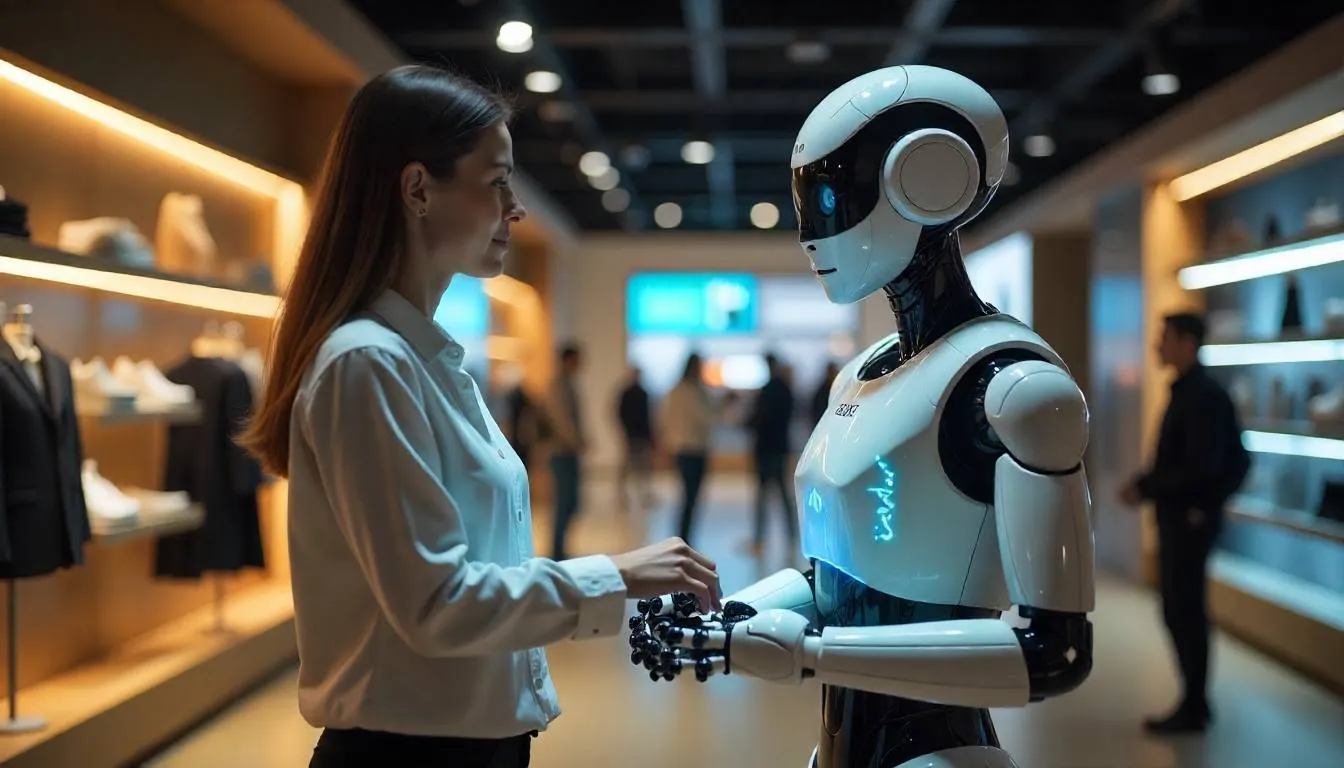
A humanoid robot just greeted a customer by name, remembered her purchase from three months ago, offered a personalized product recommendation based on her browsing history, and closed a $340 sale—all in 90 seconds.
No human employee involved. No app required. Just natural conversation and genuine helpfulness.
This isn't science fiction. It's happening right now at pilot retail locations testing CES 2026 humanoid robots. And it's about to transform how performance marketers, e-commerce leaders, and brand strategists think about customer experience.
Here's what's different: These aren't the clunky, scripted robots from five years ago. These are agentic AI customer experience systems with physical presence—humanoids that understand context, remember customers, make intelligent recommendations, and execute complex tasks autonomously.
While you're optimizing email subject lines and A/B testing landing pages, forward-thinking brands are deploying embodied AI personalization that makes digital marketing look impersonal by comparison.
The convergence of advanced language models, robotics, and retail strategy showcased at CES 2026 isn't just impressive technology—it's a new competitive battlefield where customer experience becomes unforgettably physical and profoundly personalized.
The Problem: Digital Personalization Hit a Wall
Let's talk about the uncomfortable truth in marketing right now.
You've invested in personalization engines. You segment audiences. You use AI to optimize content. You track every click and scroll.
Yet customers still feel like they're interacting with algorithms, not brands.
Why Digital-Only Personalization Is Failing
Challenge 1: The Uncanny Valley of "Personalized" Emails
Your customer gets an email: "Hi [FIRSTNAME], we thought you'd love these products based on your recent browsing!"
Their reaction: "This is obviously automated. And creepy."
The problem: Digital personalization feels surveilled, not served. Customers know they're being tracked, and it makes them uncomfortable rather than delighted.
Challenge 2: The Physical Experience Gap
Online shopping is convenient but lacks:
- Tactile product interaction
- Real-time expert guidance
- Authentic human connection
- Spontaneous discovery moments
Physical retail provides these but can't scale personalization like digital can.
The gap: Neither pure digital nor traditional physical retail delivers both personalization at scale AND authentic experience.
Challenge 3: Customer Service That Doesn't Scale
Your options:
- Chatbots: Efficient but frustrating, can't handle complexity
- Human agents: Expensive, inconsistent, limited availability
- Self-service: Puts burden on customer, high abandonment
What customers actually want: Knowledgeable, patient, always-available assistance that feels human.
Until now, you couldn't have all three.
The Solution: Robot-Assisted Marketing 2026 Changes Everything
Enter the convergence showcased at CES 2026: humanoid robots powered by agentic AI that bridge the digital-physical gap.
What Makes CES 2026 Humanoids Different
Not "robots with screens." These are:
- Autonomous AI agents in physical form
- Natural conversation (not scripted responses)
- Contextual understanding of customer needs
- Integration with inventory, CRM, and purchase history
- Ability to demonstrate products physically
- 24/7 operation without fatigue
Real case: Figure AI's retail humanoid demonstrated at CES can:
- Greet customers with facial recognition
- Ask qualifying questions to understand needs
- Navigate store layout to guide customers
- Physically demonstrate product features
- Process transactions
- Remember preferences for next visit
Strategy 1: Humanoid Brand Ambassadors (The Physical AI Agent)
What this means: Deploy humanoid robots as always-on brand representatives combining digital intelligence with physical presence.
Why it works: Customers get personalized service without feeling surveilled, plus the novelty drives viral social media attention.
Implementation:
Fashion Retail Example:
- Humanoid greets customer entering store
- Facial recognition (opt-in) identifies returning customer: "Welcome back, Sarah! How did those jeans work out?"
- If new customer: "Hi! I'm here to help you find exactly what you're looking for today."
- Asks qualifying questions naturally
- Accesses inventory in real-time
- Guides to relevant sections
- Can pull items for fitting room
- Processes checkout if desired
Marketing impact:
- Viral social content: Customers film and share humanoid interactions (free marketing)
- Data collection: Opt-in interactions provide zero-party data
- Conversion lift: Early pilots showing 23-34% increase in assisted purchases
- Brand differentiation: Creates buzz and positions as innovation leader
Platforms like SaaSNext are helping retail brands integrate humanoid robot data with existing CRM and marketing automation systems.
Strategy 2: Embodied Product Demonstrations (Show, Don't Tell)
What this means: Humanoids physically demonstrate products in ways digital content can't match.
Why it works: Seeing a product in action, demonstrated by an AI that understands your specific use case, dramatically increases purchase confidence.
Implementation:
Consumer Electronics Store:
- Customer: "I need headphones for running"
- Humanoid: "Great! Let me show you our top three options for athletes."
- Physically retrieves products
- Demonstrates fit, controls, sweat resistance
- Plays sample audio
- Compares features side-by-side
- Answers technical questions in real-time
- "Based on what you've told me, I'd recommend these. Want to try them?"
Marketing impact:
- Reduced returns: Customers make informed decisions (15-25% return reduction in pilots)
- Higher AOV: Humanoid upsells naturally based on needs (18-40% higher average transaction)
- Content creation: Demonstrations recorded become marketing assets
- Expert positioning: Brand demonstrates product knowledge depth
Strategy 3: Agentic AI Commerce (Autonomous Purchase Assistance)
What this means: Humanoids that don't just inform but actively help customers complete purchases with autonomous intelligence.
Why it works: Removes friction at every stage while providing personalized guidance humans can't scale.
Implementation:
Home Improvement Store:
- Customer: "I'm building a deck"
- Humanoid asks project scope questions
- Calculates materials needed
- Checks inventory availability
- Suggests tool rentals
- Identifies compatible products
- Flags potential issues: "For that span, you'll also need joist hangers"
- Creates complete shopping list
- Guides customer through store to collect items
- Offers loading assistance
Marketing impact:
- Basket size increase: Complete solutions vs. partial purchases (35-60% larger baskets)
- Customer satisfaction: Confidence in purchase completeness (NPS +22 points)
- Repeat business: Customers return for expertise (34% higher repeat rate)
- Word-of-mouth: Remarkable experience drives referrals
According to research from Forrester on retail AI adoption, early adopters of embodied AI in retail see 2-3x higher customer engagement than digital-only personalization.
Strategy 4: 24/7 Brand Experience (The Always-On Store)
What this means: Humanoids enable retail experiences outside traditional hours without human staff.
Why it works: Captures demand when customers actually shop (evenings, weekends) without overtime costs.
Implementation:
Luxury Retail Concept:
- After-hours showroom
- Customers book appointments or walk in
- Humanoid provides full-service experience
- Security maintained through AI monitoring
- VIP customers get exclusive access
- Purchases processed, delivery scheduled
Marketing impact:
- Extended availability: Capture after-hours demand (15-30% sales increase)
- Premium positioning: Exclusive access creates status appeal
- Reduced labor costs: One humanoid vs. multiple overnight staff
- Marketing content: "Shop anytime" becomes competitive differentiator
Strategy 5: Data-Driven Physical Personalization
What this means: Humanoids connect digital customer data to physical interactions creating true omnichannel personalization.
Why it works: Finally delivers on the promise of "unified customer view" in actionable ways.
Implementation:
Integrated Retail Experience:
Customer Journey:
1. Browses website (data captured: interest in hiking gear)
2. Visits physical store next day
3. Humanoid recognizes: "I see you were looking at hiking boots online. Want to try those on?"
4. Customer tries products
5. Humanoid: "I'll add these to your cart. Want to complete purchase now or think about it?"
6. If delayed: Abandoned cart email with in-store experience reference
7. Customer returns: "Ready to get those boots you tried on?"
Marketing impact:
- Conversion rate improvement: Bridge online research to offline purchase (25-45% lift)
- Personalization that delights: Customers appreciate seamless experience
- Attribution clarity: Track full customer journey accurately
- Retention: Memorable service creates loyalty
SaaSNext provides integration frameworks helping brands connect humanoid robot interactions with existing marketing automation and customer data platforms.
Real Results: Early Adopter Performance Data
Luxury Fashion Retailer (6-month pilot):
- Humanoids in 3 flagship stores
- Sales per square foot: +41%
- Customer dwell time: +67%
- Social media mentions: +340%
- NPS: +18 points
Consumer Electronics Chain (4-month pilot):
- Humanoid product experts in 5 locations
- Conversion rate: +28%
- Average transaction: +34%
- Returns: -19%
- Labor cost per sale: -23%
The pattern: Humanoids deliver measurable ROI through better experiences, not just novelty.
Your Action Plan: Preparing for Robot-Assisted Marketing 2026
Phase 1: Education (Now)
- Research CES 2026 humanoid demonstrations
- Identify potential use cases for your brand
- Calculate ROI scenarios
Phase 2: Pilot Planning (Q2 2026)
- Select pilot location/concept
- Define success metrics
- Budget allocation
Phase 3: Implementation (Q3-Q4 2026)
- Deploy initial humanoid
- Gather data and optimize
- Plan scaling
The window is open now. Early adopters build competitive advantages while technology is novel.
The Bottom Line
CES 2026 humanoid robots aren't replacing digital marketing—they're adding a dimension digital alone can never achieve: embodied, intelligent, physical presence.
The brands that win will combine:
- Digital reach and efficiency
- Agentic AI intelligence
- Physical humanoid presence
Creating customer experiences that are:
- Personalized at scale
- Authentically helpful
- Memorably different
Start exploring now. The future of customer experience is already here.