AgenticOps & AI ROI 2026: How CEOs Are Replacing $10K/Month Costs with Autonomous AI
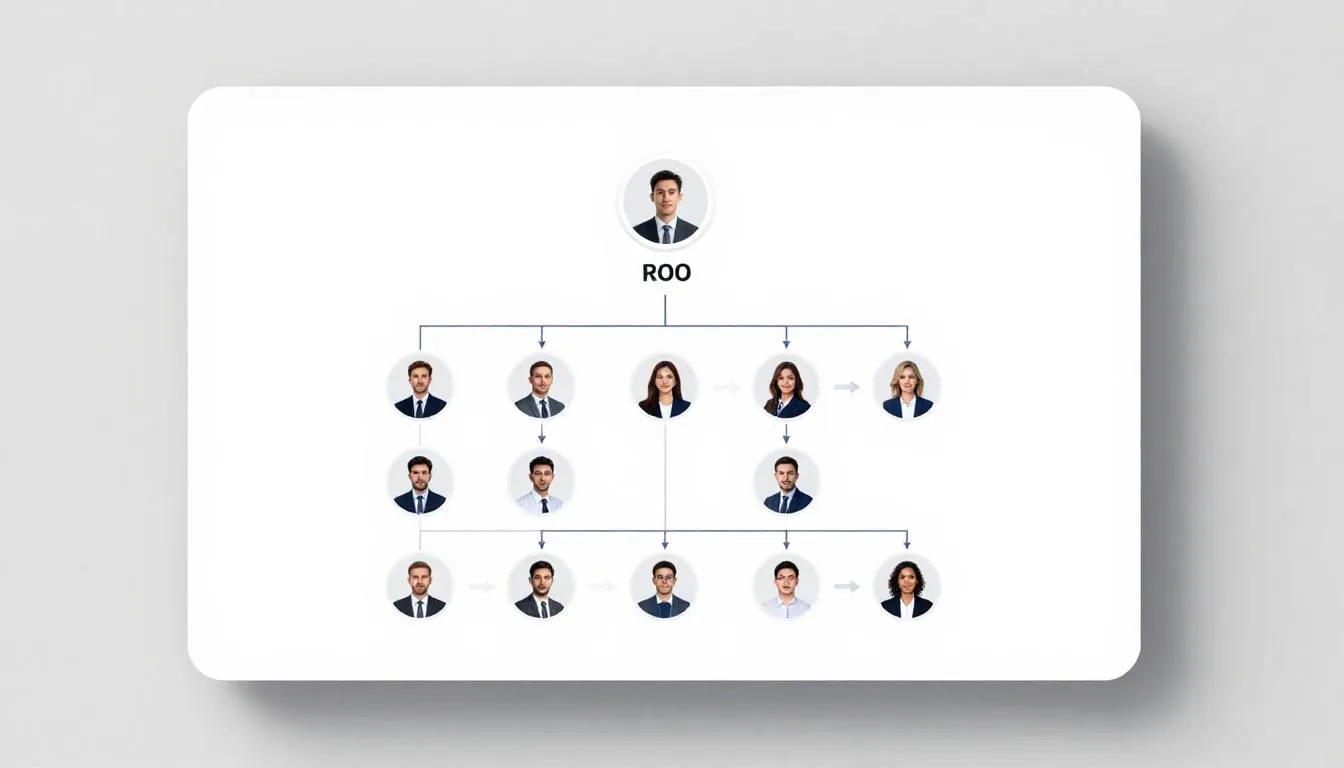
AgenticOps & ROI Reality Checks: How CEOs Are Replacing $10K/Month Overhead with Autonomous AI Teams
“I Didn’t Hire Another Ops Manager—I Deployed Three AI Agents”
Let me open with a line I heard recently from a founder scaling past Series C:
“I replaced $10,000 a month in operational overhead with three AI agents. They don’t take PTO, they don’t context-switch, and they close tickets while I sleep. Here’s the P&L.”
That sentence would’ve sounded reckless in 2023.
Experimental in 2024.
Ambitious in 2025.
In 2026, it’s becoming normal.
The era of chatbots as novelties is over. CEOs aren’t asking if AI works anymore—they’re asking:
- Where does it hit the P&L?
- How fast does it pay back?
- What breaks if we don’t move now?
Welcome to AgenticOps—where AI stops answering questions and starts running parts of the business.
The Problem: Chatbots Don’t Move the Needle—Autonomous Systems Do
Why CEOs Are Losing Patience with “AI Pilots”
Let’s be blunt. Most AI initiatives failed to deliver meaningful ROI because they stopped too early.
Common symptoms:
- Chatbots that deflect tickets but can’t resolve them
- AI tools that require constant human babysitting
- Fragmented “shadow AI” usage across teams
- No clear owner, no governance, no financial accountability
The result?
- Marginal savings
- Inflated expectations
- Growing skepticism in the boardroom
The core issue isn’t AI capability—it’s lack of agency.
The Hidden Cost of Non-Agentic AI
When AI can’t act, humans still have to:
- Review
- Approve
- Execute
- Audit
That means:
- Decision latency
- Higher labor costs
- Operational drag
- Compliance risk from uncontrolled usage
Ignoring this shift doesn’t just stall innovation—it locks in inefficiency.
From Chatbots to AgenticOps: What Actually Changed?
What Is Agentic AI (In CEO Terms)?
Agentic AI refers to systems that:
- Understand goals
- Plan actions
- Execute tasks
- Coordinate with other agents
- Learn from outcomes
These aren’t tools. They’re autonomous decision-makers with defined boundaries.
AgenticOps Explained Simply
Think of AgenticOps as:
MLOps + Business Logic + Financial Accountability
Instead of one AI answering questions, you deploy multiple agents:
- One plans
- One executes
- One audits or reconciles
All orchestrated through clear workflows.
This is where AI Orchestration becomes a board-level capability.
Case Study: Klarna’s Agentic Takeover
Klarna didn’t “add AI.”
They restructured operations around it.
What They Did
By early 2026:
- AI agents handled 75% of customer queries
- The system had authority to:
- Process refunds
- Resolve disputes
- Adjust payment plans
- Humans intervened only for edge cases
This wasn’t a chatbot. It was an agentic financial operator.
The Results That Got Everyone’s Attention
- $40M increase in annual profit
- Massive reduction in Mean Time to Resolution (MTTR)
- Lower customer churn
- Elimination of “shadow AI” risks through centralized governance
Most importantly:
AI activity showed up clearly on the P&L.
The ROI Reality Check: A Sample P&L Breakdown
Let’s walk through a realistic, anonymized scenario CEOs are seeing in 2026.
Before AgenticOps (Monthly)
- Customer support staff (8 FTEs): $48,000
- Ops manager oversight: $10,000
- QA & compliance overhead: $5,000
- Total Ops Cost: $63,000
After AgenticOps Deployment
- 3 AI agents (planning, execution, audit): $3,500
- Human escalation team (2 FTEs): $12,000
- AI orchestration platform: $2,500
- Total Ops Cost: $18,000
Net Impact
- $45,000/month savings
- 71% cost reduction
- Payback period: ~6–8 weeks
- Ongoing margin expansion
This is why P&L Impact 2026 conversations look very different from past AI hype cycles.
The Solution: How CEOs Should Implement AgenticOps (Step-by-Step)
Step 1: Start with a Financially Bounded Use Case
Don’t begin with “innovation.” Begin with:
- Refund processing
- Invoice reconciliation
- Customer issue resolution
- Demand forecasting adjustments
Ask one question:
If this ran autonomously, what would it replace on the P&L?
Step 2: Design Multi-Agent Workflows (Not Single Bots)
Effective agentic systems include:
- Planner Agent – breaks goals into tasks
- Executor Agent – takes action across systems
- Auditor Agent – checks outcomes, flags anomalies
This separation is what enables Autonomous Decision-Makers without chaos.
Step 3: Centralize AI Orchestration
This is where many teams fail.
Without orchestration:
- Agents conflict
- Compliance breaks
- Accountability disappears
Platforms like SaaSNext (https://saasnext.in/) help organizations deploy governed AI agents with:
- Role-based permissions
- Workflow visibility
- Cost tracking
- Enterprise-grade controls
This eliminates shadow AI while accelerating deployment.
Step 4: Measure What the Board Cares About
Forget vanity metrics.
Track:
- Cost per resolution
- Decision latency
- Error rate
- Revenue leakage prevented
- Net margin impact
Agentic AI must earn its place every quarter.
Step 5: Appoint an AI Orchestrator (Not a Prompt Engineer)
Top performers in 2026 are hiring:
- AI Orchestrators
- Agentic Systems Leads
Their job:
- Align AI agents with business outcomes
- Tune workflows
- Own AI ROI reporting
This role pays for itself faster than any headcount it replaces.
Why Shadow AI Is a Bigger Risk Than AI Failure
One surprising benefit Klarna highlighted:
AgenticOps reduced shadow AI.
Why?
- Centralized workflows
- Approved tools
- Clear authority boundaries
Without this:
- Employees use unsanctioned AI
- Data leaks increase
- Compliance risk explodes
AgenticOps isn’t just efficient—it’s safer.
How SaaSNext Enables Agentic ROI at Scale
Unlike generic AI tools, SaaSNext focuses on:
- Multi-agent orchestration
- Marketing and ops automation
- Clear ROI attribution
Teams use it to:
- Deploy AI agents quickly
- Monitor financial impact
- Scale without chaos
For CEOs, this means:
Faster proof, lower risk, and measurable returns.
Strategic Reading & External Validation
To deepen perspective:
- McKinsey on AI operating models:
https://www.mckinsey.com - MIT Sloan on autonomous systems:
https://mitsloan.mit.edu - SaaSNext insights on AI agent adoption:
https://saasnext.in/blog
These all point to the same conclusion: agency is the unlock.
CEO FAQs (AEO-Optimized)
Is Agentic AI safe?
Yes—when properly orchestrated and governed.
How fast can ROI be proven?
Often within one quarter for operational use cases.
Do we need to replace staff?
No. Most companies redeploy humans to higher-value work.
What’s the biggest risk?
Fragmented deployment without financial ownership.
The Bigger Shift: From Tools to Digital Labor
The most important mindset change for CEOs:
AI is no longer software.
It’s digital labor.
And like any workforce:
- It needs management
- Governance
- Performance reviews
- Financial accountability
AgenticOps is how you operationalize that reality.
The CEOs Winning in 2026 Aren’t Experimenting—They’re Replacing Costs
The companies pulling ahead right now share one trait:
They stopped asking “What can AI do?”
And started asking “What line item can it own?”
Agentic AI isn’t about hype. It’s about:
- Margin
- Speed
- Control
- Scale
The ROI is real.
The P&L impact is visible.
And the window to lead—not follow—is closing fast.
Call to Action
If you’re a CEO:
- Audit where AI already touches operations
- Identify one agentic use case with clear cost ownership
- Explore platforms like SaaSNext to deploy with governance, not guesswork
Because in 2026,
the most valuable employees on your org chart may not be human.