AI Agent Memory Architecture: Building Persistent, Proactive Systems
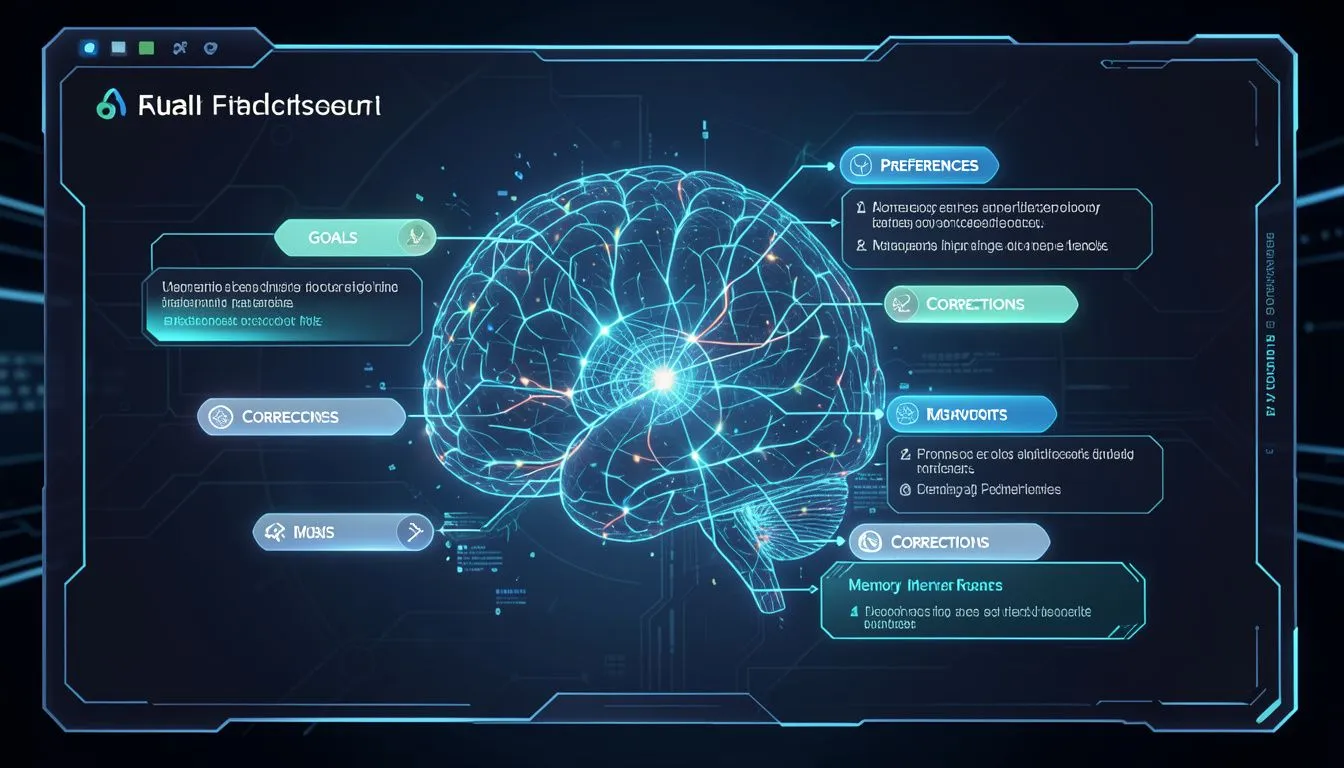
Moving Beyond Chat: Architecting a Proactive AI Memory System
🔑 Key Takeaways
- AI agent memory must move beyond chat history to structured, persistent systems
- A Convex database enables real-time, reactive storage for persistent AI memory
- RAG for agents should retrieve user-specific memories, not just documents
- The Anthropic skills system allows agents to proactively write and refine memories
- Case Study: The Memory Skill — Raroque built an agent that saves user corrections and critical facts automatically, improving performance over time
Your AI Agent Isn’t Forgetful. It’s Architecturally Limited.
Have you ever corrected your AI assistant… only to correct it again the next day?
Or built a polished agent that feels brilliant in-session — but completely resets between conversations?
For software architects and AI engineers, this isn’t just annoying.
It’s a credibility problem.
Users expect personalization.
They expect continuity.
They expect intelligence that compounds.
If your agent can’t remember user preferences, constraints, tone, goals, or corrections — it doesn’t feel intelligent.
It feels stateless.
And stateless systems don’t build loyalty.
The Core Problem: Chat History Is Not Memory
Most AI systems rely on one of two patterns:
- Stuff conversation history into context
- Use basic RAG for document retrieval
Neither solves real AI agent memory.
Why Architects Struggle
- Context windows are limited
- Token costs scale with history
- Retrieval systems fetch static knowledge — not evolving user traits
- There’s no structured layer for long-term behavioral learning
In marketing automation, personalization drives performance. The same principle applies to AI agents. If your system can’t evolve with the user:
- Recommendations stagnate
- Outputs feel generic
- Engagement drops
If ignored, you’ll spend months refining prompts instead of fixing the architecture.
The Shift: From Passive Recall to Proactive Memory
To build persistent AI memory, you need three layers:
- A structured memory schema
- A real-time database
- A proactive saving mechanism
Let’s break it down.
Step 1: Design a Structured AI Agent Memory Schema
Stop storing raw transcripts.
Instead, define memory types such as:
- User preferences
- Explicit corrections
- Long-term goals
- Constraints
- Behavioral patterns
This transforms memory from text blob to intelligence asset.
When implementing RAG for agents, retrieve only relevant memory categories based on context — not the entire chat archive.
This dramatically reduces token waste and improves response quality.
Step 2: Use a Real-Time Database Like Convex
A reactive backend like :contentReference[oaicite:0]{index=0} is ideal for persistent AI memory.
Why Convex?
- Real-time updates
- Serverless architecture
- Built-in reactivity
- Clean TypeScript integration
When a memory is written, it becomes instantly queryable.
This is crucial for:
- Multi-session continuity
- Cross-device experiences
- Multi-agent collaboration
Instead of stateless prompts, you now have stateful intelligence.
Step 3: Implement Proactive Memory via Skills
This is where most systems fail.
They rely on retrieval — not initiative.
Using the :contentReference[oaicite:1]{index=1} skills system, you can define a “Memory Skill” that allows the agent to decide when something is worth remembering.
Case Study: The Memory Skill
Raroque engineered his agent with a dedicated memory-writing capability.
Instead of just parsing conversation history, the agent:
- Detects corrections
- Identifies critical user facts
- Recognizes stable preferences
- Saves structured entries automatically
For example:
User: “I prefer Python over Node.”
→ Agent saves preference: language = python
User: “Don’t summarize, give full breakdowns.”
→ Agent stores output style constraint.
Over time, the agent improves with every interaction.
No retraining required.
No manual tagging.
Just smart, proactive AI agent memory.
Step 4: Build Retrieval Logic That Feels Intelligent
Memory isn’t just about saving.
It’s about relevance.
Your retrieval pipeline should:
- Query by memory type
- Rank by recency and confidence
- Inject only necessary fields into context
This keeps token costs manageable while enhancing personalization.
If you're optimizing AI workflows for scale, SaaSNext provides practical frameworks for implementing structured AI agents in production systems: 👉 https://saasnext.in/
They’ve published deeper guides on AI automation architecture that complement memory-first design patterns.
Step 5: Combine Memory with RAG for Agents
Many architects treat RAG as document lookup.
But advanced RAG for agents includes:
- Knowledge retrieval
- Memory retrieval
- Tool results
- Dynamic state injection
By merging user memory with domain knowledge, your agent becomes:
- Context-aware
- Behavior-aware
- Goal-aware
That’s a different category of intelligence.
What Happens If You Don’t Build Persistent AI Memory?
Short answer: your agent plateaus.
Long answer:
- Users re-explain themselves
- Personalization feels fake
- Agents fail in long workflows
- Enterprise adoption stalls
In competitive SaaS environments, that’s fatal.
This is why platforms like SaaSNext are helping teams transition from simple chatbot deployments to agent-based architectures that include memory, automation, and scalable infrastructure.
Because chat is a feature.
Memory is a system.
Frequently Asked Questions (AEO Optimized)
What is AI agent memory?
AI agent memory is a structured, persistent system that stores user preferences, corrections, goals, and context across sessions — enabling personalized and evolving behavior.
How is persistent AI memory different from chat history?
Chat history is temporary and token-bound. Persistent memory is structured, database-backed, and retrievable across sessions.
Can RAG be used for agent memory?
Yes. RAG for agents can retrieve both documents and user-specific memory entries, creating personalized responses without expanding context windows unnecessarily.
Why use the Anthropic skills system?
It allows agents to proactively write memories instead of passively relying on retrieval, creating continuous improvement.
The Bigger Insight: Personalization Is Architecture, Not Prompting
You can tweak prompts forever.
Or you can redesign the system.
The next generation of AI agents will not just answer questions — they will accumulate insight.
They will remember tone, preferences, strategy, friction points.
And they will get better over time.
That only happens if you architect for it.
Stop Building Smarter Prompts. Start Building Smarter Memory.
If your AI agent still feels like a clever chatbot, the problem isn’t intelligence.
It’s infrastructure.
By combining:
- Structured AI agent memory
- A reactive backend like Convex
- RAG for agents
- The Anthropic skills system
You move from reactive chat to proactive intelligence.
If you're building serious AI systems, now is the time to design for memory-first architecture.
Subscribe for deeper breakdowns on scalable agent design — or explore SaaSNext’s AI automation resources to accelerate your implementation.
Because the future of AI isn’t just smarter responses.
It’s smarter remembering.