AI Agent vs AI Assistant: The Business ROI of Claude Co‑work in 2026
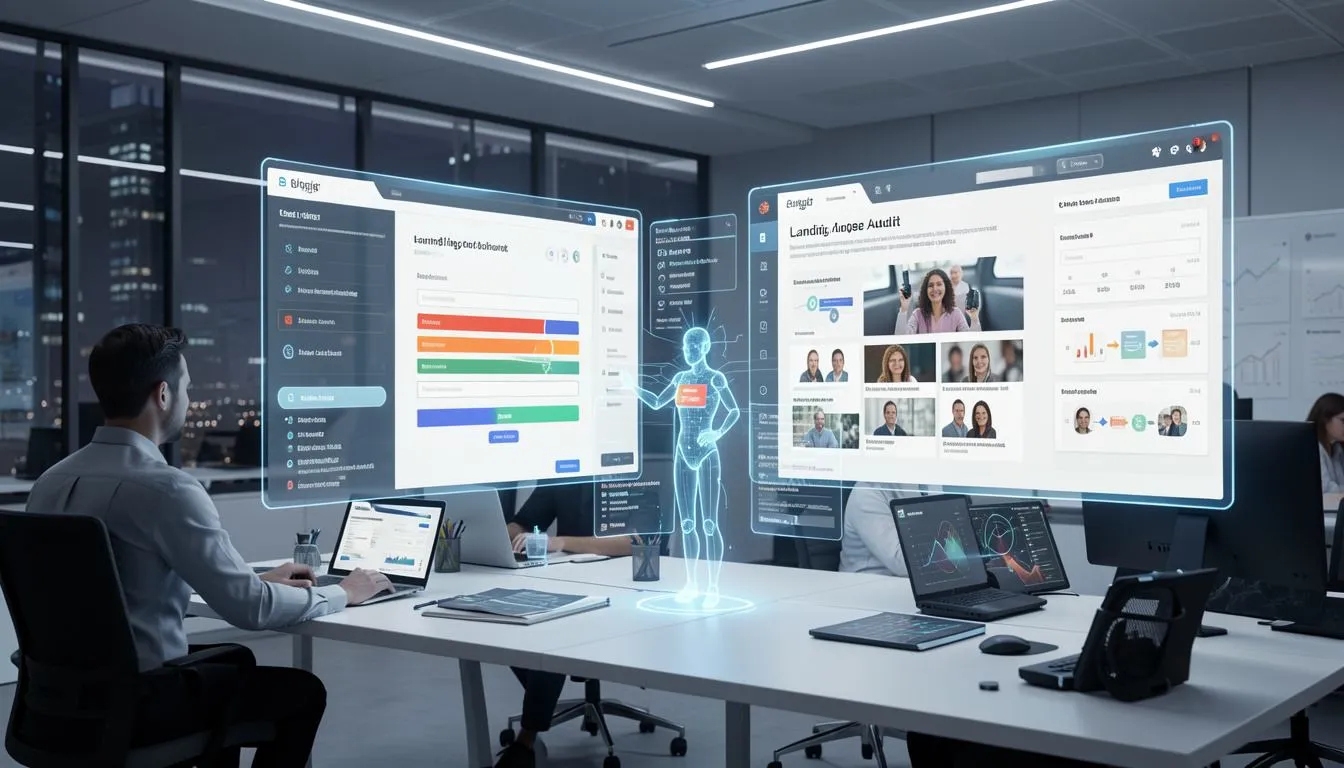
AI Business: From Assistant to Agent—The ROI of Claude Co‑work
Key Takeaways
- The shift from AI Assistant to AI Agent is redefining how businesses automate workflows in 2026.
- Claude Co‑work enables autonomous workflows where AI performs tasks instead of just suggesting them.
- Businesses are seeing measurable ROI through faster audits, smarter UX insights, and reduced consulting costs.
- AI agents can navigate websites, analyze user flows, and generate actionable optimization recommendations.
- For designers, developers, and e‑commerce teams, AI agents act like a digital teammate rather than a chatbot.
The Moment Businesses Realize AI Isn’t Just a Chatbot
Imagine paying $500 for a website conversion audit.
A consultant spends two hours reviewing your landing page, writes a report, and sends a few UX suggestions.
Now imagine an AI doing the same job—instantly.
Not just answering questions, but actually navigating your site, analyzing the user experience, identifying friction points, and recommending improvements.
This is the shift happening right now in AI business workflows.
We're moving from AI assistants to AI agents.
And that shift is quietly redefining the return on investment (ROI) of AI across marketing, product design, and e‑commerce operations.
The Problem: AI Assistants Still Leave Humans Doing the Work
Most businesses adopted AI tools expecting productivity breakthroughs.
Instead, they got something closer to a supercharged search engine.
Traditional AI assistants:
- Answer questions
- Generate text
- Suggest ideas
But they don't execute tasks.
A marketing manager still has to:
- Review landing pages
- Identify conversion issues
- Test UX improvements
- Coordinate developers
For UI/UX designers and front‑end teams, this means AI often creates more ideas but not less work.
E‑commerce teams feel this even more.
Every small optimization—like fixing a checkout form or improving social proof—requires time, analysis, and often outside consultants.
Ignore this inefficiency, and the consequences add up:
- Slow campaign optimization
- Expensive consulting fees
- Missed revenue opportunities
What businesses really need is AI that acts, not just advises.
From AI Assistant to AI Agent
The key difference between an AI Assistant vs AI Agent is simple:
| AI Assistant | AI Agent |
|---|---|
| Answers questions | Executes workflows |
| Generates suggestions | Performs analysis |
| Requires constant prompting | Works autonomously |
Tools enabling autonomous workflows are rapidly changing how teams operate.
One emerging example is Claude Co‑work, which allows AI to interact with digital environments, analyze interfaces, and generate structured insights.
For designers and developers, this is like having a junior UX analyst working 24/7.
Case Study: The $500 Audit That Cost a Chai
Vaibhav, an e‑commerce founder, shared an example that perfectly illustrates this shift.
A freelance consultant quoted $500 for a conversion audit.
Instead, Claude Co‑work reviewed the site for the cost of a cup of chai.
The AI navigated the live website and quickly identified key issues:
- Social proof lacked human faces, reducing trust signals
- The lead capture form used six fields instead of two
- Testimonials were buried below the fold
Within minutes, the system produced a concise UX improvement list.
For designers, these insights weren't revolutionary—but they were immediate and actionable.
Multiply that across hundreds of pages or campaigns, and the ROI becomes obvious.
How Businesses Can Implement AI Agents Today
To unlock the real value of AI in 2026, companies need to rethink how AI fits into their workflow stack.
1. Identify Repeatable Analysis Tasks
Start by identifying tasks that happen repeatedly:
- Landing page audits
- UX reviews
- content optimization
- conversion funnel analysis
These are ideal for business process automation using AI agents.
2. Integrate AI Into Product and Marketing Workflows
Instead of running AI as a standalone tool, embed it into daily processes.
Platforms like SaaSNext (https://saasnext.in/) are helping teams integrate AI marketing agents that can analyze campaigns, automate insights, and assist teams with optimization decisions.
This turns AI into a co‑worker rather than a utility.
3. Build Autonomous Workflow Loops
The real power comes when AI agents can complete entire workflows.
For example:
- Scan a landing page
- Detect UX friction
- Generate improvement recommendations
- Suggest UI adjustments for developers
This type of agentic workflow dramatically speeds up iteration cycles.
According to a recent McKinsey report on AI productivity, organizations adopting advanced automation can significantly improve operational efficiency and decision speed.
Claude Co‑work vs ChatGPT: What’s the Difference?
A common question teams ask is:
"How is Claude Co‑work different from ChatGPT?"
Both systems are powerful, but their roles differ.
ChatGPT primarily functions as a knowledge assistant.
Claude Co‑work focuses on task execution and analysis within real environments.
This distinction is critical for teams building AI-driven operations.
Instead of only generating ideas, AI becomes capable of:
- Reviewing live websites
- Evaluating UX structures
- Performing structured audits
For teams exploring these capabilities, platforms like SaaSNext are helping businesses deploy AI agents across marketing and product workflows, enabling faster experimentation and smarter decision making.
If you want to explore how AI automation is reshaping marketing operations, this guide offers deeper insights:
Why This Matters for Designers and Developers
For UI/UX designers and front‑end engineers, AI agents represent a fundamental shift.
Instead of spending hours diagnosing obvious usability issues, teams can focus on strategic design improvements.
AI handles the repetitive diagnostics.
Humans handle the creative breakthroughs.
This collaboration—often called Claude Co‑work—is where the real productivity gains appear.
And as AI models continue improving, these agents will move from analyzing problems to implementing fixes automatically.
The Real AI ROI of 2026
The biggest misconception about AI ROI is that it comes from writing faster emails or blog posts.
The real value appears when AI begins handling operational workflows.
In other words:
- Less analysis overhead
- Faster iteration cycles
- Reduced consulting costs
For growing e‑commerce brands and digital product teams, that combination can directly impact revenue.
Your Next Teammate Might Be an AI Agent
The AI conversation is evolving rapidly.
We're moving beyond chatbots and content generators toward something far more powerful.
AI agents that actively participate in business operations.
Whether it's running conversion audits, analyzing UX flows, or supporting developers with optimization insights, systems like Claude Co‑work show what the future of AI collaboration looks like.
And the organizations that adopt these workflows early will gain a massive advantage in speed, experimentation, and cost efficiency.
If you're curious how AI agents can integrate into your marketing or product stack, explore platforms like SaaSNext that are helping businesses adopt AI‑driven workflows.
If this article gave you new ideas about AI ROI in 2026, consider sharing it with your team or subscribing for more insights on AI, design systems, and automation.