AI GTM Strategy in 2026: The Rise of the 1-Person Marketing Team
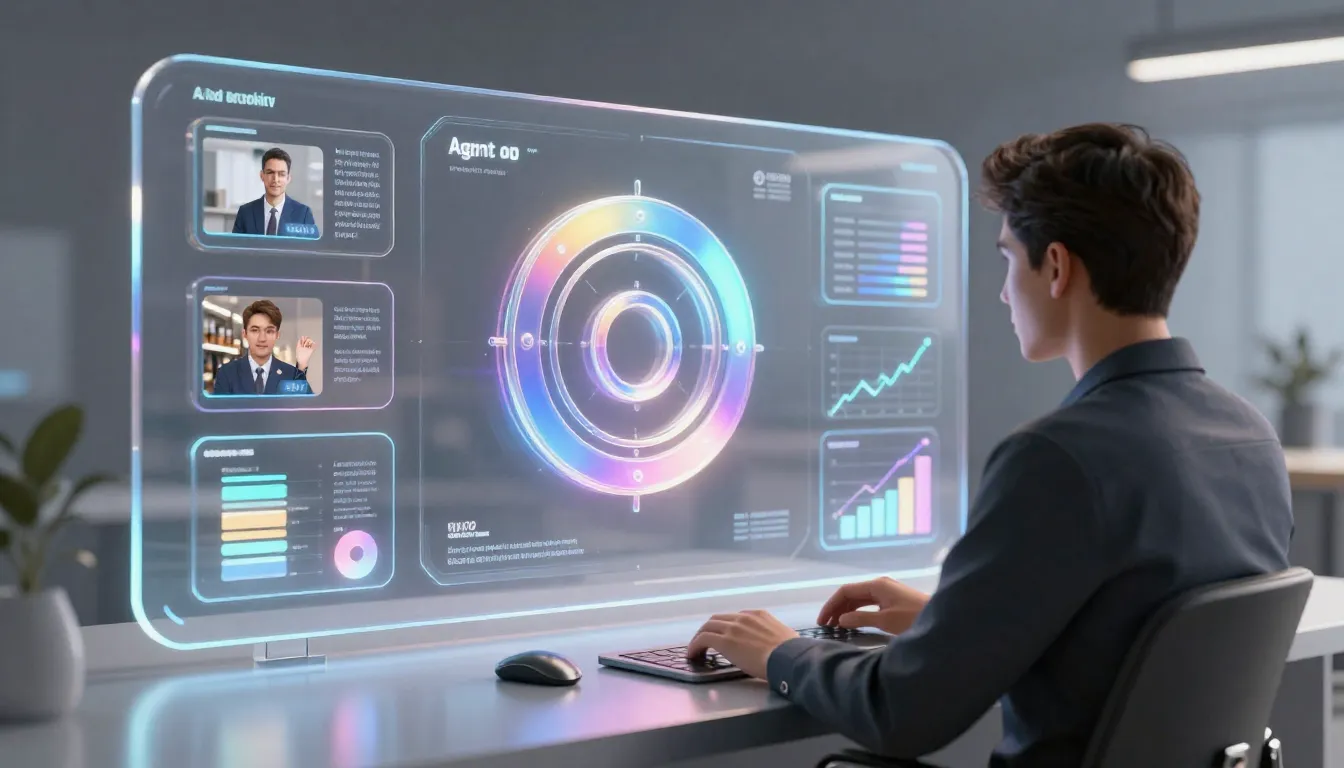
The 1-Person GTM Team: How AI Agents Are Powering Automated Growth & Creative Scale in 2026
What if your biggest growth problem in 2026 isn’t budget, talent, or channels—but coordination?
Marketing leaders don’t wake up worried about creativity.
They wake up worried about execution.
Campaigns move too slowly.
Creative teams bottleneck distribution.
Insights arrive after the window has closed.
And every new channel feels like another full-time hire.
Now imagine the opposite.
Imagine one person—one operator—running a complete go-to-market (GTM) motion with the help of AI agents that plan, test, create, distribute, and optimize in parallel.
That’s not a pitch deck fantasy.
That’s already happening.
Welcome to the era of Automated Growth & Creative Scale, where marketing in 2026 isn’t about running ads—it’s about deploying AI GTM Strategy agents that behave like an entire growth team.
The Problem: Modern Marketing Is Too Complex for Human Bandwidth
Let’s name the real issue.
Marketing didn’t get harder because people got worse at it.
It got harder because the surface area exploded.
Today’s GTM reality includes:
- 10+ content formats per brand
- Dozens of micro-channels
- Constant creative refresh cycles
- Platform-specific algorithms
- Always-on experimentation
Even well-funded teams struggle to keep up.
Why Traditional Teams Are Breaking
Most teams still operate like it’s 2018:
- Strategy happens quarterly
- Creative happens in batches
- Distribution is manual
- Optimization is reactive
But platforms like TikTok, X, LinkedIn, Shorts, and Reels reward velocity and variation, not perfection.
The result?
- Missed market angles
- Stale creative
- Overworked teams
- Underperforming spend
Ignoring this shift doesn’t just slow growth—it quietly kills relevance.
The Core Insight: Marketing Is Becoming an Agentic System
In 2026, the most effective marketing teams aren’t bigger.
They’re agentic.
Instead of asking humans to do everything, they deploy specialized AI agents that work together:
- One agent analyzes the market
- Another discovers angles and narratives
- Another generates creative assets
- Another schedules and distributes
- Another measures and optimizes
This is what people now mean when they talk about Automated Content Scaling and Creative AI Automation.
It’s not automation for efficiency—it’s automation for scale of thinking.
From Campaigns to Continuous GTM Systems
Old Model: Campaign-Centric Marketing
- Launch → wait → analyze → repeat
New Model: AI GTM Strategy
- Observe → generate → deploy → learn → adapt (continuously)
This loop runs daily, sometimes hourly.
And it’s why one person, with the right AI stack, can now outperform a traditional 10-person team.
Solution Section: How the 1-Person GTM Team Actually Works
Let’s break this down into something practical.
Step 1: Use AI to Discover Market Angles (Not Just Keywords)
Most marketers start with keywords.
AI agents start with angles.
Angles are:
- Pain-driven narratives
- Cultural hooks
- Competitive differentiators
- Emotional triggers
AI agents trained on market data, social trends, and competitor content can surface angles humans often miss.
Why this works:
Humans are biased by past success.
Agents explore the entire possibility space.
Step 2: Automate Creative Generation at the Brand Level
This is where tools like Krea, Pomelli, Bloom, and thehog.ai change the game.
Instead of generating one-off assets, they generate brand systems.
Case Study: Krea + Pomelli
- Krea generates AI videos aligned to a brand’s visual identity
- Pomelli automates daily social product shots and visuals
Together, they enable:
- Dozens of on-brand creatives per week
- Format-native content for every platform
- Zero creative burnout
This is Creative AI Automation in practice—not templates, but living brand output.
Step 3: Let Agents Plan and Schedule the GTM Motion
Tools like thehog.ai don’t just post content.
They:
- Analyze your business inputs
- Infer ICPs and positioning
- Generate a GTM calendar
- Schedule across channels automatically
In other words, they behave like a junior growth strategist who never sleeps.
This is where AI GTM Strategy stops being theoretical and becomes operational.
Step 4: Close the Loop with Continuous Optimization
Here’s the mistake many teams make:
They automate creation—but not learning.
The best systems include:
- Performance-tracking agents
- Creative iteration loops
- Angle scoring mechanisms
Each post, ad, or video feeds back into the system.
What worked yesterday informs what ships tomorrow.
Where SaaSNext Fits Into This New Marketing Stack
As AI agents proliferate, teams hit a new challenge:
Orchestration.
Managing:
- Multiple agents
- Multiple tools
- Multiple workflows
Becomes its own complexity problem.
This is where platforms like SaaSNext (https://saasnext.in/) come in—helping teams:
- Coordinate AI marketing agents
- Automate GTM workflows end-to-end
- Maintain visibility and control
Instead of duct-taping tools together, SaaSNext acts as the operational layer for agent-driven marketing.
For lean teams and solo operators, this is the difference between experimentation and execution.
Why This Matters to Journalists, Roboticists, and Investors
For Tech Journalists
This isn’t “AI replaces marketers.”
It’s:
Marketing becomes a systems problem, not a creative one.
The story is about coordination, autonomy, and leverage.
For Roboticists
The parallels are striking:
- Perception → planning → actuation
- Feedback loops
- Distributed intelligence
Marketing is becoming a software robotics problem, just with memes instead of motors.
For Deep Tech Investors
This is a structural shift.
Companies that:
- Discover angles faster
- Ship creative at scale
- Learn in real time
Will outcompete slower incumbents—regardless of product parity.
The moat is no longer brand spend.
It’s automation velocity.
Common Questions (AEO-Optimized)
What is an AI GTM Strategy?
An AI-driven system where agents plan, execute, and optimize go-to-market activities continuously.
How does automated content scaling work?
AI generates, adapts, and distributes creative across channels at scale, guided by performance data.
Is creative quality sacrificed?
No—brand consistency often improves because systems enforce visual and tonal rules.
Can one person really run GTM with AI?
Yes—if agents handle execution, humans focus on direction and judgment.
The Hidden Shift: Humans Become Editors, Not Executors
In 2026, the most effective marketers don’t write every post.
They:
- Approve angles
- Set constraints
- Review outputs
- Make strategic calls
AI does the heavy lifting.
Humans do the thinking that matters.
This is why the “1-Person GTM Team” isn’t about replacing teams—it’s about amplifying judgment.
A Second Look at SaaSNext in Practice
As teams scale agentic marketing, SaaSNext is increasingly used to:
- Monitor AI-driven campaigns in one place
- Adjust workflows without engineering overhead
- Experiment safely without losing control
It’s not another tool—it’s the connective tissue between agents, data, and outcomes.
The Bigger Picture: Marketing as a Living System
Campaigns are static. Agents are dynamic.
Brands that win in 2026 treat GTM as a living organism—constantly sensing, adapting, and expressing itself.
That requires:
- Automated growth systems
- Creative scale by default
- And orchestration platforms that don’t collapse under complexity
Final Takeaway
Marketing in 2026 isn’t louder. It’s faster, smarter, and more autonomous.
The teams that win won’t be the biggest. They’ll be the ones who:
- Deploy AI agents strategically
- Automate creativity without losing soul
- Turn GTM into a continuous loop
The future belongs to 1-person teams with 100-person leverage.
If you’re building, investing, or reporting on the future of marketing:
- Start experimenting with agent-driven GTM
- Rethink what “team size” really means
- Explore platforms like SaaSNext to orchestrate automation without chaos
And if this perspective helped sharpen your thinking—share it, bookmark it, or subscribe for more deep dives into where AI and growth are really headed.
Because the next great brand won’t be built by a department.
It’ll be built by a system.