Anthropic Agent SDK: Is the $200 Claude Code Subscription Worth It?
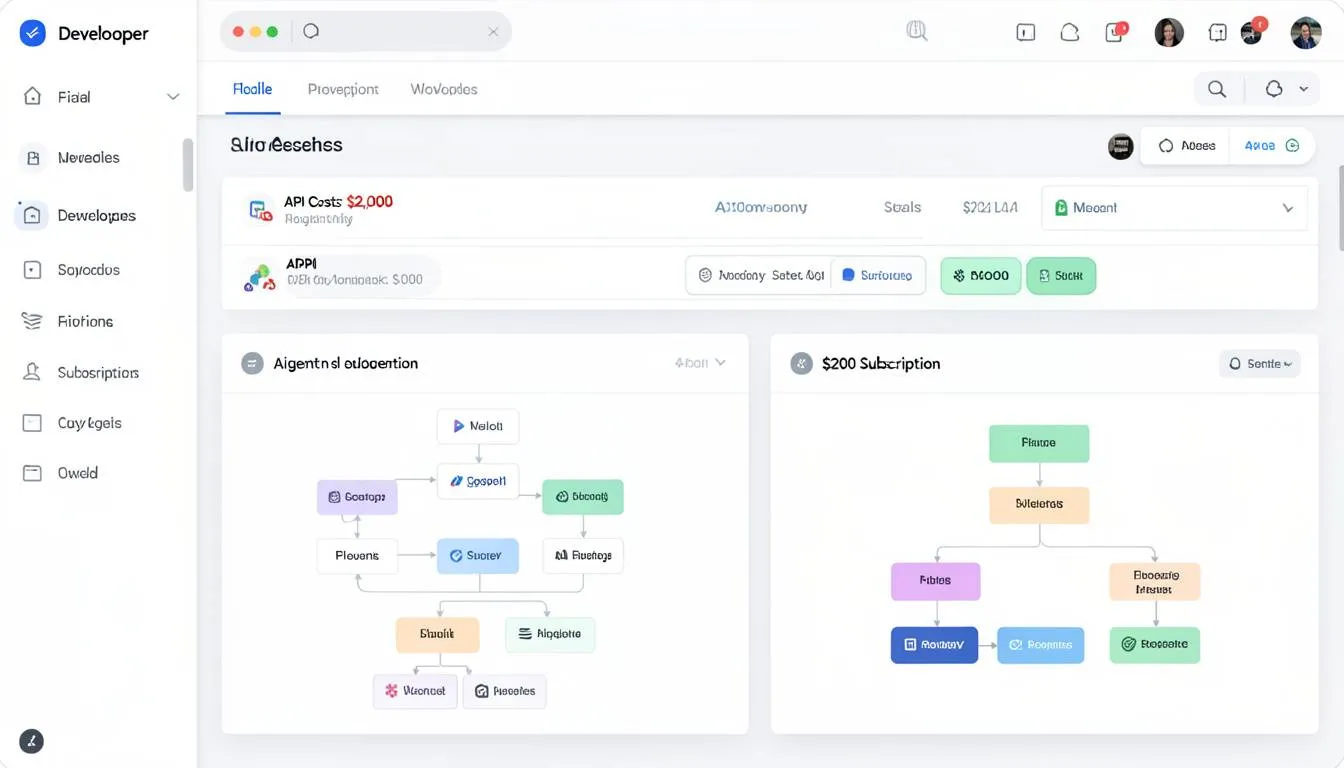
The $200 Subscription Hack: Is Anthropic’s Agent SDK the Best Deal in AI?
🔑 Key Takeaways
- The Anthropic Agent SDK changes how developers think about AI API costs
- A $200 Claude Code subscription can deliver outsized value compared to raw token pricing
- Agent-based workflows reduce token waste and increase output efficiency
- Startups can build powerful AI agents without runaway API bills
- Smart usage strategy = massive token savings
Are You Quietly Burning $1,000+ a Month on Tokens?
If you’ve built anything serious with AI APIs, you know the feeling.
You start small.
A few tests.
Some prompts.
A prototype agent.
Then your dashboard updates.
$400.
$800.
$1,200.
And suddenly, “just experimenting” is your second-largest expense.
For individual developers and startups, AI API costs can quietly kill momentum before revenue even starts.
But what if a flat $200/month subscription could give you the equivalent of thousands in token value?
That’s the promise behind the Anthropic Agent SDK + Claude Code subscription combo.
Let’s break down whether it’s real — or just hype.
The Problem: Pay-Per-Token Is Brutal at Scale
The traditional AI model is simple:
- You send tokens
- You receive tokens
- You pay for both
That’s fine for:
- Small apps
- Low-frequency usage
- Basic chat features
But once you start building AI agents — systems that:
- Iterate
- Reflect
- Plan multi-step actions
- Re-call large context
Token usage explodes.
Why Developers Struggle
When building AI agents, you:
- Re-send context repeatedly
- Over-specify instructions
- Retry failed outputs
- Waste tokens debugging
Before long, optimization becomes a financial necessity.
If you ignore this?
- Your burn increases
- Your runway shortens
- You hesitate to experiment
And hesitation kills innovation.
The $200 Hack: Claude Code + Anthropic Agent SDK
Here’s where it gets interesting.
Through a :contentReference[oaicite:0]{index=0} Claude Code subscription (around $200/month for heavy usage tiers), developers can access high-performance models with usage patterns that often feel far more generous than strict API metering.
When paired with the Anthropic Agent SDK, something powerful happens:
You stop thinking in raw tokens — and start thinking in structured agent workflows.
Case Study: The $2,000 Token Value
Developer Raroque ran the numbers.
Using the $200/month Claude Code plan heavily for personal projects via the Agent SDK, he estimated the effective value equated to roughly $2,000 worth of API tokens under standard pay-per-token pricing.
Why?
Because:
- The subscription absorbs iterative experimentation
- Agents can be tested without micro-cost anxiety
- Context reuse becomes more efficient
Instead of paying per token, you operate inside a more predictable cost ceiling.
For indie hackers and startups, predictability is power.
How the Anthropic Agent SDK Reduces Waste
Let’s get tactical.
1. Structured Agent Loops Reduce Re-Sends
Instead of re-sending massive prompts, the SDK:
- Maintains structured conversation state
- Manages tool use
- Reduces redundant context
This directly improves token savings.
2. Tool Use Cuts Hallucinated Iterations
When building AI agents, many tokens are wasted on:
- Clarifications
- Corrections
- Re-prompts
Agent SDK workflows allow:
- Tool invocation
- Explicit reasoning steps
- Controlled output loops
Fewer retries = fewer tokens burned.
3. Subscription Encourages Aggressive Experimentation
Psychology matters.
When every prompt costs money, you hesitate.
When you're inside a subscription model, you:
- Iterate faster
- Test more aggressively
- Optimize outputs
That speed compounds.
How to Use This Strategy as a Developer
If you're building AI tools and want to maximize ROI, here’s a practical approach.
Step 1: Use Claude Code for Heavy Iteration
Prototype your agents. Test workflows. Debug logic.
Use the subscription tier as your experimental sandbox.
Step 2: Move Optimized Workflows to API (If Needed)
Once stable:
- Measure token usage
- Decide if API deployment makes sense
- Hybridize your architecture
This balances cost and scale.
Step 3: Design Agents for Efficiency
When building AI agents:
- Minimize unnecessary memory
- Use structured tool outputs
- Avoid verbose system prompts
- Trim conversation history
Small design changes dramatically impact AI API costs.
Where SaaSNext Comes In
If you’re serious about building production-ready AI agents, platforms like SaaSNext help startups:
- Design scalable AI workflows
- Optimize agent performance
- Reduce unnecessary token burn
- Deploy marketing and operational AI agents safely
Explore their AI automation guides: 👉 https://saasnext.in/
While Anthropic’s tools power the core intelligence, SaaSNext focuses on turning that intelligence into sustainable business systems.
Later, when your internal agent experiments turn into revenue-driving tools, having structured deployment support matters.
External Perspective: The Rise of Agentic Architectures
Industry analysis increasingly shows that agent-based architectures are more efficient than raw chat completion loops.
The shift toward tool-using AI systems isn’t just hype — it’s cost optimization at scale.
As AI matures, structured agents will outperform naive prompt chaining.
Common Questions (AEO Optimized)
Is the Claude Code subscription better than pay-per-token?
For heavy experimentation and agent development, often yes. It provides cost predictability and encourages iteration.
Does this eliminate API costs entirely?
Not necessarily. For production SaaS apps, API pricing may still apply. But for R&D and internal tooling, the savings can be substantial.
Who benefits most from this setup?
- Indie developers
- Early-stage startups
- AI entrepreneurs building internal tools
- Founders testing agent ideas before scaling
The Bigger Insight: Predictability > Raw Cost
This isn’t just about saving money.
It’s about:
- Removing fear from experimentation
- Encouraging iteration
- Enabling agent-first thinking
When your cost ceiling is fixed, your creativity expands.
And that’s priceless.
Conclusion: Is It the Best Deal in AI?
If you’re building AI agents seriously?
It might be.
A $200 Claude Code subscription paired with the Anthropic Agent SDK can feel like a cheat code — especially when compared to unpredictable pay-per-token bills.
Just remember:
The real savings come from smart architecture.
Subscription alone doesn’t fix bad design.
If you’re currently paying high AI API costs:
- Audit your token usage
- Test a subscription-based workflow
- Refactor one agent using structured SDK patterns
Then compare the results.
If this breakdown helped, share it with another founder wrestling with token anxiety — and start building without watching the meter tick.