Beyond Scraping: Build Niche Intelligence Agents for Smarter Lead Generation
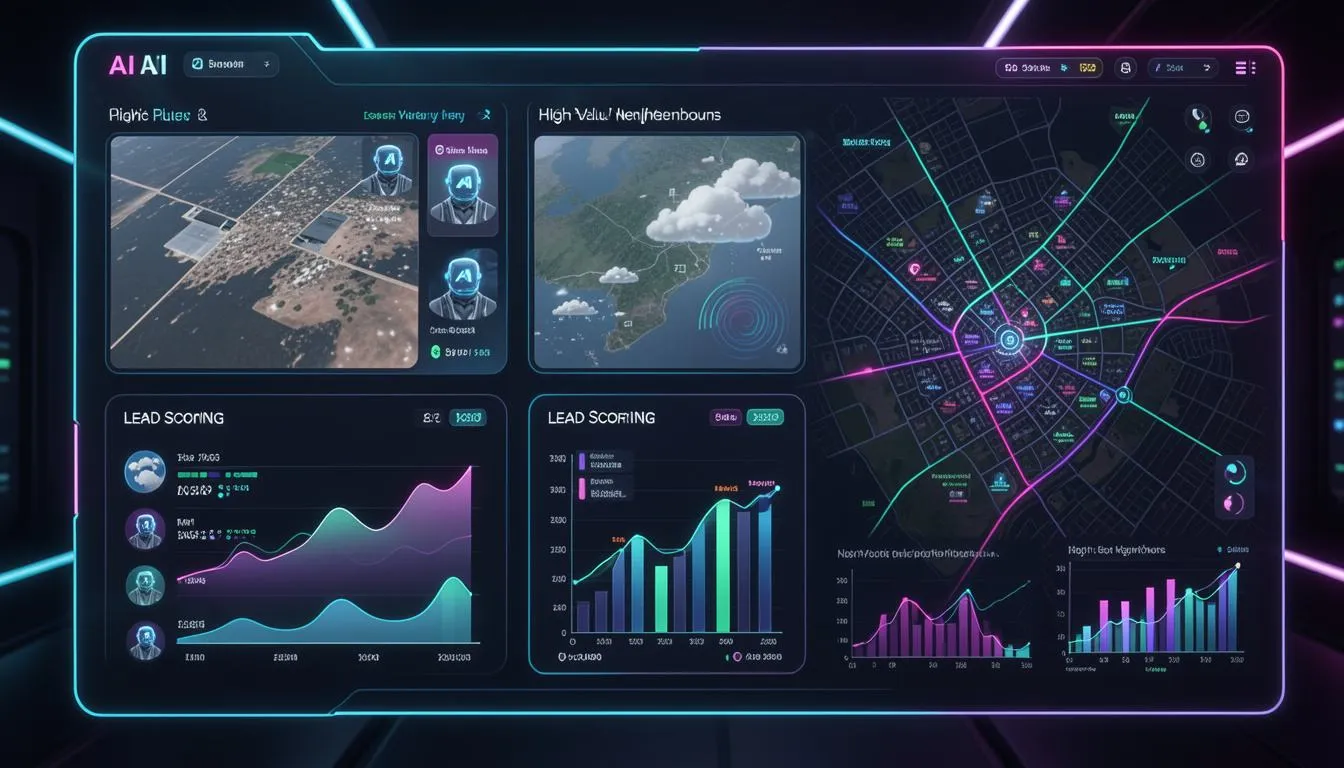
Beyond Scraping: Building "Niche Intelligence" Agents for Competitive Industries
Key Takeaways
- Simple scraping is no longer enough—niche intelligence agents deliver actionable insights, not raw data
- Lead Sourcing AI combined with contextual signals (weather, income, behavior) dramatically improves conversion rates
- Paperclip Skills enable multi-agent workflows that simulate real sales teams
- Blue-collar industries are seeing the fastest ROI from predictive sales agents
- Companies leveraging niche data extraction are outcompeting generic AI adopters
The Shift No One Talks About
What if your competitors already know which customers are about to buy—before those customers even search?
That’s the uncomfortable reality in 2026.
For years, businesses relied on scraping tools to collect emails, phone numbers, and basic firmographic data. But today, that approach feels outdated. It’s like trying to win a Formula 1 race on a bicycle.
UI/UX designers, developers, and e-commerce founders are now facing a deeper challenge: data is everywhere, but insight is rare.
And without insight, your campaigns become guesswork.
The Real Problem: Data Without Context is Useless
Let’s break it down simply.
Most teams today still:
- Scrape generic lists
- Send mass outreach
- Hope for replies
The result?
- Low response rates
- Wasted ad spend
- Burnt-out sales teams
The issue isn’t effort—it’s lack of context.
Knowing who to contact is no longer enough.
You need to know:
- Why now?
- What triggered their need?
- How urgent is the problem?
Without these signals, even the best-designed campaigns fail.
And if you ignore this shift, competitors using predictive sales agents will quietly dominate your market.
The Solution: Niche Intelligence Agents (Not Just Scrapers)
This is where the game changes.
Instead of collecting data, modern teams are building Lead Sourcing AI systems that combine multiple signals into a single decision engine.
What is a Niche Intelligence Agent?
A niche intelligence agent is an AI system that:
- Collects data from multiple specialized sources
- Cross-references real-world signals
- Prioritizes leads based on likelihood to convert
It doesn’t just find leads—it tells you which ones matter most right now.
Case Study: The Roofing Lead-Gen Agent
A roofing company implemented Paperclip Skills to build a multi-agent system that:
- Analyzed satellite imagery for roof damage
- Cross-referenced recent hailstorm data
- Filtered high-income zip codes
- Generated a ranked lead list
The result?
- Sales teams stopped cold-calling random neighborhoods
- Outreach became hyper-targeted
- Closing rates increased significantly
Instead of guessing, they acted on real-world triggers.
How to Build Your Own Niche Intelligence System
You don’t need a massive team to implement this.
Here’s a practical framework:
1. Identify High-Intent Signals
Start by asking:
“What real-world event indicates my customer needs my product?”
Examples:
- E-commerce: Price drops, restocks, competitor launches
- SaaS: Hiring trends, funding announcements
- Local services: Weather events, permits, inspections
These signals are the foundation of predictive sales agents.
2. Combine Data Layers (The Real Advantage)
This is where most fail.
Don’t rely on a single dataset. Combine:
- Public records
- APIs (weather, finance, social)
- Behavioral signals
For deeper insights on combining automation layers, check this guide from SaaSNext: 👉 https://saasnext.in/
Platforms like SaaSNext help teams orchestrate these layers into scalable AI workflows without engineering overhead.
3. Use Multi-Agent Orchestration
Instead of one monolithic script, use multiple agents:
- Data Agent → collects raw inputs
- Analysis Agent → identifies patterns
- Scoring Agent → ranks opportunities
- Outreach Agent → drafts personalized messages
This mirrors how real teams operate—but faster.
For a deeper understanding of agentic systems, explore this external breakdown: 👉 https://www.mckinsey.com/capabilities/quantumblack/our-insights/the-state-of-ai
4. Turn Insights into Action (Fast)
Speed is everything.
Once your agent identifies a lead:
- Trigger outreach within minutes
- Personalize messaging using context
- Route high-value leads to humans
This is where Blue Collar AI is winning—execution, not just analysis.
5. Continuously Improve with Feedback Loops
Your system should learn:
- Which leads convert
- Which signals matter most
- Which messages perform best
Using platforms like SaaSNext, teams can build feedback loops that refine targeting automatically over time.
Why This Matters for Designers & Developers
This isn’t just a backend shift—it affects product design.
UI/UX designers must now think about:
- Dashboards that surface actionable insights, not raw data
- Interfaces built for decision-making, not exploration
Developers must focus on:
- Integrating APIs efficiently
- Building scalable agent pipelines
- Ensuring real-time responsiveness
And for e-commerce owners?
This is your competitive edge.
While others chase traffic, you’ll target intent.
The Future: From Data Collectors to Decision Engines
We’re entering a new phase of AI adoption.
The winners won’t be those with the most data.
They’ll be the ones who:
- Understand niche signals
- Build intelligence layers
- Act faster than everyone else
Because in competitive industries, timing beats volume.
Stop Scraping. Start Thinking.
If you’re still relying on basic scraping tools, you’re playing yesterday’s game.
The future belongs to businesses that build niche intelligence agents—systems that don’t just collect data, but understand it.
Start small.
Pick one niche signal. Build one agent. Test one workflow.
And once you see the results, scale it.
🚀 Ready to Build Your First Intelligence Agent?
Explore how SaaSNext can help you design and deploy AI-powered workflows without complexity: 👉 https://saasnext.in/
If this guide helped you, share it with your team or bookmark it—you’ll want to revisit this as AI continues to evolve.