Physical AI 2026: n8n, Robotic Process Automation 2.0 & Autonomous Logistics
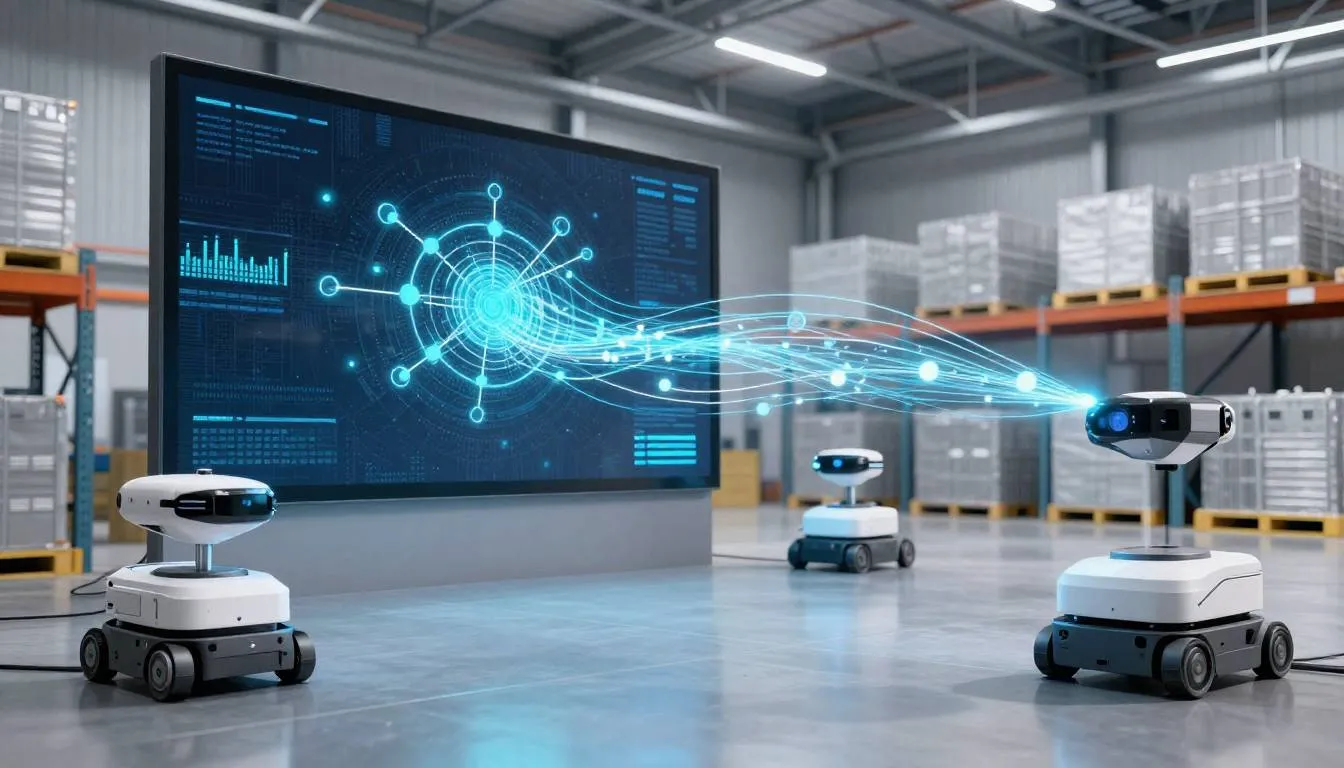
Physical AI Agents: When n8n Leaves the Screen
From Digital Labor to Physical Orchestration in 2026
🔑 Key Takeaways
- Physical AI (2026) marks the shift from software-only automation to AI agents that control real-world machines
- n8n workflows are evolving from moving data to orchestrating robots, drones, and autonomous systems
- This is Robotic Process Automation 2.0—context-aware, agentic, and event-driven
- “Vibe triggers” (social trends, demand spikes, environmental signals) now influence physical decisions
- Manufacturers, logistics leaders, and retailers that ignore Physical AI risk slower response times and higher costs
- Case Study: Unilever uses agentic physical crews to reroute autonomous containers in real time
What Happens When Your Workflow Grows Hands?
Imagine this.
Your n8n workflow detects a sudden spike in demand in one city.
A viral TikTok trend.
A weather alert.
A supply hiccup halfway across the world.
Instead of:
- Sending a Slack alert
- Updating a dashboard
- Creating a Jira ticket
It does something else.
It moves inventory.
It reroutes a container.
It dispatches a robot.
No human approval loop.
No swivel-chair operations.
Just action.
This is the moment when automation stops being digital labor—and becomes physical orchestration.
Welcome to Physical AI Agents.
The Problem: Digital Automation Hit a Ceiling
Why Automation Feels “Stuck” in Manufacturing and Logistics
For the last decade, automation has lived on screens.
We automated:
- File transfers
- Data syncs
- Notifications
- Reports
- Tickets
Tools like RPA and workflow builders (including n8n) did their job well.
But here’s the uncomfortable truth for manufacturing leaders, logistics managers, and retail innovators:
Your biggest problems don’t live in software. They live in the physical world.
Examples:
- Inventory in the wrong location
- Robots idle while demand spikes elsewhere
- Containers stuck on inefficient routes
- Warehouses reacting hours—or days—too late
Digital automation can observe these issues.
But it can’t fix them.
And if you ignore this gap:
- Response times lag behind competitors
- Forecast accuracy doesn’t translate into action
- Labor and fuel costs creep up
- AI insights die in dashboards instead of driving outcomes
This is where traditional automation breaks down.
The Breakthrough: Physical AI Agents
What Is Physical AI?
Physical AI refers to AI agents that:
- Perceive digital and real-world signals
- Make autonomous decisions
- Directly control physical systems
Think:
- Warehouse drones
- Autonomous forklifts
- Retail service bots
- Smart containers
- Industrial robots
In 2026, AI agents aren’t just analyzing operations.
They’re executing them.
Why n8n Is at the Center of This Shift
n8n started as a flexible automation tool for APIs, data, and apps.
Now, it’s becoming something bigger:
A control plane between AI decision-making and physical execution.
With:
- IoT integrations
- Event-driven triggers
- Agentic logic layers
An n8n IoT Agent can now:
- Listen to sensors
- React to external data (weather, demand, social signals)
- Trigger actions in robotic systems
This is why we’re moving from Digital Labor → Physical Orchestration.
Robotic Process Automation 2.0
Why RPA Had to Evolve
Classic RPA:
- Rule-based
- Fragile
- Screen-dependent
RPA 2.0 (powered by Physical AI):
- Context-aware
- Event-driven
- Autonomous
Key differences:
| Old RPA | Physical AI (2026) |
|---|---|
| Clicks buttons | Moves machines |
| Static rules | Adaptive agents |
| Software-only | Cyber-physical |
| Reactive | Predictive + proactive |
This isn’t automation faster.
It’s automation alive.
The Role of “Vibe Triggers”
Here’s where things get interesting.
Not all triggers are operational.
Some are… cultural.
What Are Vibe Triggers?
“Vibe” triggers are soft signals like:
- Social media trends
- Regional sentiment
- Cultural moments
- Sudden shifts in consumer behavior
Example:
- A TikTok trend spikes demand for a product in one city
- AI detects it before sales data catches up
- Physical AI agents respond immediately
This is how Connected Ecosystems outperform siloed ones.
Solution Framework: How to Move from Digital to Physical AI
Let’s break this down into actionable steps.
Step 1: Treat AI as an Operator, Not an Analyst
What to Do
Stop limiting AI to forecasting and insights.
Instead, give it:
- Authority
- Guardrails
- Clear objectives
Why It Works
AI predictions without execution are just expensive opinions.
When agents can act, insight turns into impact.
Step 2: Use n8n as the Orchestration Layer
What to Do
Position n8n as:
- The bridge between AI logic and physical systems
- A coordinator across APIs, IoT devices, and robots
Typical flow:
- AI model detects event
- n8n workflow evaluates context
- Decision node selects action
- Physical system executes
How to Apply It
- Integrate IoT sensors and robotics APIs
- Use conditional logic for safety and compliance
- Log every action for auditability
For teams exploring advanced automation patterns, SaaSNext’s resources on agentic workflows offer deeper guidance:
- https://saasnext.in/blog/agentic-workflows (internal reference)
Step 3: Design for Autonomy—But Keep Humans in the Loop
What to Do
Define levels of autonomy:
- Fully autonomous (low risk)
- Human-approved (medium risk)
- Human-directed (high risk)
Why It Works
Physical AI doesn’t mean removing humans.
It means:
- Humans set intent
- Agents handle execution
This balance builds trust across ops teams.
Step 4: Build Connected Ecosystems, Not Point Solutions
Physical AI thrives on context.
That means connecting:
- Demand signals
- Supply data
- Weather APIs
- Social platforms
- Robotics systems
Disconnected systems create blind spots.
Connected ecosystems create leverage.
Case Study: Unilever’s Agentic Physical Crews
The Challenge
Unilever operates one of the world’s most complex supply chains.
Problems included:
- Rapid demand shifts
- Weather disruptions
- Regional trends changing overnight
Traditional forecasting wasn’t enough.
The Solution
Unilever deployed Agentic Physical Crews:
- AI models predict demand and disruptions
- n8n workflows orchestrate responses
- Autonomous containers (via Maersk systems) reroute shipments in real time
Inputs included:
- Live weather data
- Port congestion
- Local “vibe” signals (social trends, regional sentiment)
The Result
- Faster response to demand spikes
- Reduced spoilage and delays
- Lower manual intervention
- A supply chain that moves at the speed of culture
This is Autonomous Logistics in practice.
Where SaaSNext Fits Into Physical AI
As organizations move into Physical AI, they face new challenges:
- Governance
- Observability
- Agent coordination
SaaSNext helps teams:
- Deploy AI agents responsibly
- Orchestrate workflows across digital and physical systems
- Maintain visibility and control as autonomy increases
For manufacturers and retailers, this isn’t about adding complexity.
It’s about making autonomy manageable.
Learn more at: https://saasnext.in/
Risks to Watch (And How to Avoid Them)
Physical AI is powerful—but not careless.
Watch out for:
- Over-automation without safeguards
- Poor data quality feeding agents
- Lack of rollback mechanisms
Mitigations:
- Simulation before deployment
- Clear escalation paths
- Continuous monitoring
Autonomy without governance is chaos.
What This Means for Leaders
Manufacturing Leaders
- Faster plant-level decisions
- Better asset utilization
- Reduced downtime
E-commerce Logistics Managers
- Real-time routing
- Demand-responsive fulfillment
- Lower last-mile costs
Retail Innovators
- Inventory that follows culture
- Stores that respond dynamically
- Experiences that feel “alive”
The Bigger Picture: Software Is Escaping the Screen
We’ve crossed a threshold.
Software no longer just:
- Tracks
- Reports
- Notifies
It:
- Moves
- Acts
- Decides
In 2026, the most competitive organizations won’t just automate workflows.
They’ll orchestrate reality.
Final Thoughts: The Age of Physical Orchestration Has Begun
When n8n leaves the screen, everything changes.
AI stops being a back-office assistant
and becomes a frontline operator.
The question isn’t if Physical AI will arrive.
It’s whether your systems—and your mindset—are ready.
If this opened new possibilities:
- 👉 Share this with your ops or innovation team
- 👉 Subscribe for more insights on Physical AI and autonomous systems
- 👉 Explore how SaaSNext helps organizations adopt agentic automation—safely and at scale
The future of automation isn’t digital.
It’s physical.