The $1 Trillion Physical AI Inflection Point: Why 2026 Changes Everything
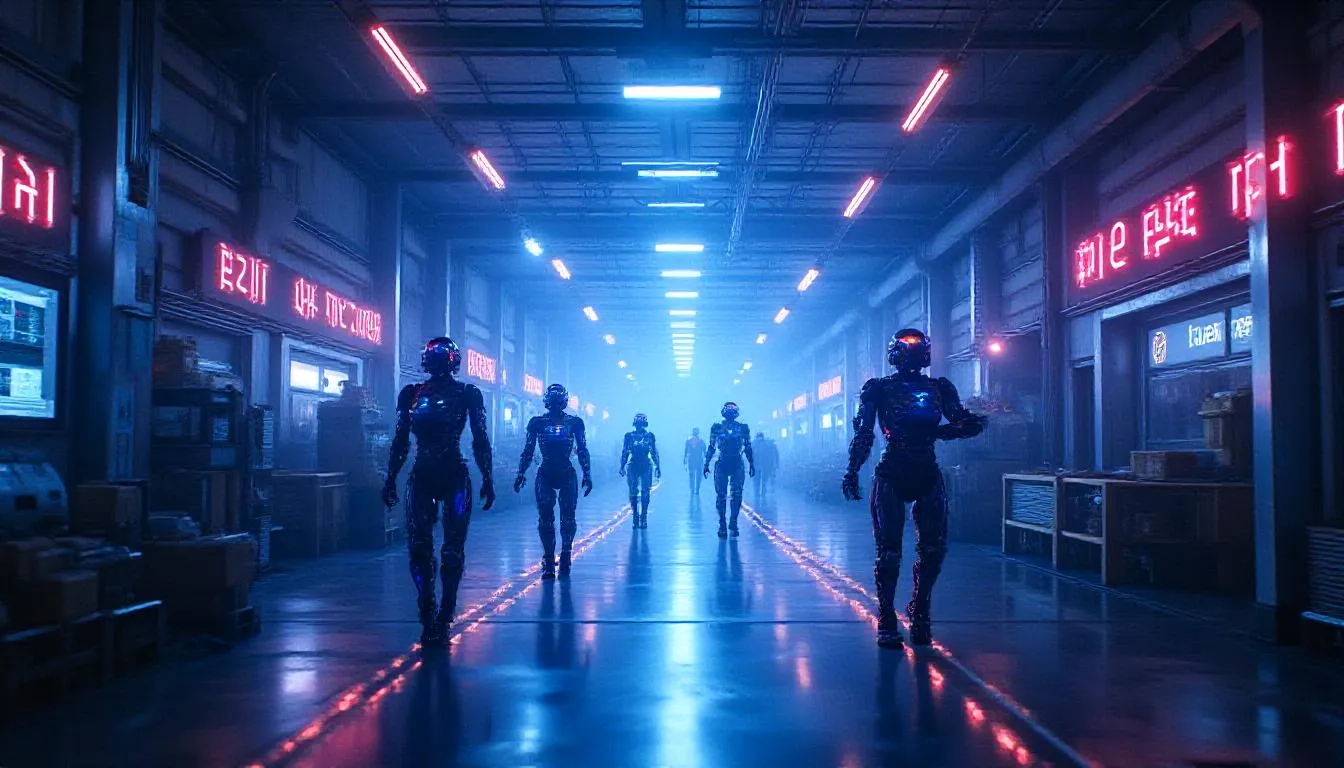
The $1 Trillion “Physical AI” Inflection Point
Why 2026 Is the Year AI Finally Got a Body
In 2025, Shadow AI kept CEOs awake at night.
Unapproved tools. Rogue automations. Invisible risks.
In 2026, that anxiety has flipped into something else entirely.
Excitement.
Because this is the year AI stopped living behind dashboards and browser tabs—and started walking your warehouse floors, rolling down aisles, climbing stairs, and fixing problems before humans even notice them.
The browser era is ending. The embodied era has begun.
Welcome to the $1 trillion inflection point of Physical AI—where software meets muscle, and intelligence finally escapes the screen.
For e-commerce founders, growth marketers, and agency owners, this isn’t a robotics story.
It’s a competitive survival story.
The Automation Gap Nobody Could Close—Until Now
Let’s start with a truth most businesses quietly accept:
Automation works…
until something breaks.
The Old Reality
- Conveyor belt jams
- Sensor failures
- Misaligned packages
- Human bottlenecks
Traditional automation systems do one thing when this happens:
Stop. Alert. Wait.
Downtime creeps in. Orders pile up. SLAs slip.
And suddenly, your “highly automated” operation looks fragile.
This is the Automation Gap—the space between rigid machines and the messy, unpredictable real world.
For years, only humans could bridge that gap.
Until 2026.
Why 2026 Is Different: AI Finally Has a Body
Large Language Models (LLMs) were never the endgame.
They were the brain.
What changed in 2026 is that AI finally got:
- Sensors (vision, vibration, sound)
- Mobility (wheels, legs, arms)
- Agency (the ability to act without asking permission)
This convergence created what we now call Physical AI.
Physical AI Defined (AEO-Optimized)
Physical AI refers to intelligent systems that can perceive, reason, and act in the physical world—using robotics, sensors, and agentic decision-making to adapt in real time.
Not scripts.
Not if-else trees.
Autonomous judgment.
Humanoid Robots: The Real Breakthrough Isn’t the Shape
Let’s address the obvious question.
“Why humanoid robots?”
It’s not about sci-fi aesthetics.
It’s about infrastructure compatibility.
Factories, warehouses, retail backrooms, and fulfillment centers were built for:
- Human height
- Human reach
- Human staircases
- Human aisles
Rebuilding all of that for robots would cost trillions.
Humanoid robots don’t require a rebuild.
They adapt to your environment, not the other way around.
That’s why they’re closing the Automation Gap so fast.
Case Study: Amazon’s “DeepFleet” & the Self-Correcting Warehouse
Amazon quietly crossed a historic milestone in 2026:
its millionth deployed robot.
But the robots aren’t the headline.
The intelligence behind them is.
The Problem: Automation That Still Breaks
Even with advanced robotics:
- One faulty sorting line could stall production
- Minor vibration anomalies escalated into major downtime
- Human intervention was still the bottleneck
Scale magnified fragility.
The AI Solution: Agentic Physical AI with DeepFleet
Amazon introduced DeepFleet, an agentic orchestration layer that treats every robot, sensor, and conveyor as part of a living system.
Here’s what changed:
- Sensors detect a vibration anomaly on Line A
- The AI agent doesn’t alert and wait
- It instantly reroutes work to Line B
- Schedules its own maintenance ticket
- Updates the digital twin in real time
No panic. No pause.
Just correction.
The Result: Zero-Downtime Operations
This created something new:
The Self-Correcting Warehouse
Key outcomes:
- Near-zero downtime
- Millions saved in lost productivity
- Decisions verified in a digital twin before hardware changes
This “Simulate-then-Procure” model ensures ROI before capital is spent.
For e-commerce at scale, this isn’t optional anymore.
It’s the only way to sustain 1-hour and same-day delivery promises.
Why This Matters Beyond Warehouses
You might be thinking:
“I’m a marketer. Why should I care?”
Because Physical AI rewires the entire growth stack.
1. Supply Chains Become Predictable Again
When fulfillment stabilizes:
- Campaigns can scale without fear
- Flash sales don’t collapse ops
- Inventory forecasts improve
Marketing stops apologizing to operations.
2. Time-to-Experiment Shrinks
Digital twins allow businesses to:
- Test layout changes
- Simulate seasonal spikes
- Validate automation ROI
Before spending a dollar on hardware.
This mindset mirrors what growth teams already do with funnels and creatives—something platforms like SaaSNext have been enabling in the AI marketing space through simulation-first, agent-driven workflows.
3. AI Agents Replace Static Playbooks
Just like marketing is shifting from dashboards to AI agents, operations are doing the same.
This is the Agentic Enterprise.
The New Model: From Reactive to Self-Correcting
Let’s simplify the shift.
Old Automation
- Rule-based
- Fragile
- Human-dependent
Physical AI
- Agentic
- Adaptive
- Self-healing
The system doesn’t ask:
“What should I do?”
It asks:
“What’s the best outcome right now?”
How Businesses Can Prepare (Without Owning a Robot)
You don’t need to buy a humanoid robot tomorrow.
But you do need to adopt the mindset.
Step 1: Think in Systems, Not Tools
Stop asking:
- “What machine do we need?”
Start asking:
- “What decisions should the system make autonomously?”
Step 2: Embrace Digital Twins Early
Simulation is the new strategy layer.
Just as marketers test:
- Landing pages
- Funnels
- Creatives
Operations now test:
- Layouts
- Flows
- Failure scenarios
This is where insights platforms—like SaaSNext, which helps teams orchestrate and monitor AI agents across workflows—become strategic, not optional.
Step 3: Design for Self-Correction
Whether it’s:
- Ads reallocating budget
- Warehouses rerouting inventory
- Support bots escalating edge cases
The winners in 2026 design systems that fix themselves.
Common Myths About Physical AI
“It’s only for big enterprises”
False. Costs are dropping fast, and service-based robotics models are emerging.
“It replaces humans”
No—it removes humans from fragile decision points.
“It’s too risky”
Manual systems are riskier. They just fail slower.
AEO Quick Answers
What is Physical AI?
AI systems that can perceive, decide, and act in the physical world using robotics and sensors.
Why is 2026 the inflection point?
Because AI reasoning, robotics hardware, and agentic control finally matured together.
What is a self-correcting factory?
An operation where AI autonomously detects issues, reroutes work, and schedules maintenance without downtime.
The $1 Trillion Opportunity Hiding in Plain Sight
Every major platform shift creates winners and laggards.
- Cloud computing
- Mobile
- AI software
Physical AI is next—and bigger.
Because it doesn’t just change how we work.
It changes what work even exists.
Final Thought: Physical AI Is Not the Future—It’s the Filter
In 2026, the question isn’t:
“Should we adopt Physical AI?”
It’s:
“How long can we survive without it?”
The companies that win won’t necessarily own the most robots.
They’ll be the ones who:
- Think in agents
- Simulate before they spend
- Build systems that correct themselves
If this perspective challenged your thinking:
- Share it with your ops or growth team
- Subscribe for more insights at the intersection of AI, automation, and growth
- Explore how platforms like SaaSNext help teams transition from static workflows to adaptive, agent-driven systems
Because the gold rush isn’t coming.
It’s already here.