The MCP Revolution: Why Backends Need an AI Interface in 2026
The “MCP” Revolution: Why Your Backend Needs an AI Interface in 2026
🔑 Key Takeaways
- 2026 marks the shift from API-first backends to AI-interface-first backends
- The Model Context Protocol (MCP) is becoming the “language” backends use to talk to AI agents
- Traditional APIs are optimized for humans and services — not for reasoning models
- MCP enables agentic backends that can explain, validate, and evolve themselves
- Tools like Cursor MCP, Inforce AI, and AI-native infrastructure unlock 10x developer velocity
- Case study: Inforce’s MCP allowed Cursor to design, build, and deploy a complex app in under 20 minutes
- Platforms like SaaSNext help teams operationalize agentic systems responsibly
What If Your Backend Could Explain Itself?
Let’s start with a question that makes most backend engineers uneasy.
If an AI agent looked at your backend today…
Would it understand it — or just poke it?
Because in 2026, that question isn’t theoretical anymore.
Your next:
- Developer
- Automation agent
- CI bot
- Autonomous coding system
Isn’t a human.
It’s an LLM.
And if your backend can’t talk back — clearly, safely, and contextually — you’re about to become the bottleneck.
Welcome to the MCP revolution.
The Problem: APIs Were Built for Requests, Not Reasoning
Why Backends Struggle in an Agentic World
Modern backends are incredible at one thing:
Responding to structured requests with predictable outputs.
But AI agents don’t work like traditional clients.
They:
- Explore systems
- Ask follow-up questions
- Need context, not just responses
- Reason across endpoints and schemas
From an agent’s perspective, most backends look like:
- A maze of undocumented routes
- Implicit business rules buried in code
- Schemas without intent
- Errors without explanation
So what happens?
- AI agents hallucinate how your system works
- Tools like Cursor make unsafe assumptions
- Dev velocity stalls after the “wow” moment
- Humans step back in to translate
This isn’t an AI problem.
It’s a backend interface problem.
Ignore This, and You’ll Feel the Pain Fast
Teams that don’t adapt will see:
- Slower AI-assisted development
- Broken automations
- Security and compliance risks
- AI tools restricted instead of embraced
The irony?
You’ll have the smartest AI models…
…and the least usable backend.
The Shift: From APIs to AI Interfaces
Here’s the mindset change happening right now:
APIs are for machines.
MCP is for intelligence.
The Model Context Protocol (MCP) isn’t just another spec.
It’s a contract that answers:
- What does this system do?
- What are the rules?
- What should never happen?
- How should I reason about change?
This is what enables an agentic backend.
What Is MCP (In Plain Terms)?
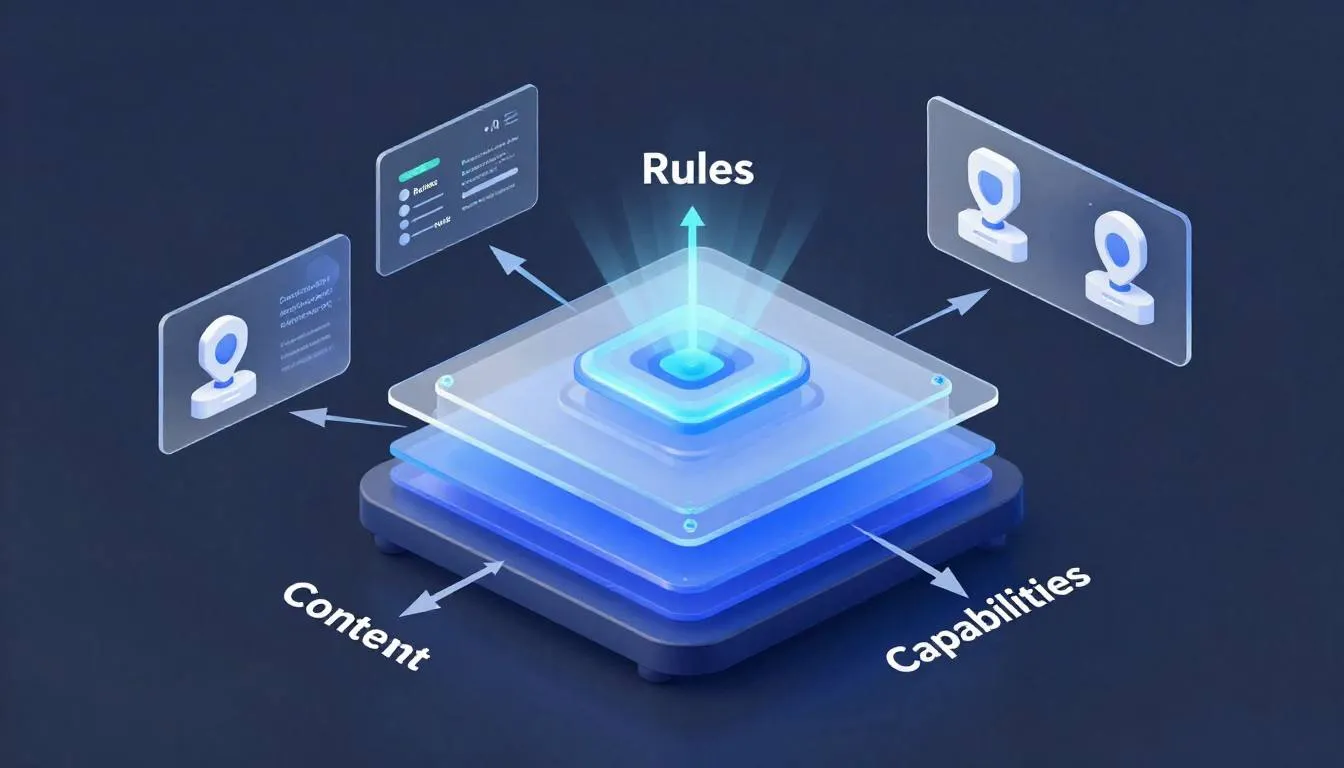
Model Context Protocol (MCP) is a structured way for backends to expose:
- Capabilities
- Constraints
- Semantics
- Intent
So AI tools don’t guess.
They understand.
Instead of:
“Here’s an endpoint. Good luck.”
You get:
“Here’s what this service is for, how to use it safely, and when not to.”
That’s the leap.
Why MCP Is Inevitable in 2026
Three forces are converging:
1. Cursor-Style AI Development Is Becoming Default
Developers now expect:
- Prompt → Code
- Context-aware refactors
- Safe deployments
Without MCP, these tools plateau fast.
2. Agentic Systems Need Guardrails
Autonomous agents:
- Deploy code
- Modify infra
- Trigger workflows
They must understand system boundaries.
That’s governance — as code.
3. Backends Are Becoming Living Systems
With AI agents inside:
- Code evolves faster
- Infra changes more often
- Human review can’t scale linearly
MCP provides machine-readable understanding.
Case Study: Inforce AI + Cursor MCP
A video demonstration by Inforce made something very clear.
Using Inforce AI’s MCP, Cursor was able to:
- Understand backend capabilities
- Navigate business logic safely
- Generate compatible services
- Deploy a complex app
All in under 20 minutes.
Not because Cursor got “smarter” — but because the backend finally spoke its language.
This is the unlock.
What an Agentic Backend Looks Like
Let’s break it down.
Traditional Backend
- Endpoints
- Schemas
- Docs (maybe)
- Tribal knowledge
MCP-Enabled Backend
- Machine-readable intent
- Explicit constraints
- Versioned semantics
- AI-safe affordances
To an AI agent, this feels like:
“I know what I can do here — and what I shouldn’t.”
The Real Value: Fewer Hallucinations, Faster Shipping
MCP dramatically reduces:
- Misuse of endpoints
- Invalid assumptions
- Risky code generation
And increases:
- Autonomous coding confidence
- Safe refactoring
- Continuous deployment
This is AI-native infrastructure in practice.
How MCP Changes Backend Architecture
1. APIs Gain Meaning
Endpoints are no longer just functions.
They have:
- Purpose
- Preconditions
- Side effects
AI agents reason with them.
2. Governance Becomes Executable
Rules aren’t buried in wikis.
They’re enforced automatically.
This is AI governance-as-code.
3. Backends Become Composable by Intelligence
Agents can:
- Chain services
- Validate outcomes
- Adapt flows
Without brittle glue code.
Where SaaSNext Fits In
As organizations move toward agentic systems, they face a real challenge:
How do you scale AI adoption without losing control?
SaaSNext helps teams:
- Deploy AI agents responsibly
- Connect marketing, ops, and backend systems
- Maintain governance while moving fast
Their work on AI automation and orchestration provides a strong foundation for teams exploring MCP and agentic backends:
Later-stage teams use SaaSNext to ensure AI systems remain:
- Observable
- Secure
- Business-aligned
Explore more: https://saasnext.in/
How to Prepare Your Backend for MCP
Step 1: Document Intent, Not Just Interfaces
Ask:
- Why does this service exist?
- What should never happen?
- What assumptions does it rely on?
Write that for machines.
Step 2: Externalize Rules
Move:
- Validation logic
- Constraints
- Safety checks
Into declarative, inspectable layers.
Step 3: Treat AI as a First-Class Client
Design as if:
- An LLM is your most frequent user
- It will misunderstand unless guided
Because it will.
Step 4: Start Small
You don’t need full MCP overnight.
Begin with:
- Critical services
- High-risk operations
- AI-assisted workflows
Build confidence incrementally.
MCP vs “Just Better Docs”
This is important.
MCP is not:
- Better Swagger
- Longer README files
- More comments
It’s:
- Structured
- Machine-consumable
- Enforceable
Docs inform humans.
MCP guides intelligence.
The Bigger Picture: Backends as Collaborators
In 2026, your backend isn’t just serving requests.
It’s:
- Collaborating with AI agents
- Guiding autonomous systems
- Enforcing policy in real time
This is why the backend now needs an interface for intelligence.
Final Thoughts: MCP Is the New API Layer
Every platform shift introduces a new interface.
- GUIs enabled humans
- APIs enabled services
- MCP enables intelligence
CTOs and architects who get this early will:
- Ship faster
- Break less
- Trust AI more
Those who don’t will be stuck “supervising” tools that should already understand their systems.
If this sparked ideas:
- 👉 Share it with your backend or platform team
- 👉 Subscribe for deep dives into AI-native infrastructure
- 👉 Explore how SaaSNext helps teams operationalize agentic systems safely
The future backend doesn’t just respond.
It explains itself.