The Silicon Workforce: How Multi-Agent Systems (MAS) Are Redefining Work in 2026
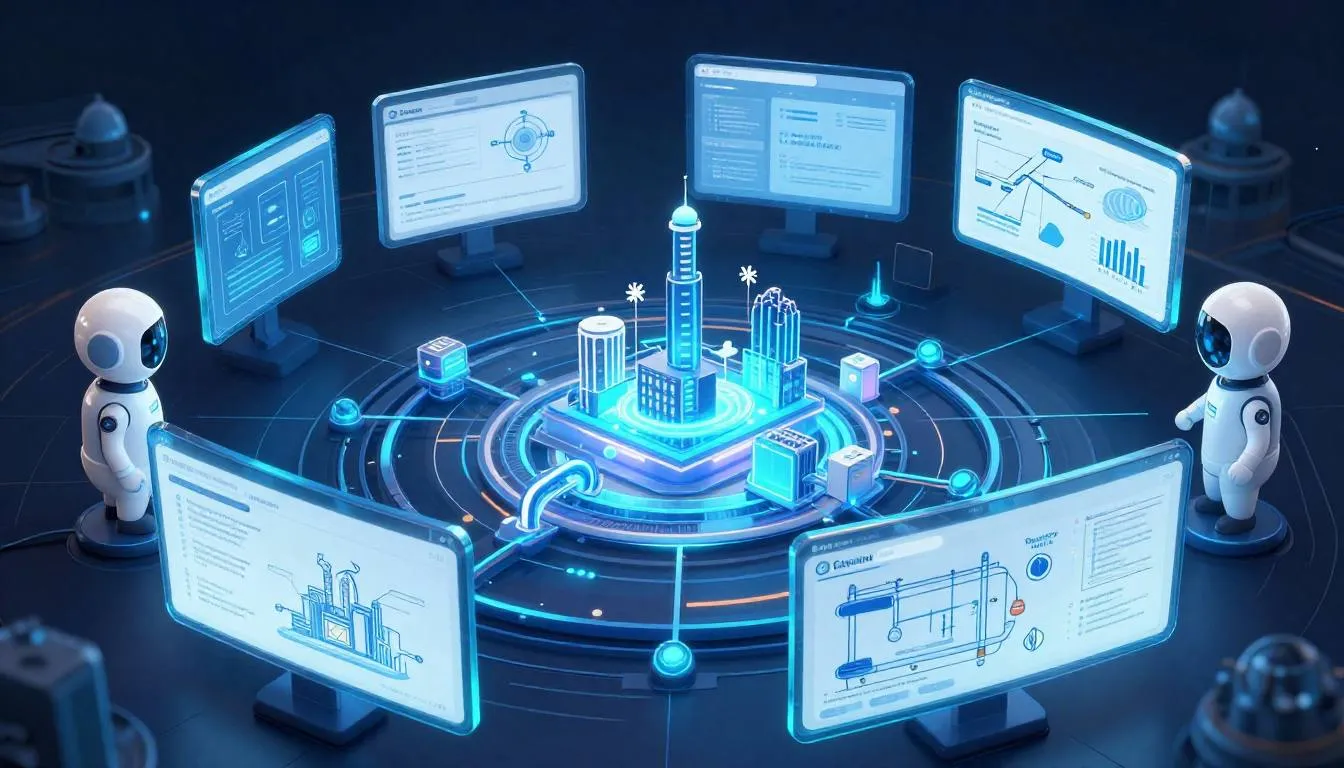
The “Silicon Workforce”: Orchestrating the Power of the Swarm
In 2025, you hired a chatbot. In 2026, you’re managing a swarm.
Welcome to the era of Multi-Agent Systems (MAS)—where work is no longer done by single tools, but by coordinated fleets of autonomous AI agents acting as a true digital workforce.
🔑 Key Takeaways
- The future of operations is not single AI agents, but coordinated AI swarms
- Multi-Agent Systems (MAS) outperform linear automation in speed, resilience, and adaptability
- Managing AI now looks more like orchestrating teams than deploying tools
- n8n AI swarms are becoming the backbone of agentic orchestration
- Without governance, AI swarms create chaos—not leverage
- Companies like Foxconn are already using agentic swarms to optimize both hardware and logistics in real time
- The winning organizations treat AI as a workforce, not software
When Automation Stops Feeling… Simple
Let’s start with a moment every COO and operations leader recognizes.
You invested in automation to reduce complexity.
You added AI tools to move faster.
You deployed bots to cut costs.
And yet… operations feel more complex than ever.
There are more dashboards.
More systems talking to each other.
More “smart” tools—but less clarity on who’s doing what.
Here’s the uncomfortable truth:
You didn’t just automate tasks.
You accidentally hired a silicon workforce.
And now, you’re responsible for managing it.
The Problem: Linear Automation Breaks at Scale
Why Traditional Automation Hits a Wall
Most companies still think about automation in straight lines:
Trigger → Action → Output
That worked when systems were predictable.
But in 2026:
- Markets shift in real time
- Supply chains reroute hourly
- Customer behavior changes mid-campaign
- Decisions depend on dozens of signals at once
Linear automation can’t keep up.
It’s brittle.
It’s slow to adapt.
And it collapses when assumptions change.
The Real Pain Leaders Feel
- Automation tools conflict with each other
- Decisions get stuck in approval loops
- Teams don’t trust AI outputs
- Optimization becomes reactive instead of proactive
Ignore this, and the cost isn’t theoretical:
- Missed production targets
- Wasted operational spend
- Slower innovation cycles
- Humans stuck “babysitting” automation
This is where Multi-Agent Systems (MAS) enter the picture.
What Is the “Silicon Workforce”?
From Tools to Teammates
A Silicon Workforce is a network of autonomous AI agents that:
- Specialize in specific tasks
- Communicate with each other
- Coordinate decisions
- Adapt based on shared outcomes
This is the essence of Multi-Agent Systems (MAS).
Instead of one AI doing everything poorly, you have:
- Planner agents
- Executor agents
- Validator agents
- Optimizer agents
Each with a role.
Each with boundaries.
Each contributing to the whole.
Think less “bot.”
Think more team.
Why 2026 Is the Tipping Point for MAS
Three forces are converging right now:
1. Agentic AI Is Mature
Modern agents can:
- Set sub-goals
- Reason about trade-offs
- Learn from feedback
- Collaborate asynchronously
2. Orchestration Tools Have Evolved
Platforms like n8n AI swarms allow:
- Visual agent coordination
- Event-driven decision making
- Cross-system communication
- Human-in-the-loop checkpoints
3. Operations Demand Real-Time Adaptation
Static workflows can’t handle:
- Live demand shifts
- Global logistics disruptions
- Rapid design iterations
Together, these forces make Agentic Orchestration inevitable.
The Core Shift: From Automation to Orchestration
Automation Asks: “What Happens Next?”
Orchestration Asks: “Who Should Handle This?”
That’s the mindset change.
In Digital Workforce Management, your job is no longer:
- Designing perfect workflows
It’s now:
- Designing interaction rules between agents
This is where MAS shine.
How Multi-Agent Systems (MAS) Actually Work
Let’s make this practical.
A typical MAS includes:
🧠 Specialized Agents
- Forecasting agents
- Optimization agents
- Monitoring agents
- Execution agents
Each agent:
- Has a narrow mandate
- Optimizes for a specific outcome
- Reports results back to the swarm
🔁 Feedback Loops
Agents continuously:
- Share outcomes
- Adjust strategies
- Improve collective performance
🧭 Orchestration Layer
This layer:
- Resolves conflicts
- Sets priorities
- Applies governance rules
Tools like n8n act as the nervous system—routing signals between agents and humans.
Case Study: Foxconn’s Agentic Swarms
The Challenge
Foxconn faced two interconnected problems:
- Chip design cycles were slowing
- Logistics complexity was exploding
Traditional automation created silos.
The Shift
By 2026, Foxconn moved to Agentic Swarms:
- Design agents optimized chip layouts
- Simulation agents tested performance
- Supply agents adjusted sourcing in real time
- Logistics agents rerouted components dynamically
The key innovation?
Feedback loops.
Smarter agents designed better hardware.
Better hardware enabled smarter agents.
The Result
- Faster design iterations
- Reduced supply chain latency
- Continuous optimization across physical and digital systems
This is Federated AI Models in action—distributed intelligence, unified outcomes.
How to Build Your Own Silicon Workforce
You don’t need Foxconn’s scale to start.
Here’s a practical roadmap.
Step 1: Identify Swarm-Worthy Problems
Good candidates:
- Complex decision spaces
- High variability
- Multiple competing goals
Examples:
- Inventory optimization
- Campaign orchestration
- Demand forecasting
- Pricing optimization
Bad candidates:
- Simple, static tasks
- One-off automations
Step 2: Break Work Into Agent Roles
Instead of “one AI,” define roles:
- Scout agents gather data
- Planner agents propose actions
- Executor agents take action
- Auditor agents validate outcomes
This mirrors human team structures—and scales better.
Step 3: Orchestrate with n8n AI Swarms
This is where orchestration platforms matter.
Using tools like n8n, teams can:
- Coordinate agent interactions visually
- Set escalation rules
- Add human approval where needed
- Maintain observability across the swarm
For teams exploring AI-driven operations and orchestration, SaaSNext’s resources on agent workflows provide deeper context:
Step 4: Govern the Swarm (Seriously)
Ungoverned swarms create:
- Conflicting decisions
- Resource waste
- Hidden risks
Best practices:
- Clear decision boundaries
- Confidence thresholds for escalation
- Logging and traceability
- Human-in-the-loop for high-impact actions
This is Digital Workforce Management, not “set and forget.”
Where SaaSNext Fits In
As AI swarms move from experimentation to operations, teams need platforms that balance:
- Speed
- Control
- Consistency
SaaSNext helps organizations adopt AI marketing and operations agents responsibly by:
- Standardizing agent behavior
- Maintaining governance across workflows
- Aligning automation with business goals
It’s not about adding more agents—it’s about managing them well.
Learn more at: https://saasnext.in/
Common Mistakes When Adopting MAS
❌ Treating Agents Like Tools
Agents need autonomy and constraints.
❌ Centralizing Everything
Decentralization is the point. Orchestration ≠ control.
❌ Ignoring Human Roles
Humans become:
- Supervisors
- Strategists
- Value arbiters
Not button-pushers.
The New Role of Leaders in the MAS Era
COOs and founders now manage:
- Humans
- Machines
- And the interactions between them
Your competitive advantage isn’t:
“Who has the best AI?”
It’s:
“Who orchestrates intelligence best?”
The Big Picture: The Workforce Has Changed
The workforce of 2026 includes:
- Employees
- Contractors
- AI agents
All contributing value.
The organizations that win will:
- Design clear roles
- Enable collaboration
- Enforce governance
- Trust—but verify—autonomy
That’s the promise of the Silicon Workforce.
Final Thoughts: From Headcount to Headspace
You don’t scale by hiring endlessly.
You scale by multiplying intelligence.
Multi-Agent Systems aren’t a trend. They’re a structural shift.
The question isn’t:
“Should we adopt MAS?”
It’s:
“Are we ready to manage a swarm?”
If this reframed how you think about AI and operations:
- 👉 Share this with your leadership or ops team
- 👉 Subscribe for more insights on agentic orchestration and digital workforces
- 👉 Explore how SaaSNext helps teams deploy AI agents without losing control
Because in 2026, success isn’t about automation.
It’s about orchestration.