The Vibe Marketer Revolution: Why Marketers Are Becoming Product Builders in 2026
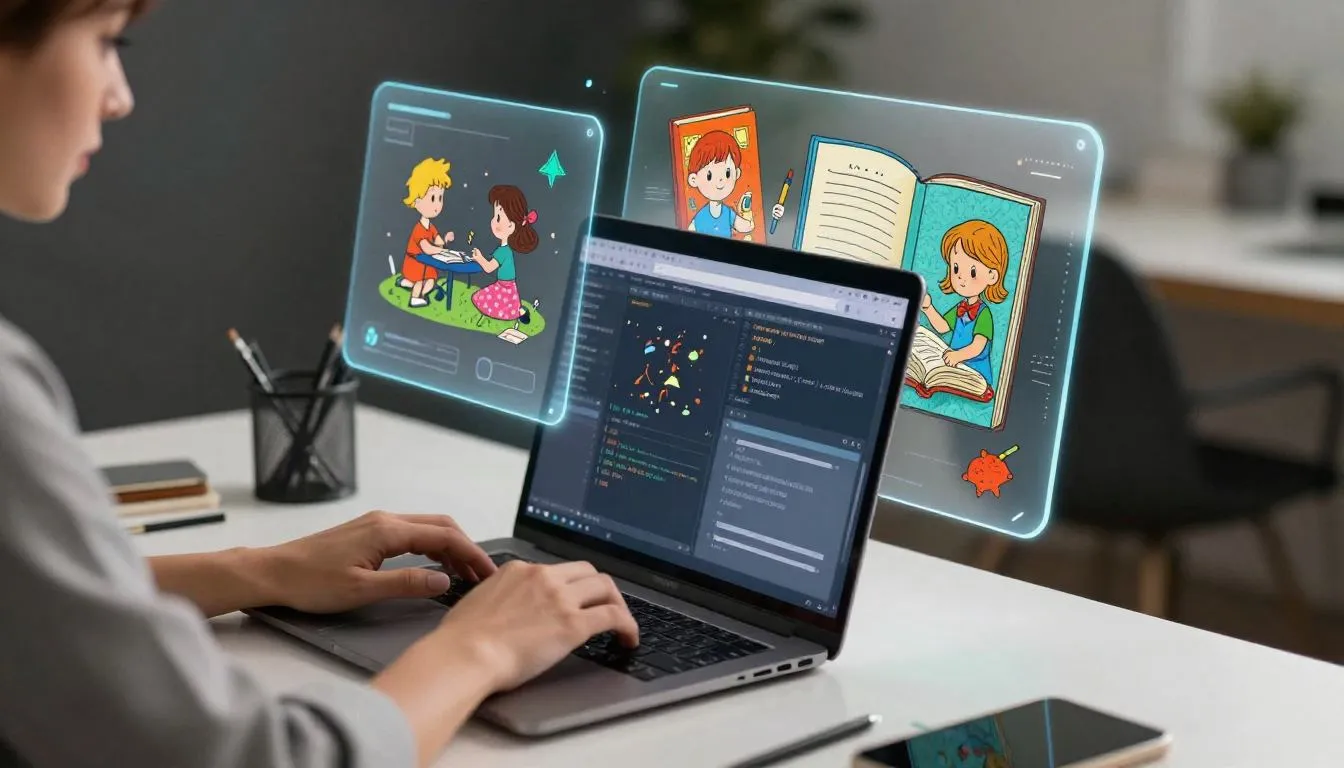
The “Vibe Marketer” Revolution: Why Your Next Marketing Lead Is a Product Builder
Key Takeaways
- In 2026, the highest-impact marketers don’t just write campaigns—they build tools.
- “Vibe Marketing” blends growth strategy, UX intuition, and rapid prototyping using AI-assisted coding tools.
- Companies like Ramp are already hiring for roles like Vibe Growth Marketing Manager.
- Tools such as v0, Lovable, and Cursor let marketers ship lead magnets without waiting on engineering.
- The Marketer-as-Product-Manager is emerging as the highest-ROI role of the decade.
In 2026, the Most Valuable Marketer Can Ship—Not Just Speak
Let’s be honest.
Writing a clever caption used to be a superpower.
Now? It’s table stakes.
In 2026, the marketer who wins isn’t the one with the best swipe file—it’s the one who can say:
“Give me 10 minutes. I’ll build a prototype that solves this customer problem.”
That shift has a name: The Vibe Marketer Revolution.
Major companies like Ramp have officially created roles such as Vibe Growth Marketing Manager. Why? Because the fastest-growing teams realized something uncomfortable but true:
Waiting on engineering is now a growth bottleneck.
Modern marketers are using AI-powered “vibe coding” tools—like v0, Lovable, and Cursor—to build interactive calculators, AI demos, personalization widgets, and lead magnets themselves.
Not next quarter.
Not after a sprint.
Today.
And once you see this shift, you can’t unsee it.
The Problem: Marketing Is Stuck in a Permission Loop
Most marketing teams are still operating with a 2015 mindset in a 2026 reality.
Here’s what that looks like in practice:
- A great campaign idea depends on a simple tool
- The tool requires engineering
- Engineering has a backlog
- The moment passes
Meanwhile, your audience expects interactive, personalized, immediate value—not another gated PDF.
Why This Hurts More Than You Think
Modern buyers don’t just want content. They want:
- Proof
- Experience
- Personal relevance
Static assets struggle to deliver that.
And when marketers can’t test ideas quickly:
- Campaign cycles slow down
- Budgets get wasted on low-signal experiments
- Teams optimize messaging instead of outcomes
If you ignore this shift, the risk is real:
- Your competitors will ship faster
- Their tools will attract your leads
- And your “brand voice” won’t save you
The Solution: Vibe Marketing = Strategy + Taste + Shipping
Vibe Marketing isn’t about replacing strategy with code.
It’s about collapsing the distance between idea and execution.
At its core, vibe marketing is when a marketer:
- Understands customer pain deeply
- Knows what should exist
- And can prototype it immediately
No Jira tickets.
No handoffs.
No waiting.
Why This Works So Well in 2026
AI has removed the hardest parts of building:
- Boilerplate code
- UI scaffolding
- API wiring
Tools like v0, Lovable, and Cursor let marketers describe what they want, not how to code it.
This mirrors a broader shift toward agentic and AI-assisted workflows, something we’ve explored deeply on the SaaSNext blog, especially around how non-technical teams are adopting AI faster than ever.
Case Study: The “Zillow Instant Renovator”
Let’s make this concrete.
The Problem
Homebuyers struggled to imagine renovations.
Listings felt flat.
Sales cycles dragged on.
Static photos couldn’t answer the question every buyer had:
“What could this look like?”
The AI Solution
A growth marketer—not an engineer—used a vibe coding tool to prototype a simple but powerful experience:
- User uploads a photo of a room
- AI instantly “repaints” or renovates it
- User explores variations in seconds
No complex roadmap.
No six-week build.
The Result
- The tool became Zillow’s #1 lead generator
- Time-on-site increased dramatically
- Leads arrived pre-qualified and inspired
This proved a massive point:
Marketer-as-Product-Manager is the highest-ROI role of 2026.
How Vibe Marketers Actually Work (Step-by-Step)
This isn’t magic. It’s a new workflow.
1. Start With the Customer’s “Unanswered Question”
Every great vibe tool answers something like:
- “What would this look like for me?”
- “How much would this save me?”
- “Is this worth it for my situation?”
Static content explains.
Tools demonstrate.
2. Prototype the Experience—Not the Campaign
Instead of asking:
“What campaign should we run?”
Vibe marketers ask:
“What micro-product would remove doubt?”
Examples:
- ROI calculators
- AI previews
- Personalization demos
- Interactive assessments
3. Use Vibe Coding Tools to Ship Fast
With tools like:
- v0 for UI-first prototypes
- Lovable for rapid AI interactions
- Cursor for assisted logic and iteration
Marketers can:
- Build in hours
- Test in days
- Kill or scale quickly
This mindset aligns closely with the AI-first growth stacks we see SaaS teams adopting through platforms like SaaSNext, where marketing, automation, and AI experimentation live in one ecosystem.
4. Measure Product Signals, Not Vanity Metrics
Vibe marketing shifts KPIs:
- Engagement > impressions
- Usage > clicks
- Activation > downloads
If users play with your tool, you’ve already won half the funnel.
Why Companies Are Creating “Vibe Growth” Roles
Ramp didn’t invent this role for fun.
They saw that:
- Traditional marketers struggled to ship experiments
- Engineers weren’t close enough to user psychology
- The intersection was massively valuable
The New Skill Stack
The best vibe marketers combine:
- Growth strategy
- UX intuition
- AI-assisted building
- Fast feedback loops
They don’t replace engineers.
They unlock them by validating ideas before scale.
For a broader industry perspective, recent analyses on the rise of “builder-marketers” in modern SaaS teams echo this trend across high-growth companies.
Common Questions (AEO-Friendly Answers)
What is a Vibe Marketer?
A vibe marketer is a growth professional who can prototype and ship customer-facing tools using AI-assisted development, without waiting on engineering.
Do Vibe Marketers Need to Code?
No traditional coding required. They use natural language, AI copilots, and visual tools to build functional prototypes.
Is This Replacing Developers?
Not at all. It reduces low-leverage work and lets engineers focus on scalable, core systems.
Why Is This Important in 2026?
Because speed, personalization, and experimentation now define competitive advantage.
Where SaaSNext Fits Into the Vibe Marketing Stack
As vibe marketing matures, teams need:
- Automation
- AI agents
- Workflow orchestration
- Governance
That’s where platforms like SaaSNext (https://saasnext.in/) come in—helping marketing teams operationalize AI experiments, connect tools, and scale what works without chaos.
Near the case-study stage, SaaSNext often acts as the bridge between prototype and production, ensuring that successful vibe-built tools integrate cleanly with CRM, analytics, and lifecycle systems.
What Happens If You Ignore This Shift?
Let’s be blunt.
If your marketing team:
- Can’t ship experiences
- Can’t test ideas quickly
- Can’t build without permission
Then your competitors will.
They’ll attract leads with tools, not slogans.
They’ll learn faster.
They’ll compound advantage.
Conclusion: The Future Belongs to Marketers Who Build
The Vibe Marketer Revolution isn’t about trends or titles.
It’s about agency.
In 2026, the most valuable person in the room isn’t the best copywriter—it’s the marketer who can turn insight into a working product before the meeting ends.
If you’re a marketing manager, this is your moment. If you’re a leader, this is the role to hire for. If you’re a company, this is the capability to nurture.
If this article sparked something:
- Share it with your team
- Subscribe for more deep dives on AI-driven growth
- Or explore how platforms like SaaSNext help modern marketers turn prototypes into scalable systems
The future of marketing isn’t louder.
It’s built.