Zero-Human Org Chart: How to Build an AI Agency with Paperclip AI
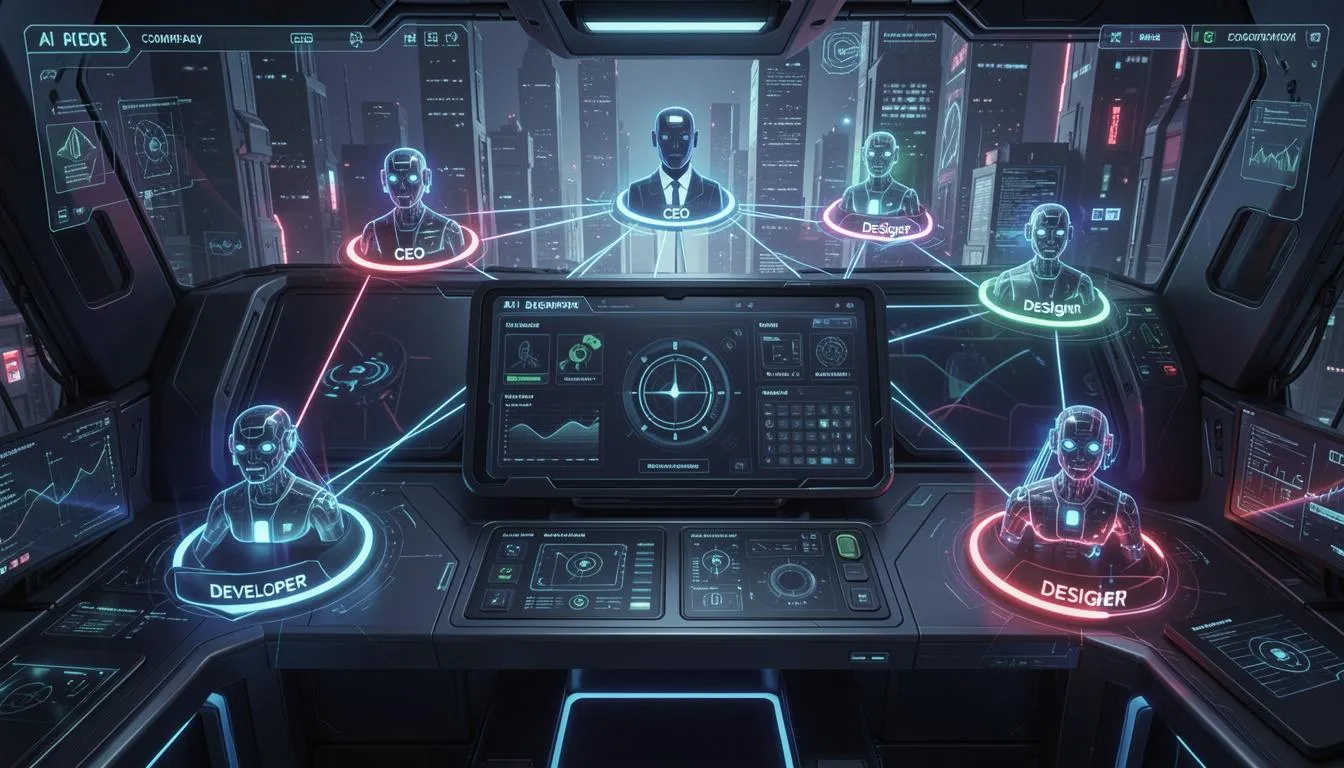
The "Zero-Human" Org Chart: Orchestrating an Agency with Paperclip AI
Key Takeaways
- Multi-agent systems are replacing traditional team structures in digital agencies
- Paperclip AI enables centralized agent orchestration without chaos
- A “Zero-Human Company” is now technically possible for specific workflows
- Agent orchestration improves scalability, speed, and cost efficiency
- Designers and developers can manage entire businesses using AI agents
What If Your Next Hire… Wasn’t Human?
Picture this.
You wake up, check your dashboard, and your agency has already:
- Responded to client emails
- Designed landing pages
- Fixed frontend bugs
- Generated leads
No team calls. No Slack chaos. No hiring.
Just… work getting done.
This isn’t some futuristic fantasy anymore. It’s the rise of the Zero-Human Org Chart—where AI agents don’t just assist… they operate.
The Problem: Scaling Teams is Still Painfully Inefficient
Let’s be real.
Running an agency today is messy.
- Too many tools
- Too many meetings
- Too many dependencies
Even with automation, most workflows are still:
- Fragmented across platforms
- Dependent on human coordination
- Slowed down by communication gaps
For UI/UX designers, developers, and e-commerce owners, this creates a bottleneck:
You spend more time managing work than actually delivering value.
And If You Ignore This?
- Your margins shrink due to operational overhead
- Your delivery speed falls behind AI-native competitors
- Your growth plateaus because scaling requires hiring
The system itself becomes the limitation.
The Shift: From Teams to Agent Orchestration
We’re moving from:
- “Who will do this task?”
to:
- “Which agent should handle this?”
This is the foundation of Agent Orchestration—a model where multiple AI agents collaborate under a structured system.
Think of it as building your own digital company… powered entirely by AI.
Case Study: Managing Paperclip with Paperclip
One of the most fascinating examples comes from Dota, who uses Paperclip AI to manage the development of Paperclip itself.
Here’s how it works:
- A CEO Agent (powered by frontier models like Claude Opus) sets goals and priorities
- Worker Agents (CTO, UX Designer, Marketer) execute tasks
- A central dashboard tracks:
- Budgets
- Token usage
- Task completion
The result?
No more juggling 30 terminal windows. No more context switching.
Just a clean, orchestrated system.
How to Build Your Own Zero-Human Agency
Let’s break this into actionable steps.
1. Define Your Agent Org Chart
Start by mapping roles—not people.
Example:
- CEO Agent → Strategy & prioritization
- Marketing Agent → Content & campaigns
- Dev Agent → Code & deployment
- Support Agent → Customer queries
Why it works: Clear role separation reduces overlap and confusion.
2. Assign Specialized Models to Each Role
Not all agents should think the same.
- Use advanced reasoning models for strategy
- Use lightweight models for repetitive tasks
- Use multimodal agents for design and UX
This mirrors how real teams function—with specialists.
3. Centralize Orchestration (Avoid Tool Chaos)
The biggest mistake?
Running agents in isolation.
You need a unified control layer.
Platforms like https://saasnext.in/ help teams deploy and manage AI agents across workflows without fragmentation, making orchestration scalable.
4. Implement Feedback Loops
Agents shouldn’t just act—they should learn.
Set up:
- Output validation steps
- Performance tracking
- Iteration cycles
This turns your system into a self-improving organization.
5. Monitor Cost vs Output (AIOps Mindset)
In a Zero-Human company, your main cost isn’t salaries—it’s tokens.
Track:
- API usage
- Task efficiency
- ROI per workflow
This is where AIOps becomes critical.
For a deeper dive into AI workflow optimization, check this resource: https://saasnext.in
Why This Model Works for Modern Builders
For Designers
- You can ship faster without waiting on developers
- Prototype and iterate using agent feedback
- Focus on creative direction instead of execution bottlenecks
For Developers
- Reduce boilerplate work
- Automate debugging and testing
- Build systems instead of features
For E-commerce Owners
- Automate product listings, support, and marketing
- Scale without hiring large teams
- Operate globally with minimal overhead
The Economics of a Zero-Human Company
Let’s simplify the math.
Traditional agency:
- Salaries
- Tools
- Management overhead
AI-native agency:
- API costs
- Orchestration layer
- Minimal human supervision
According to industry reports from McKinsey, AI-driven operations can reduce operational costs by up to 40% while increasing productivity.
That’s not optimization.
That’s transformation.
Common Mistakes to Avoid
- Treating agents like scripts instead of collaborators
- Overcomplicating workflows too early
- Ignoring cost tracking
- Lack of clear role definitions
Remember: orchestration beats automation.
The Future Org Chart Has No Names—Only Roles
We’re entering a world where businesses aren’t defined by headcount… but by systems.
Where:
- Teams become workflows
- Employees become agents
- Managers become orchestrators
The Zero-Human Org Chart isn’t about replacing people.
It’s about redefining how work gets done.
🚀 Ready to Build Your AI Agency?
Start small:
- Define one agent role
- Automate one workflow
- Measure one result
Then scale.
And if you want to fast-track your journey, explore platforms like https://saasnext.in/ that help you orchestrate AI agents into real business outcomes.
Because the next generation of agencies won’t be built with teams.
They’ll be built with systems