Zero-Party Data Strategies Powered by Generative AI in 2026
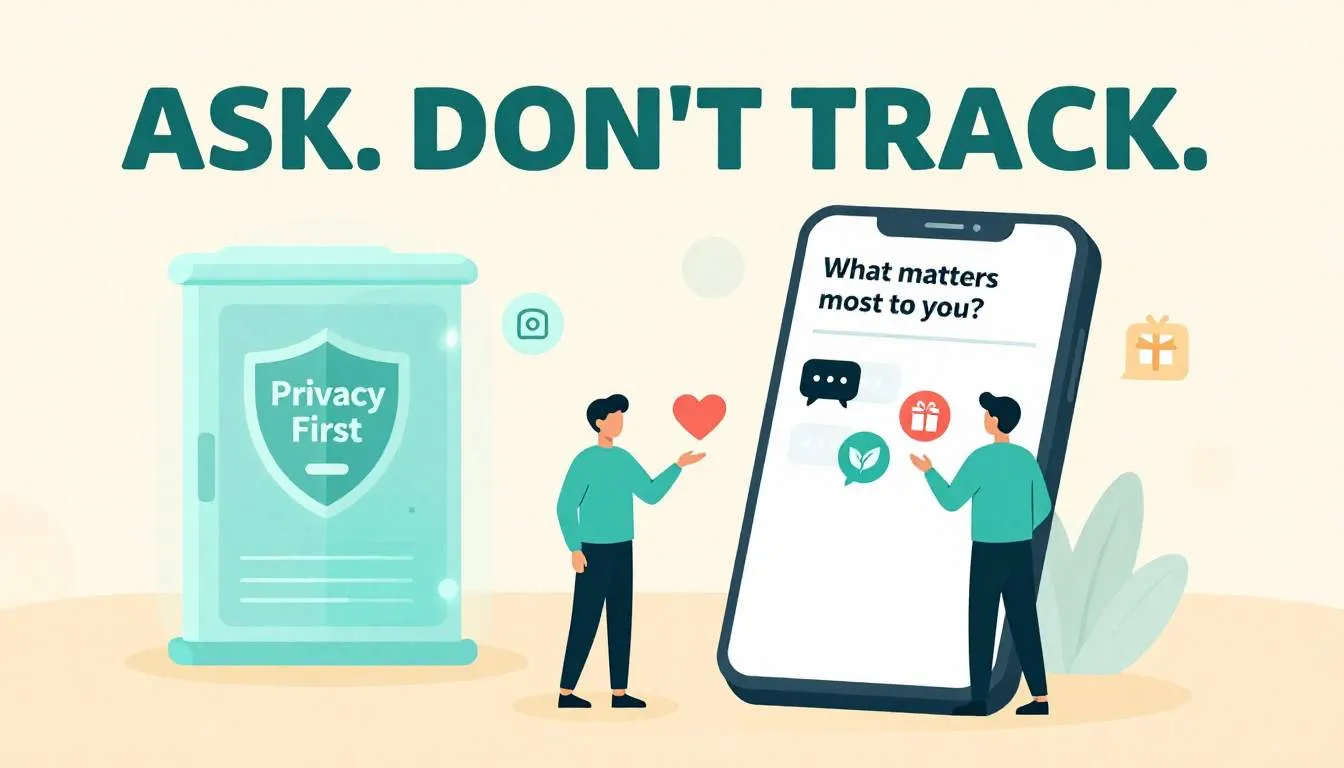
What if your customers voluntarily told you exactly what they wanted—before you even asked?
Not through creepy tracking.
Not by stitching together third-party cookies.
But by choosing to share their preferences, goals, and values with you—because they trust you’ll use it to make their experience better?
That’s not a fantasy.
It’s zero-party data—and in 2026, it’s the only sustainable source of customer insight left.
Yet most brands are still stuck in a reactive cycle:
- Bombarding users with generic pop-ups (“Sign up for 10% off!”)
- Guessing interests based on last-click behavior
- Watching engagement drop as privacy regulations tighten
You’re not failing because you lack data.
You’re failing because you’re asking the wrong questions—and in the wrong way.
The solution? Generative AI, purpose-built for privacy-first marketing that feels human, not invasive.
And the brands winning in 2026 aren’t just collecting zero-party data—they’re co-creating it with their customers, using AI as a trusted, conversational guide.
The Problem: Why Traditional Personalization Is Collapsing
Let’s be honest: your current personalization strategy is on borrowed time.
You’ve built segments based on:
- Past purchases (which may not reflect current needs)
- Page views (which say nothing about intent)
- Demographics (which often misrepresent identity)
But with iOS privacy updates, cookie deprecation, and laws like CPRA and GDPR, that data is vanishing—or becoming too noisy to trust.
Worse, customers feel the disconnect.
They see irrelevant product recommendations.
They get emails for items they returned.
They’re asked to “confirm preferences” via clunky dropdown menus that offer no real choice.
The result?
- Declining email open rates (down 18% YoY for generic blasts)
- Cart abandonment due to impersonal experiences
- Eroding trust as consumers assume you’re “spying” rather than serving
If you keep relying on inferred data, you’ll keep delivering experiences that feel off-brand, off-message, and off-putting.
But there’s a better path—one that’s explicit, ethical, and effective.
The Solution: How Generative AI Turns Zero-Party Data Into Your Superpower
Zero-party data is information customers intentionally and proactively share with you:
- “I’m shopping for a wedding gift under $75”
- “I prefer sustainable packaging”
- “I want skincare for sensitive, acne-prone skin”
Until recently, collecting this at scale felt impossible.
Surveys were boring. Preference centers were ignored. Quizzes felt gimmicky.
Enter generative AI.
In 2026, smart brands are using AI personalization engines that converse, not interrogate. They ask smart, adaptive questions—and use the answers to build dynamic customer profiles in real time.
Here’s how to do it right.
1. Replace Static Forms with Generative AI Surveys
Ditch the 10-question Google Form.
Instead, deploy conversational AI interfaces that feel like talking to a knowledgeable friend.
“Hey! Looking for running shoes? Tell me a bit about your goals—are you training for a race, or just staying active?”
Based on the response, the AI adapts:
- Asks about foot type if they mention pain
- Suggests lightweight models if they say “recovery runs”
- Asks budget only after establishing need
Why it works: People enjoy conversations. They tolerate forms.
A study by McKinsey (2025) found that brands using conversational zero-party collection saw 3.2x higher completion rates than traditional methods.
How to apply it:
- Use platforms like Typeform AI, Outgrow, or SaaSNext’s AI Engagement Suite to build adaptive quizzes and onboarding flows
- Train your AI on your product catalog so it can make intelligent follow-ups
- Store responses as structured zero-party attributes in your CDP or CRM
💡 Pro tip: Frame every question as value exchange: “Help us help you.”
2. Embed Zero-Party Collection Into High-Intent Moments
Don’t ask for preferences at random.
Ask when customers are already engaged and motivated.
- Post-purchase: “Love your new jacket? What’s next on your wishlist?”
- Account creation: “Welcome! How would you like us to tailor your experience?”
- Support chat: “While we fix this, can I learn what matters most to you—speed, price, or sustainability?”
These moments have built-in trust, making customers far more likely to share.
Real example: A clean beauty brand added a 3-question AI chat to its post-purchase email. In 6 weeks, they collected 42,000 zero-party profiles—and saw a 29% lift in repeat purchase rate from that segment.
3. Power AI Personalization That Feels Human—Not Robotic
Zero-party data is useless if you don’t act on it.
Use it to fuel AI personalization that’s:
- Dynamic: Show product recommendations based on stated skin type, not just past buys
- Contextual: Send replenishment reminders only if they said “I use this daily”
- Respectful: Honor “no promo emails” preferences instantly across all channels
This is where SaaSNext shines. Their platform syncs zero-party insights from AI surveys directly into segmentation and campaign workflows—so your email, ads, and onsite experiences stay in sync with what the customer told you, not what you guessed.
“Before SaaSNext, our zero-party data lived in spreadsheets. Now it drives real-time personalization across 5 channels.”
— CRM Director, DTC Wellness Brand
4. Build a Privacy-First Marketing Flywheel
When customers see their input reflected in real experiences, they share more.
This creates a virtuous cycle:
- AI asks a relevant, low-friction question
- Customer shares a preference
- Brand delivers a tailored experience
- Trust increases → customer shares deeper insights
Over time, you build rich, consented profiles that are more accurate than any tracking pixel—and fully compliant with privacy laws.
Why this matters in 2026: Regulators are cracking down on “dark patterns” and covert tracking. But zero-party data is legally gold—explicit, documented, and revocable.
5. Answer the Questions Keeping Privacy Officers Awake
Let’s cut through the noise.
Q: Isn’t this just another data grab?
A: Only if you’re dishonest. True zero-party data is transparent and reciprocal. Always explain why you’re asking and how you’ll use it.
Q: How do we store this responsibly?
A: Treat zero-party data like sensitive PII. Store it in a consent-managed CDP (like Segment or mParticle) with clear retention and deletion policies.
Q: What if customers lie or give vague answers?
A: Design questions that reveal intent through behavior, not just words. Example: “Which of these 3 goals matters most?” (with concrete options) works better than “What do you want?”
Q: Can this scale beyond email?
A: Absolutely. Use zero-party insights to:
- Personalize landing pages via Mutiny or Numerator
- Customize product feeds for Meta Dynamic Ads
- Train your customer service AI to reference preferences (“I see you prefer eco-packaging!”)
The Bottom Line: Trust Is the New Currency—And Zero-Party Data Is How You Earn It
In 2026, personalization isn’t about knowing everything.
It’s about knowing what matters—and how you earned the right to know it.
Brands that master generative AI surveys and privacy-first marketing won’t just comply with regulations—they’ll build deeper loyalty, higher LTV, and unstoppable word-of-mouth.
Because when customers feel seen on their terms, they don’t just buy once.
They become advocates.
Your Move: Stop Guessing. Start Asking.
You don’t need to overhaul your entire stack tomorrow.
But you do need to start the conversation.
✅ This week: Audit one customer touchpoint (e.g., welcome email, product page) and add a single, value-driven zero-party question via AI.
✅ This month: Integrate those responses into one personalization use case (e.g., tailored product recommendations).
✅ This quarter: Build a full zero-party data strategy—with SaaSNext or your preferred CDP—as the backbone of your 2026 growth plan.
The future of marketing isn’t surveillance.
It’s collaboration.
→ Share this with your privacy or CRM lead
→ Download our free “Zero-Party Data Starter Kit” (includes AI survey templates)
→ Try SaaSNext’s free demo to see how AI-powered zero-party collection works in practice
Because in 2026,
the brands that win won’t be the ones with the most data.
They’ll be the ones with the most trust.