Agent-First UI: How to Design Websites AI Agents Can Read and Recommend
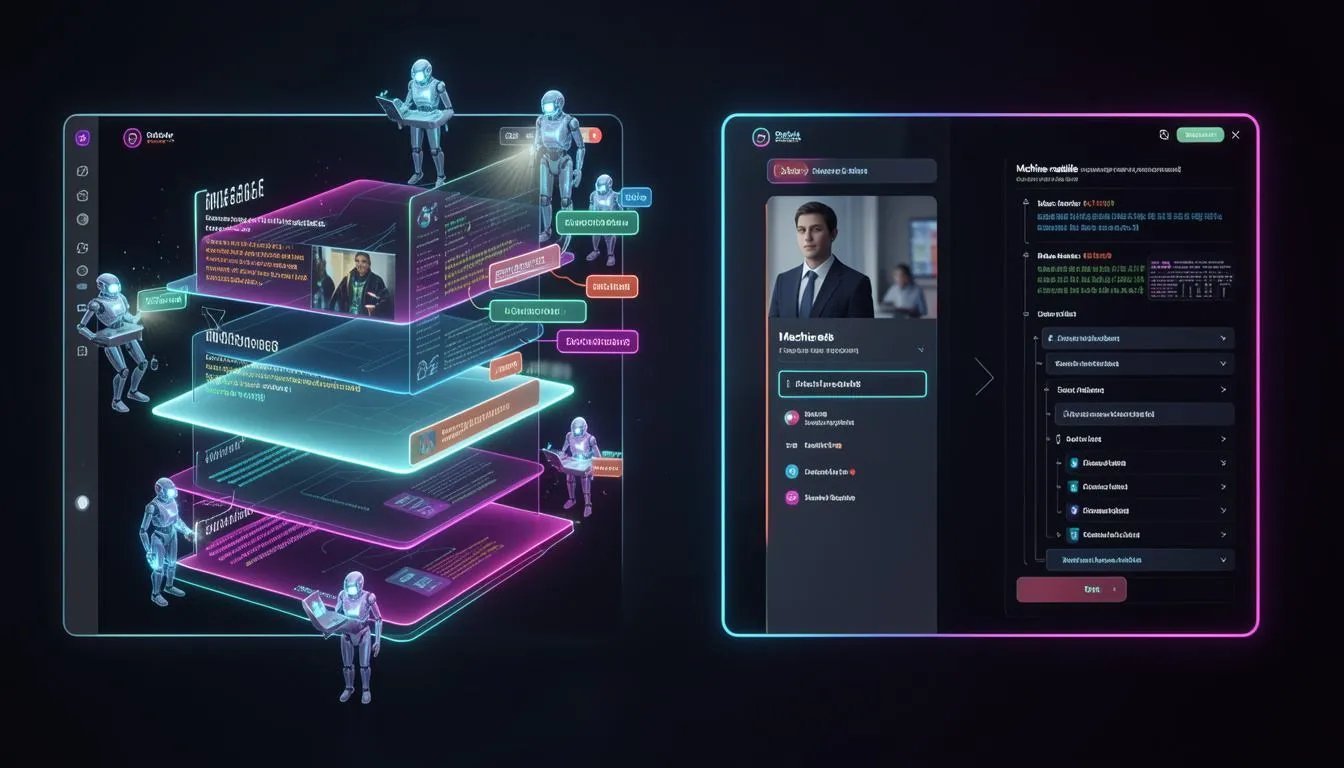
The "Agent-First" UI: Why Your Next Website Needs to be Readable by Bots
Key Takeaways
- AI agents are becoming primary users of websites, not just humans
- Agentic UX focuses on making interfaces readable and actionable for AI systems
- Semantic HTML and structured data improve discoverability in AI-driven environments
- Optimizing for LLM navigation increases visibility in automated recommendations
- Businesses that adapt early gain a competitive edge in AI-mediated traffic
What If Your Biggest Customer Never Clicks Your Website?
Imagine this.
A corporate buyer needs a vendor. They don’t Google. They don’t scroll. They don’t compare websites.
They ask an AI agent.
And that agent… never even sees your website.
Not because your product is bad—but because your site isn’t readable by machines.
This is the silent shift happening right now. And if you’re a UI/UX designer, developer, or e-commerce owner, it changes everything about how you build for the web.
The Problem: We Designed for Humans, But Bots Are Now the Gatekeepers
For the last 20 years, web design has been human-first:
- Visual hierarchy
- Conversion funnels
- Click-based navigation
But AI agents don’t click buttons. They don’t “feel” design. They don’t care about your gradients.
They parse. They extract. They decide.
And if your website isn’t structured for them, you simply don’t exist in their decision-making process.
What Happens If You Ignore This?
- Your competitors get recommended by AI assistants
- Your organic traffic declines (even if rankings stay stable)
- Your conversion funnel breaks before users even arrive
This is not a UX problem.
It’s a visibility problem.
The Shift: Enter the Agent-First UI
Agentic UX is about designing interfaces that both humans and AI systems can understand.
Think of it as:
“Designing your website as an API for AI agents.”
This is where concepts like Semantic Web 3.0, AI-readable design, and LLM navigation come into play.
Case Study: The Firecrawl Optimization Win
A developer optimized a B2B sourcing platform using:
- Semantic HTML
- JSON-LD structured data
- Clean content hierarchies
Specifically for Firecrawl’s browser sandbox.
The result?
AI-powered procurement agents began recommending their services more frequently than competitors who relied on traditional UI design.
No redesign. No ad spend.
Just better machine readability.
How to Build an Agent-First Website (Step-by-Step)
1. Use Semantic HTML Like It Actually Matters
Stop relying on div-heavy layouts.
Instead:
- Use
<article>,<section>,<nav>,<header>properly - Structure content logically
- Add meaningful headings (H1–H3)
Why it works: AI agents rely on structure to understand context.
2. Implement JSON-LD for Contextual Clarity
Structured data is no longer optional.
Add schema for:
- Products
- Services
- Reviews
- FAQs
This helps AI systems interpret your content without guessing.
You can explore schema standards at https://schema.org for implementation guidance.
3. Optimize for LLM Navigation, Not Just SEO
Traditional SEO focuses on keywords.
Agentic UX focuses on:
- Clear answers
- Context-rich sections
- Modular content blocks
Think:
- “What question is this section answering?”
- “Can an AI extract this in one pass?”
For deeper insights into AI-driven workflows, check this guide: https://saasnext.in/blog/ai-automation-workflows
4. Build with AI-Friendly Frameworks
Modern stacks like Next.js make it easier to:
- Render structured content
- Integrate APIs for AI agents
- Serve clean, crawlable pages
Combine this with server-side rendering and you get maximum accessibility for both bots and humans.
5. Test with AI Browsers and Sandboxes
Don’t guess—test.
Use tools like Firecrawl’s sandbox to:
- Simulate how agents read your site
- Identify missing context
- Optimize extraction paths
Platforms like https://saasnext.in/ also help teams deploy AI agents that interact with your site, giving real-world feedback on performance.
Why This Matters for Designers & Developers
This isn’t about replacing design.
It’s about expanding it.
For UI/UX Designers
- You’re no longer designing just for screens
- You’re designing for decision systems
- Clarity beats creativity when it comes to machine readability
For Developers
- Clean architecture becomes a growth lever
- Structured data impacts revenue directly
- Agentic workflows integrate deeply with frontend systems
The New SEO: From Rankings to Recommendations
We’re moving from:
- “How do I rank #1?”
to:
- “How do I get recommended by AI?”
This is a fundamental shift.
According to a recent report by Gartner, over 30% of B2B buying decisions will involve AI-assisted recommendations by 2026.
That means your real audience might not be humans anymore.
It might be their agents.
Common Mistakes to Avoid
- Treating structured data as optional
- Over-designing visual elements with no semantic meaning
- Ignoring AI testing environments
- Focusing only on Google rankings
Remember: if an AI can’t understand your site, it won’t recommend it.
Conclusion: Build for Humans—But Optimize for Agents
The future of the web isn’t human vs machine.
It’s human through machine.
Your website is no longer just a destination.
It’s a data source. A decision layer. A recommendation engine.
And if you want to stay competitive, you need to design accordingly.
🚀 Ready to Future-Proof Your Website?
Start small:
- Audit your semantic structure
- Add structured data
- Test with AI agents
And if you want to accelerate adoption, explore platforms like https://saasnext.in/ that help you integrate AI agents directly into your workflows.
Because in the agent-first era, visibility isn’t earned by clicks.
It’s earned by understanding.