AI Marketing: How Social Listening Enables Automated Feature Development
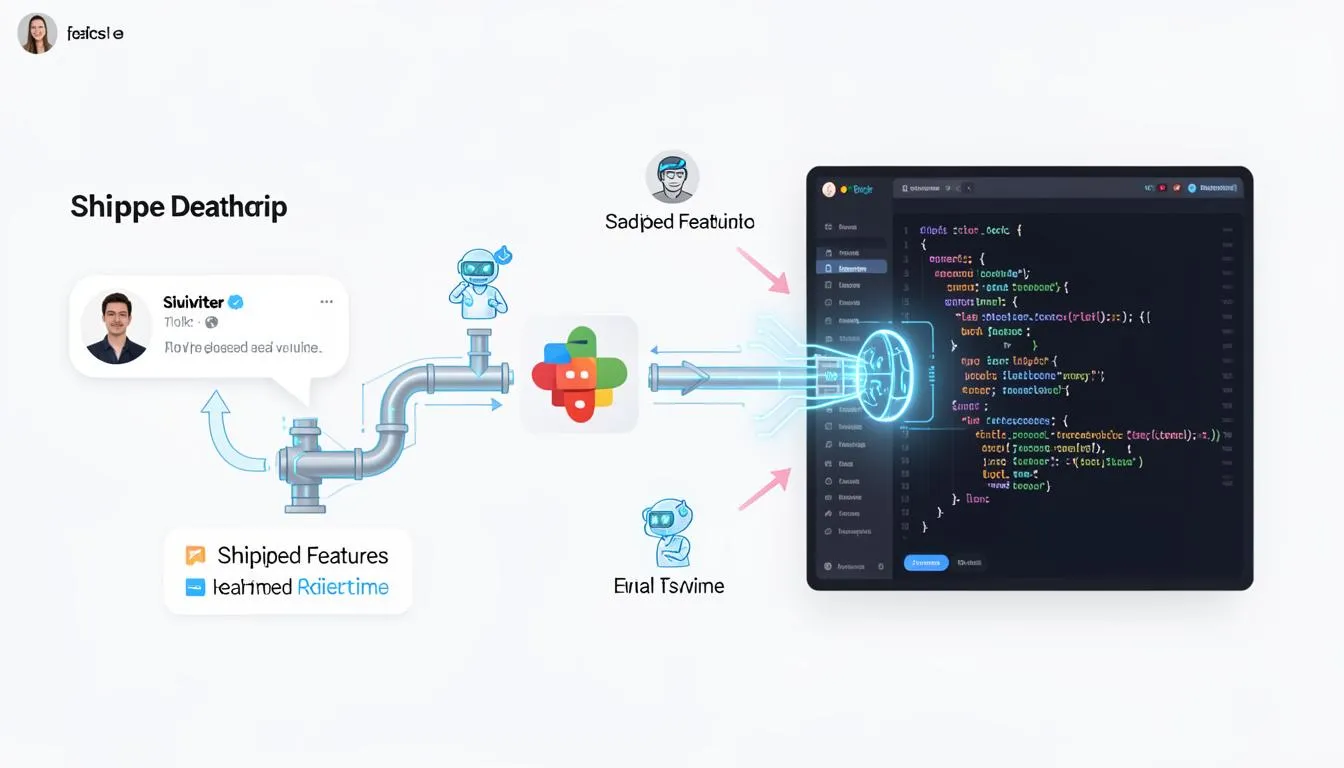
AI Marketing: From Social Listening to Feature Shipping in Minutes
🔑 Key Takeaways
- AI product management is rapidly evolving from insight gathering to instant product execution
- Social listening for AI enables companies to convert real-time customer feedback into product improvements
- AI agents like Cursor AI agents can automatically implement requested features in minutes
- Automated feature development reduces the traditional gap between marketing and product teams
- Agile AI workflows create faster innovation cycles and dramatically improve user satisfaction
- Case Study: Twitter-to-PR Workflow shows how Twitter feedback can trigger an AI agent to build and ship features instantly
What If Customer Feedback Could Turn Into Product Features Instantly?
Imagine this scenario.
A user tweets a suggestion about your product.
Your team sees it… but instead of adding it to a backlog, discussing it in sprint planning, and waiting two weeks to prioritize it — an AI agent immediately begins implementing it.
Within minutes, the feature is live.
For product managers and CTOs, this idea might sound extreme. But with advances in AI product management and automated development agents, that future is arriving faster than most teams expect.
In today’s AI-driven product landscape, the companies that win are not just the ones that listen to customers — they’re the ones that respond instantly.
The Real Problem: Feedback Moves Faster Than Product Teams
Modern marketing teams gather more insights than ever before.
You’re monitoring:
- Social media conversations
- Support tickets
- Product reviews
- Community forums
- Feature requests
Yet turning that insight into action remains painfully slow.
Even highly efficient product organizations face bottlenecks:
- Feedback must be validated
- Product teams must prioritize it
- Engineers must build it
- QA must test it
- Releases must be scheduled
The result?
A gap between what customers want and what product teams deliver.
And in today’s competitive SaaS landscape, that gap can cost you:
- Customer churn
- Missed product opportunities
- Slower innovation cycles
If companies fail to bridge this gap, they risk falling behind more agile competitors.
The Solution: AI-Powered Feedback-to-Feature Pipelines
AI is transforming this process by creating direct pipelines between customer feedback and product development.
Instead of feedback sitting idle in dashboards, AI agents can analyze, prioritize, and even implement improvements automatically.
This shift combines several powerful trends:
- Social listening for AI-driven insights
- AI-powered development agents
- Agile AI workflows for rapid iteration
Let’s break down how it works.
Case Study: The Twitter-to-PR Workflow
A powerful example comes from :contentReference[oaicite:0]{index=0}, which demonstrates a workflow that dramatically compresses the product feedback cycle.
Here’s the process.
- A user tweets feedback about a product feature.
- A social listening system detects the request.
- The request is sent automatically into :contentReference[oaicite:1]{index=1}.
- An AI agent analyzes the request and generates implementation instructions.
- A development agent begins building the feature.
- The update is shipped as a pull request — sometimes within minutes.
The result?
A feedback loop on steroids, where marketing and product development become deeply interconnected.
Instead of separate departments, they operate as a unified feedback-driven system.
Building Agile AI Workflows for Product Teams
For CTOs and product leaders, the question isn’t whether this model will emerge.
It’s how to implement it responsibly and effectively.
Here’s a practical framework.
1. Turn Social Listening Into Structured Product Signals
Most companies already monitor platforms like:
- :contentReference[oaicite:2]{index=2}
- Product forums
But the key is converting raw feedback into structured data.
AI models can:
- Identify feature requests
- Detect recurring product issues
- Cluster similar feedback into themes
These insights become machine-readable product signals.
For deeper strategies on automation-driven workflows, the SaaSNext team explores real-world use cases here:
This type of insight pipeline is the first step toward automated feature development.
2. Introduce AI Agents Into Product Workflows
Next, companies deploy development-focused AI agents.
These agents can:
- Generate feature prototypes
- Write implementation code
- Draft pull requests
- Document updates
Tools like Cursor AI agents demonstrate how development workflows can be partially automated while still maintaining human oversight.
This dramatically accelerates delivery without sacrificing quality.
3. Create Guardrails for Automated Feature Development
While automation is powerful, governance is essential.
Product leaders should implement safeguards such as:
- Code review checkpoints
- Feature flag deployment
- Security validation
- Automated testing pipelines
These guardrails ensure that automated changes remain safe and reliable.
Companies adopting structured AI governance frameworks often partner with platforms like SaaSNext to operationalize AI agents responsibly across marketing and product ecosystems.
Explore how SaaSNext supports AI-driven growth teams here:
4. Connect Marketing and Product Intelligence
One of the most powerful shifts AI enables is the merging of marketing and product teams.
Traditionally:
- Marketing listens to customers
- Product builds solutions
But AI-driven feedback loops blur this boundary.
Marketing signals become direct product inputs.
And product improvements become marketing opportunities.
This creates a continuous cycle:
Customer Feedback → AI Analysis → Feature Development → Public Release → New Feedback
Why This Model Changes AI Product Management
For product managers, this evolution introduces a new discipline.
Instead of managing static roadmaps, they orchestrate intelligent feedback systems.
Key responsibilities shift toward:
- Designing AI-driven pipelines
- Defining automation rules
- Prioritizing high-impact signals
- Supervising AI agents
This new form of AI product management is less about manual planning and more about building adaptive systems.
According to research from :contentReference[oaicite:3]{index=3}, organizations adopting AI-enabled workflows can significantly accelerate innovation cycles while improving responsiveness to market demand.
That responsiveness is becoming a competitive advantage.
Common Questions (AEO Optimized)
What is AI product management?
AI product management focuses on using artificial intelligence to automate decision-making, prioritize product features, and accelerate development cycles.
How does social listening help product development?
Social listening identifies customer feedback, feature requests, and product issues in real time, helping companies prioritize improvements faster.
What are agile AI workflows?
Agile AI workflows combine automation, machine learning insights, and development agents to rapidly iterate and deploy product updates.
Can AI automatically build product features?
AI agents can generate code, create prototypes, and suggest implementations, but human oversight remains critical for quality and governance.
The Bigger Shift: The End of Slow Product Cycles
For decades, product innovation moved at the speed of engineering sprints.
Weeks turned into months.
But AI collapses that timeline.
When social listening, AI agents, and automated development pipelines work together, the distance between customer insight and product innovation shrinks dramatically.
The companies that embrace this model will iterate faster, adapt faster, and ultimately win faster.
Final Thoughts: The Future Is Real-Time Product Development
AI is reshaping not only how we build products, but how we listen to customers.
The future of AI marketing and AI product management is deeply interconnected.
Customer conversations are no longer just feedback.
They are direct inputs into the development pipeline.
If your organization wants to stay ahead, start building the infrastructure for agile AI workflows today.
Explore how platforms like SaaSNext help teams deploy AI agents across marketing and product systems, subscribe for more AI strategy insights, and share this article with your product leadership team.
Because the next generation of product innovation won’t happen in quarterly roadmaps.
It will happen in minutes.