Design System Bot: Scaling Brand Consistency with Custom Claude Skills
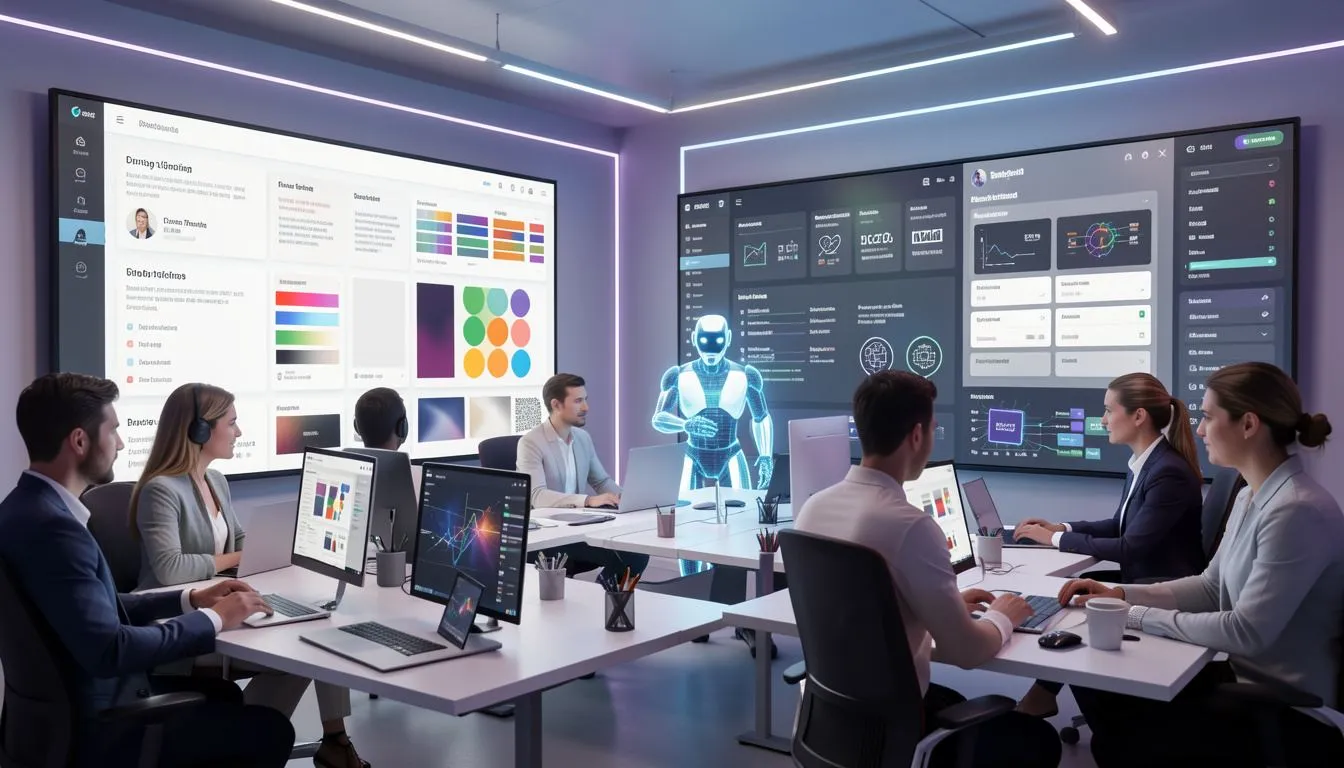
The "Design System Bot": Scaling Brand Consistency with Custom Claude Skills
Key Takeaways
- AI Brand Guidelines can transform static design rules into active, self-enforcing systems.
- Custom Claude skills allow teams to embed brand tokens, color palettes, and tone-of-voice directly into AI workflows.
- A well-structured skill.md file enables designers and non-designers to generate on-brand assets instantly.
- Automated brand enforcement reduces design bottlenecks and approval cycles.
- Design systems scale more effectively when AI acts as a "brand guardian" across teams.
The Hidden Cost of Brand Inconsistency
Every design team has experienced it.
A marketer Slacks a designer asking: "What's the hex code for the primary blue again?"
Another teammate publishes a landing page using the wrong font. A social media graphic goes live with the outdated logo. A sales deck uses three different shades of "brand red."
Individually, these mistakes feel small. But across a growing organization, they compound quickly.
The result?
- Slower campaign launches
- Endless micro-approvals from designers
- Frustrated teams waiting for simple answers
- A brand that gradually loses visual consistency
For UI/UX designers and front-end developers, this creates an invisible tax on productivity. Instead of focusing on innovation, they become the "brand police," answering repetitive questions.
And if companies ignore this issue, scaling becomes chaotic. The more content teams produce—especially in fast-moving e-commerce environments—the harder it becomes to maintain a unified brand voice.
Why Traditional Design Systems Don't Scale
Most organizations already have a design system. They use tools like style guides, Figma libraries, or documentation portals.
But there's a problem: documentation doesn't enforce behavior.
People still:
- Forget where the guidelines are stored
- Misinterpret rules
- Skip documentation entirely
A PDF style guide or Notion page cannot stop someone from using the wrong logo or color.
What teams really need is something different:
A design system that actively enforces brand rules.
That's where the idea of a Design System Bot powered by custom Claude skills comes in.
The Solution: A Self‑Enforcing Style Guide
Imagine this scenario:
A marketer needs a social media banner.
Instead of messaging a designer, they simply prompt an AI assistant:
"Create a LinkedIn banner using our brand style for the summer sale campaign."
The AI instantly generates an asset that:
- Uses the correct brand colors
- Applies the right typography
- Follows logo spacing rules
- Maintains the company's tone of voice
No approvals. No corrections.
Because the brand guidelines are embedded directly inside the AI system.
This is possible by creating custom Claude skills using a structured skill.md file.
Step 1: Convert Brand Guidelines into Structured Data
Start by extracting the most important elements of your design system.
Typical inputs include:
- Primary and secondary hex color codes
- Typography hierarchy
- Logo usage rules
- Icon style rules
- Spacing and layout constraints
- Brand voice guidelines
Instead of living in static documentation, these rules are written into a skill.md file.
Example structure:
Brand Colors:
Primary Blue: #0A66C2
Accent Yellow: #FFC845

Typography:
Headings: Inter Bold
Body: Inter Regular

Logo Rules:
Minimum padding: 24px
Never stretch or recolor the logo

Tone of Voice:
Confident, helpful, and concise
Now the AI understands your brand the same way a human designer would.
Step 2: Build a Private "Design System Bot"
Using a Skill Creator workflow, teams can load the skill.md file into a private AI skill.
This effectively creates an AI Brand Guardian.
Whenever someone generates content, the AI automatically references those rules.
Benefits include:
- Instant brand compliance
- Reduced manual reviews
- Faster asset production
Platforms like SaaSNext (https://saasnext.in/) are helping teams adopt these AI-powered workflows by integrating intelligent marketing agents into existing processes.
For organizations managing large design systems, this dramatically reduces operational friction.
Step 3: Enable Non‑Designers to Generate On‑Brand Assets
The real magic happens when everyone in the company can use the system.
Marketing teams can prompt the bot for:
- Social media creatives
- Landing page sections
- Product promotion banners
- Email headers
Front-end developers can even generate:
- CSS tokens
- Design variables
- UI components aligned with brand standards
Instead of constantly asking designers for approvals, teams produce assets that are automatically compliant.
This approach is gaining traction as AI-driven workflows reshape digital production pipelines. Research from McKinsey highlights how AI-powered automation can significantly accelerate creative production and reduce operational overhead.
Case Study: The Self‑Enforcing Style Guide
Consider an e-commerce company scaling rapidly across marketplaces and social channels.
Previously:
- Designers reviewed every banner
- Marketing constantly asked for brand assets
- Developers recreated color tokens manually
After implementing a Design System Bot with custom Claude skills:
- The entire brand guide was encoded into a
skill.mdfile - Marketing teams generated campaign assets independently
- Developers pulled brand tokens directly from AI prompts
The results:
- 70% faster asset creation
- Dramatically fewer brand inconsistencies
- Designers regained time for strategic work
Platforms such as SaaSNext are already enabling teams to deploy these AI-driven systems across marketing operations, helping organizations scale content production without sacrificing brand integrity.
If you're exploring AI-powered marketing automation, this guide provides additional insights:
Why This Matters for Modern Design Teams
The future of design systems isn't just documentation.
It's automation.
Designers move from being gatekeepers to becoming system architects.
Instead of answering repetitive questions, they define the rules once and allow AI to enforce them everywhere.
For fast-moving e-commerce brands and product teams, this shift unlocks something powerful:
true brand scalability.
Conclusion: Your Brand Needs a Digital Guardian
Design systems were originally created to bring consistency to digital products.
But as companies produce more content across more channels, static guidelines are no longer enough.
By combining AI Brand Guidelines, custom Claude skills, and structured skill.md files, organizations can create a self-enforcing brand ecosystem.
A Design System Bot ensures every asset, campaign, and interface stays aligned with the brand—automatically.
If you're exploring how AI agents can streamline marketing and design workflows, platforms like SaaSNext are helping teams implement these systems faster than ever.
The question isn't whether AI will influence design systems.
It's whether your brand will adapt early—or struggle to scale later.
If this concept sparked ideas for your team, consider sharing this article or subscribing for more insights on AI-powered design and marketing systems.