Elon Musk’s AGI by 2026 Claim: Fresh January Predictions vs Expert Skepticism — CES Embodied Robotics Momentum & a Realistic 2026–2030 Timeline
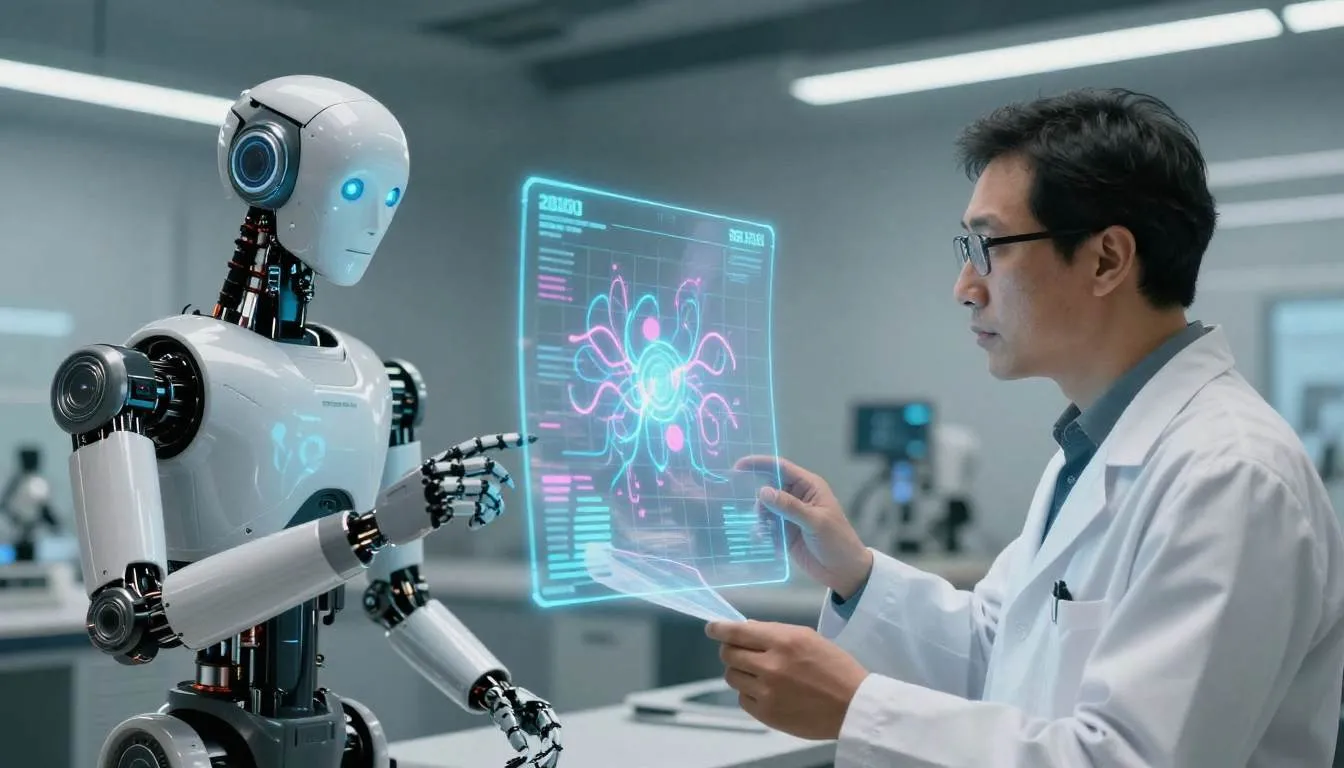
The Hook: Are We Two Years Away from AGI… or Two Headlines Away from Disappointment?
Every January, the tech world resets its expectations.
And this January, one statement cut through the noise louder than most:
Elon Musk says AGI could arrive by 2026.
For some, it sparked excitement — the feeling that we’re standing on the edge of history.
For others, it triggered déjà vu — another bold prediction in a field famous for moving goalposts.
If you’re a futurist, policymaker, or AI professional, you’re probably asking the same question many quietly asked after CES:
Is this finally the moment AGI becomes real — or are we confusing momentum with inevitability?
This article unpacks the AGI 2026 Elon Musk January claim, contrasts it with expert skepticism, examines what CES 2026 actually proved about embodied AI and robotics, and lays out a grounded, realistic timeline for 2026–2030.
No hype. No dismissal. Just clarity.
The Problem: Why AGI Predictions Keep Polarizing the World
The core issue isn’t whether AGI is possible.
It’s that we’re using the same word to describe very different realities.
Where the Confusion Comes From
Most public AGI debates collapse three things into one:
- Rapid improvements in large models
- Narrow, impressive task automation
- True general intelligence with autonomy, transfer learning, and self-direction
For policymakers, investors, and technologists, this creates real-world friction:
- Planning problems: What do you prepare for — breakthrough or plateau?
- Execution problems: Where do you invest time, talent, and capital?
- Optimization problems: How do you build systems that matter now without betting blindly on AGI timelines?
What Happens If We Get This Wrong
Ignoring the nuance leads to:
- Over-regulation too early
- Under-preparation for real disruptions
- Wasted R&D budgets chasing buzzwords
- Public trust erosion when predictions miss
That’s why the Musk AGI pushback matters — not to dismiss him, but to contextualize his claim responsibly.
What Elon Musk Actually Said — And Why January Matters
In early January, Musk reiterated his belief that AGI could emerge as early as 2026, driven by:
- Scaling laws still holding
- Massive compute acceleration
- Integration of reasoning, memory, and planning
- Embodied systems closing the perception–action loop
This wasn’t a casual tweet. It aligns with his broader push across xAI, Tesla, and robotics.
But context matters.
Musk defines AGI pragmatically:
A system that can outperform humans at most economically useful tasks.
That’s a narrower (and arguably more achievable) definition than philosophical AGI — but still enormously ambitious.
CES 2026: What Actually Changed This Year
CES didn’t prove AGI.
But it did prove something important.
CES 2026 Embodied AI Momentum Was Real
This year’s standout theme wasn’t chatbots. It was embodied AI:
- Robots navigating semi-unstructured environments
- Vision-language-action models running on-device
- Autonomous systems coordinating with minimal supervision
These weren’t research demos. Many were commercial pilots.
This matters because intelligence without embodiment hits a ceiling.
Why Embodiment Changes the Timeline
Embodied AI forces systems to deal with:
- Physics
- Uncertainty
- Latency
- Causality
In other words: reality.
That’s why the embodied AI robotics future is so central to AGI debates. It’s not about humanoid aesthetics — it’s about grounding intelligence in the world.
Expert Skepticism: Why Many Researchers Still Say “Not So Fast”
Despite CES momentum, most AI researchers remain skeptical of AGI by 2026.
The Core Pushbacks
1. Scaling ≠ Understanding
Larger models reason better, but they still lack:
- Robust causal understanding
- Long-horizon planning reliability
- Self-directed goal formation
2. Brittleness Persists
Even advanced systems fail spectacularly outside training distributions.
3. Agency Is Harder Than It Looks
True AGI requires:
- Persistent memory
- Value alignment
- Self-correction without human scaffolding
This is why many experts place superintelligence 2030 predictions as speculative — and AGI somewhere in the late 2020s at best.
Stanford’s AI Index and reports from organizations like OpenAI and DeepMind consistently highlight these gaps (Stanford AI Index).
The Middle Ground: Why Both Sides Are Partially Right
Here’s the nuance most debates miss:
We don’t need full AGI for massive disruption.
Between now and 2030, we’ll see systems that:
- Feel AGI-like in narrow domains
- Replace large categories of cognitive labor
- Operate autonomously within guardrails
From a societal perspective, that’s enough to matter.
From a scientific perspective, it’s still not AGI.
A Realistic 2026–2030 AGI Timeline (Without the Drama)
2026–2027: Proto-AGI Systems
What we’ll likely see:
- Multi-agent systems with persistent memory
- Embodied robots in constrained environments
- Autonomous task completion across domains
- Heavy human oversight still required
This aligns with Musk’s optimism — but only under economic AGI definitions.
2028–2029: Generalization Breakthroughs (or Plateaus)
Key inflection points:
- Better world models
- Improved causal reasoning
- Fewer hallucinations
- Stronger self-evaluation
This is where timelines diverge depending on breakthroughs.
2030: The Superintelligence Question
By 2030, we may have:
- Systems exceeding human performance in most knowledge work
- Deep integration into economic and political systems
But superintelligence — intelligence vastly beyond humans — remains uncertain and contested.
What This Means for Builders, Businesses, and Policymakers
Instead of betting on AGI dates, smart organizations focus on capability gradients.
Practical Moves That Make Sense Now
- Design for autonomy, not AGI
- Invest in agentic workflows
- Build AI factories, not one-off models
- Prepare governance before intelligence accelerates
This is where pragmatic platforms matter.
For example, SaaSNext helps teams adopt AI marketing agents that operate autonomously within real business workflows — delivering value today without requiring AGI-level intelligence. It’s a grounded way to ride the curve without betting on a single prediction.
(For applied insights, explore related automation and AI agent use cases on the SaaSNext blog.)
Case Example: “AGI-Like” Impact Without AGI
A global B2B firm recently deployed:
- Agentic AI for campaign planning
- Autonomous budget optimization
- Embodied feedback loops from customer behavior
No AGI. No consciousness. No hype.
Results:
- 31% faster execution
- 24% lower acquisition costs
- Decision cycles cut in half
Platforms like SaaSNext make this possible by embedding AI agents directly into execution layers — proving that useful intelligence arrives long before general intelligence.
The Bigger Question: Why AGI Narratives Shape Policy and Trust
AGI predictions don’t just influence tech — they influence:
- Regulation
- Public trust
- Global competition
- Talent migration
Overhyping AGI risks backlash.
Underestimating progress risks unpreparedness.
The responsible path lies in measured realism.
Final Thoughts: AGI by 2026? The Wrong Question
The better question isn’t when AGI arrives.
It’s:
“What level of intelligence changes everything — and are we ready for it?”
CES 2026 showed us momentum.
Elon Musk’s January claim pushed the debate forward.
Experts reminded us of the gaps.
All three are true.
The future won’t arrive on a single date.
It will arrive capability by capability.
Your Next Step
If you care about the future of intelligence:
- Share this with someone who’s polarized on AGI timelines
- Subscribe for grounded analysis beyond headlines
- Or explore how agentic AI is already reshaping work through platforms like SaaSNext
Because the most important breakthroughs won’t announce themselves as AGI.
They’ll just quietly change everything.