Embodied AI Explained: Physical Intelligence, World Models & Microsoft’s Majorana 1 Breakthrough
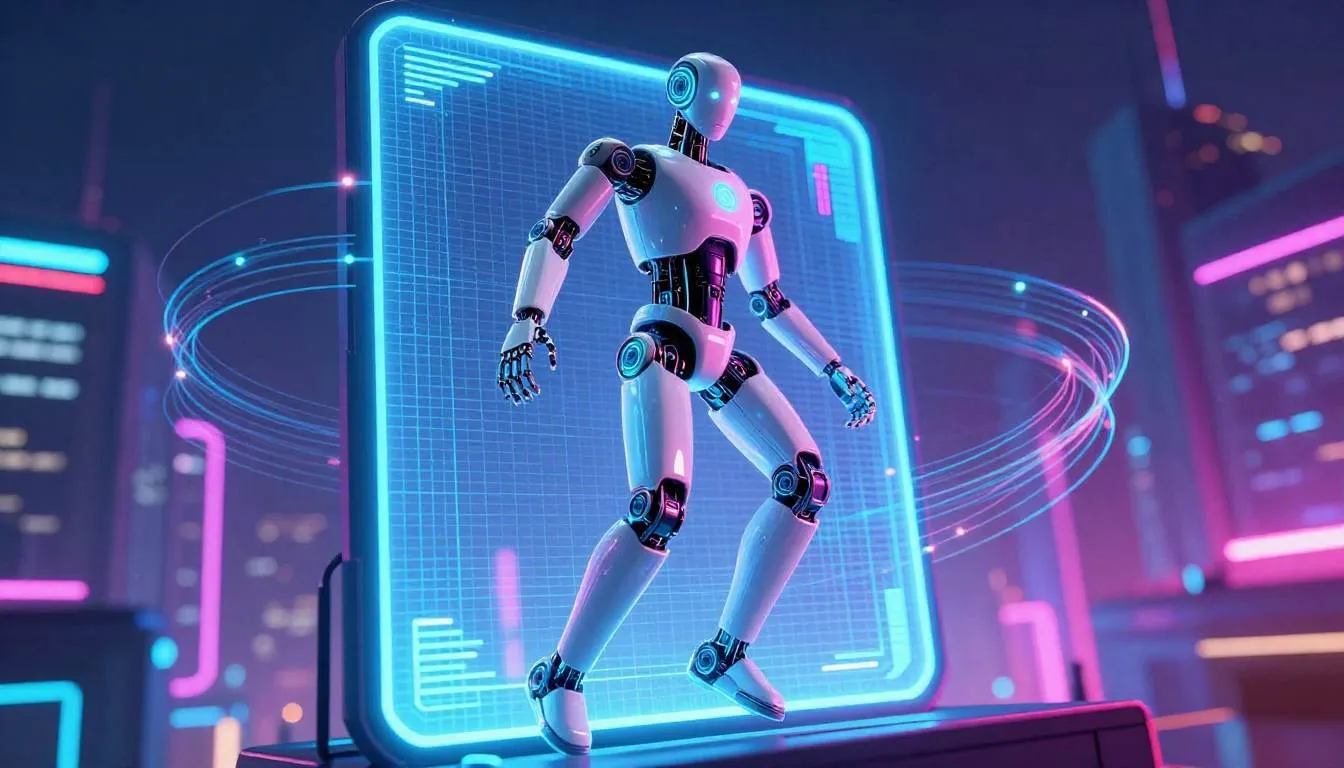
Embodied AI—When Intelligence Leaves the Screen
Physical Intelligence, World Models, and Why Majorana 1 Changes the Rules of AGI Forever
What Happens When AI Stands Up, Walks, and Touches the World?
For the last decade, intelligence has lived behind glass.
Inside screens.
Inside dashboards.
Inside chat windows.
And yet, something always felt… incomplete.
If AI is truly “intelligent,” why can’t it open a door, navigate a busy street, or understand gravity the way a child does?
In 2026, that question is no longer theoretical.
AI is leaving the screen.
And when intelligence becomes physical, everything—from design and creativity to economics and safety—changes.
Welcome to the era of Embodied AI.
The Problem: Why Screen-Bound Intelligence Hit a Ceiling
Digital AI Is Brilliant—but Fragile
Modern AI can:
- Write code
- Design interfaces
- Generate art
- Reason across vast datasets
But ask it to:
- Pick up a fragile object
- Drive through an unfamiliar city
- Navigate unpredictable environments
And it breaks.
Why?
Because language alone is not intelligence.
The Missing Ingredient: Reality
Traditional AI systems lack:
- Physical intuition
- Spatial reasoning
- Cause-and-effect understanding
- An internal sense of the real world
They optimize symbols, not survival.
This limitation shows up everywhere:
- Autonomous vehicles struggling with edge cases
- Robots failing outside controlled labs
- Simulations that collapse in real environments
If businesses ignore this shift, they’ll:
- Overinvest in brittle automation
- Miss the next platform transition
- Build products that can’t cross the digital–physical divide
The Shift: From Abstract Intelligence to Embodied Intelligence
What Is Embodied AI?
Embodied AI refers to systems that:
- Perceive the physical world
- Learn through interaction
- Move, manipulate, and navigate
- Understand physics, space, and causality
This is Physical AI, powered by World Models.
Not rules. Not scripts. Not preprogrammed logic.
Understanding.
World Models: The Brain Behind Physical Intelligence
What Is a World Model?
A World Model is an internal simulation of reality.
It allows AI to:
- Predict outcomes before acting
- Understand physics intuitively
- Generalize from observation
- Learn without explicit instructions
Think of it as imagination—for machines.
Why World Models Are the Breakthrough
World Models enable AI to:
- Learn by watching (not labeling)
- Transfer skills across environments
- Handle uncertainty and novelty
- Operate safely in the real world
This is why World Models are foundational to:
- Autonomous driving
- Humanoid robots
- Industrial automation
- Physical creative systems
Case Study: Wayve.AI’s “Embodied Driving”
Wayve isn’t building rule-following cars.
They’re building drivers.
What Makes Wayve Different
Instead of:
- Hardcoded maps
- Explicit traffic rules
- Hand-engineered logic
Wayve uses:
- Observation-based learning
- End-to-end World Models
- Simulation at scale
Their AI learns how to drive the way humans do.
Why This Matters
When Wayve deployed its Embodied AI system to Japanese roads, it:
- Adapted to new driving cultures
- Generalized without retraining
- Handled complexity through understanding
Investors noticed.
$1.3 billion USD raised.
The market validated a simple truth:
The future of AI is spatial.
Why Embodied AI Changes Everything for Creators and Designers
If you’re a:
- UI/UX designer
- Product creator
- 3D artist
- Creative director
This isn’t abstract science.
It’s your next canvas.
Design Beyond Screens
Embodied AI enables:
- Spatial interfaces
- Gesture-based interaction
- Voice + movement + context
- Design for environments, not devices
The “interface” becomes:
- The room
- The object
- The body
Design shifts from pixels to presence.
Enter Majorana 1: Solving the “Unsolvable” Problems of AGI
Why Computation Is the Bottleneck
World Models are powerful—but expensive.
Simulating reality requires:
- Massive compute
- Long-term memory
- Stable reasoning under uncertainty
Classical hardware struggles here.
That’s where Majorana 1 comes in.
What Is Majorana 1?
Majorana 1 is Microsoft’s breakthrough topological quantum chip.
It’s built around:
- Topological qubits
- Fault-tolerant quantum computation
- Stability at scale
Unlike fragile quantum systems, Majorana-based qubits are:
- Inherently more stable
- Resistant to noise
- Scalable for real-world problems
Why This Matters for AGI
Topological qubits unlock:
- Complex physical simulations
- Optimization across massive state spaces
- Faster learning of World Models
- Solving problems classical AI can’t touch
This isn’t faster chatbots.
This is new intelligence classes.
How Physical AI and Quantum Compute Converge
Here’s the big picture:
- Embodied AI needs realistic world simulation
- World Models require immense computation
- Majorana 1 makes that computation feasible
Together, they enable:
- Safer autonomous systems
- Smarter robots
- More reliable AGI research
This is why many experts believe:
The path to AGI runs through physics, not language.
Practical Implications for Businesses (Yes, Even Yours)
You might be thinking: “This sounds futuristic—what does it mean now?”
A lot.
Near-Term Applications of Physical AI
- Autonomous logistics and warehousing
- Smart factories and robotics
- Mobility and delivery systems
- Spatial retail and experiential design
Platforms like SaaSNext (https://saasnext.in/) already help teams orchestrate AI agents in digital workflows.
The same principles—coordination, governance, intent—are now extending into physical systems.
Digital-first teams who understand agent orchestration will adapt faster to embodied systems.
The Risks: Embodied AI Isn’t Just Software
Why Governance Matters More Than Ever
When AI:
- Moves
- Touches
- Interacts with humans
Mistakes aren’t bugs—they’re accidents.
This demands:
- Strong simulation-first testing
- Clear ethical constraints
- Human-in-the-loop oversight
- Robust fail-safe mechanisms
Embodied Intelligence must be governed intelligence.
From Agentic Software to Agentic Bodies
The same shift happening in software—from chatbots to autonomous agents—is now happening in hardware.
Instead of:
- Single-task robots
We get:
- Multi-agent embodied systems
- Coordination across space
- Learning at the edge
Companies that already use platforms like SaaSNext to manage agentic workflows will recognize this pattern instantly—just in three dimensions instead of two.
Common Myths About Physical AI
“It’s just robotics.”
No. Robotics is mechanics. Embodied AI is cognition.
“It’s decades away.”
Wayve, Tesla, Boston Dynamics, and others prove otherwise.
“Designers won’t be involved.”
Design is moving into space, motion, and behavior.
What Creators Should Start Doing Now
1. Think Spatially
Design for environments, not screens.
2. Learn Simulation Tools
Physics engines, 3D worlds, and digital twins matter.
3. Collaborate with AI Systems
You won’t design for Embodied AI—you’ll design with it.
4. Follow World Model Research
This is where the real breakthroughs are happening.
External Signals You Should Pay Attention To
- Rapid funding into embodied startups
- Government interest in physical autonomy
- Advances in quantum hardware
- Open research on World Models and simulation
These aren’t hype cycles—they’re infrastructure signals.
The Strategic Takeaway
Embodied AI is not a feature.
It’s a platform shift.
Just as mobile redefined software… Just as the internet redefined business…
Physical AI will redefine intelligence itself.
Conclusion: Intelligence That Can Act Is Intelligence That Matters
The most important AI of the next decade won’t just talk.
It will:
- Navigate
- Build
- Assist
- Protect
- Create
Powered by World Models. Accelerated by quantum breakthroughs like Majorana 1. Guided by human values—if we do this right.
The screen was only the beginning.
Call to Action
If this perspective challenged your thinking:
- Share it with your team or peers
- Follow developments in World Models and Physical AI
- Explore how agent orchestration platforms like SaaSNext prepare organizations for this shift
Because the future of intelligence won’t be typed.
It will move.