Local LLMs vs Cloud Giants 2026: Who Wins the AI Independence Battle?
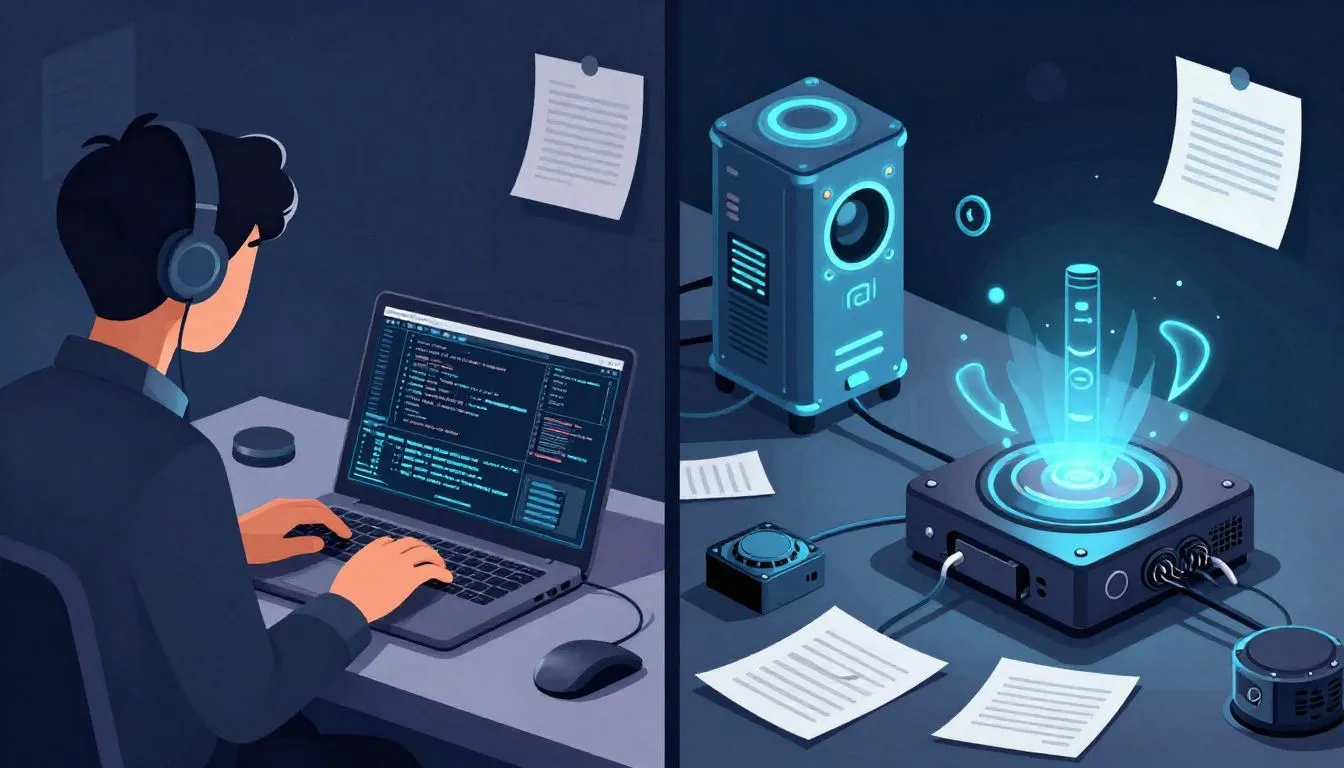
Local LLMs vs. Cloud Giants: 2026 Predictions on Who Wins the Independence Battle
🔑 Key Takeaways
- Local LLMs vs cloud in 2026 is less about “which is better” and more about who controls intelligence
- Sovereign AI is moving from government theory to indie developer reality
- Cloud giants still dominate scale, but local stacks are winning on privacy, cost, and speed-to-experiment
- A single indie developer recently outperformed big platforms using a local LLM stack
- Hybrid architectures will rise, but independence-first AI will define the next wave
- Tools and platforms like SaaSNext are quietly enabling teams to operationalize AI without full cloud lock-in
The Quiet Question No One Wants to Say Out Loud
What happens when your AI stops working… because someone else changed the rules?
If you’ve spent time building with large cloud-based LLMs, you’ve probably felt it:
- Pricing changes overnight
- Rate limits tighten without warning
- Models “update” and suddenly your outputs change
- Data policies get murkier, not clearer
For years, we’ve accepted this as the cost of progress. After all, cloud giants gave us power we never had before.
But now a different question is bubbling up across GitHub threads, indie hacker forums, and private Discords:
What if AI didn’t have to be rented?
What if it could be owned?
Welcome to the independence battle of AI — local LLMs vs cloud giants, heading into 2026.
The Core Problem: Power Without Control
Why AI Enthusiasts Are Starting to Feel Uneasy
The problem isn’t that cloud LLMs are bad. They’re incredible.
The problem is dependency.
When all intelligence lives behind an API:
- You don’t control uptime
- You don’t control cost curves
- You don’t fully control data
- You definitely don’t control the roadmap
For hobbyists, this is annoying.
For startups, it’s risky.
For entire countries, it’s existential.
This is why sovereign AI predictions have shifted so dramatically in the last two years — from “maybe someday” to “actively happening.”
Ignore this shift, and you risk:
- Building products that can’t survive pricing shocks
- Losing differentiation as models commoditize
- Being locked out of innovation by platform rules
Defining the Battlefield: Local LLMs vs Cloud in 2026
Before we predict winners, let’s clarify terms.
What Are Local LLMs?
Local LLMs are large language models that:
- Run on your own hardware (laptop, workstation, private server)
- Can operate offline or semi-offline
- Are often open or open-weight (e.g., LLaMA variants, Mistral, Mixtral)
- Are customizable at the inference and fine-tuning level
What Are “Cloud Giants”?
Cloud giants provide:
- Massive proprietary models
- Centralized infrastructure
- API-based access
- Incredible scale and reliability
Think convenience, not control.
Why Local LLMs Are Surging (And It’s Not Just Cost)
1. Data Sovereignty Is No Longer Optional
Developers working in healthcare, finance, defense, and enterprise AI are realizing something uncomfortable:
You can’t promise privacy if intelligence lives elsewhere.
Local LLMs allow:
- On-device inference
- Private fine-tuning
- Zero external data leakage
This is a major driver behind sovereign AI initiatives worldwide — not just national ones, but organizational sovereignty too.
2. Performance Is Catching Up Faster Than Expected
The old argument against local models was simple: they’re weaker.
That gap is shrinking fast.
Thanks to:
- Quantization techniques
- Better inference engines
- Smaller, more specialized models
Many local stacks now outperform cloud models for specific tasks, especially:
- Coding assistance
- Retrieval-augmented generation (RAG)
- Domain-specific reasoning
For real-world use cases, “best overall model” often matters less than best contextual model.
3. Independence Unlocks Experimentation
Here’s what cloud APIs quietly discourage: reckless curiosity.
With local LLMs:
- You can test weird prompts
- You can break things safely
- You can chain agents without worrying about token bills
This freedom is why indie developers are moving faster than funded teams in some niches.
Case Study: How an Indie Developer Beat the Giants with a Local Stack
The Setup
An independent developer built a niche AI product for legal document summarization.
No VC funding.
No massive infra.
No cloud LLM dependency.
Instead:
- A local fine-tuned model
- Lightweight RAG
- Task-specific optimization
The Result
Against competitors using major cloud APIs:
- Lower operating costs by ~70%
- Faster response times for users
- Complete data privacy guarantees
Most importantly?
Customers trusted the product more.
This is the quiet power of local LLMs in 2026: trust as a feature.
Where Cloud Giants Still Dominate (Let’s Be Fair)
This isn’t a takedown.
Cloud providers still win on:
- Massive multi-modal models
- Cutting-edge research deployment
- Enterprise-scale reliability
For teams that need:
- Image + video + text fusion
- Global scalability overnight
- Zero infrastructure management
Cloud-first still makes sense.
The real question isn’t cloud or local.
It’s who owns the intelligence layer.
The Hybrid Reality: What Actually Wins in 2026
Prediction #1: Hybrid Architectures Become Default
Most serious teams will:
- Use local LLMs for sensitive, core logic
- Use cloud models for high-level reasoning or creativity
This reduces risk while keeping access to innovation.
Platforms like SaaSNext are already helping teams design these hybrid AI workflows — enabling autonomy without sacrificing speed.
Prediction #2: Sovereign AI Goes Mainstream
By 2026, sovereign AI won’t just be for governments.
We’ll see:
- Sovereign startups
- Sovereign enterprises
- Sovereign dev stacks
Meaning: you control your models, data, and deployment.
This aligns with broader automation and AI strategy trends discussed here:
https://saasnext.in/blog/ai-automation-strategy
Prediction #3: “Good Enough” Beats “Best Overall”
The best AI isn’t the smartest one.
It’s the one that:
- Fits your constraints
- Respects your users
- Evolves with your needs
Local LLMs excel here.
Practical Guidance: How to Choose Your Side (or Balance Both)
Step 1: Classify Your Risk
Ask:
- Can this data ever leave our system?
- What happens if API costs double?
- Do we need explainability or auditability?
If risk is high → local-first.
Step 2: Optimize for Control, Not Hype
Choose models based on:
- Task performance
- Customization ability
- Operational ownership
Not leaderboard scores.
Step 3: Use Platforms That Don’t Lock You In
This is where tools like SaaSNext quietly matter — enabling teams to orchestrate AI workflows across local and cloud systems without hard dependency on a single provider.
The Bigger Shift No One’s Talking About
This isn’t just a tech debate.
It’s a philosophical one.
Cloud AI represents:
Intelligence as a service
Local LLMs represent:
Intelligence as infrastructure
In every previous computing wave, infrastructure eventually won.
AI won’t be different.
Final Verdict: Who Wins the Independence Battle?
By 2026:
- Cloud giants still dominate scale
- Local LLMs dominate control
- Hybrid stacks dominate reality
But the true winners?
Builders who choose independence without isolation.
If you’re an AI enthusiast, now is the moment to:
- Experiment with local models
- Understand sovereign AI deeply
- Design systems that can survive platform shifts
👉 Share this with your dev circle
👉 Subscribe for deeper AI strategy breakdowns
👉 Or explore how SaaSNext helps teams build flexible, future-proof AI systems
The future of AI isn’t centralized.
It’s chosen.