Omni-Channel SEO: Why Your Strategy Must Go Beyond Google
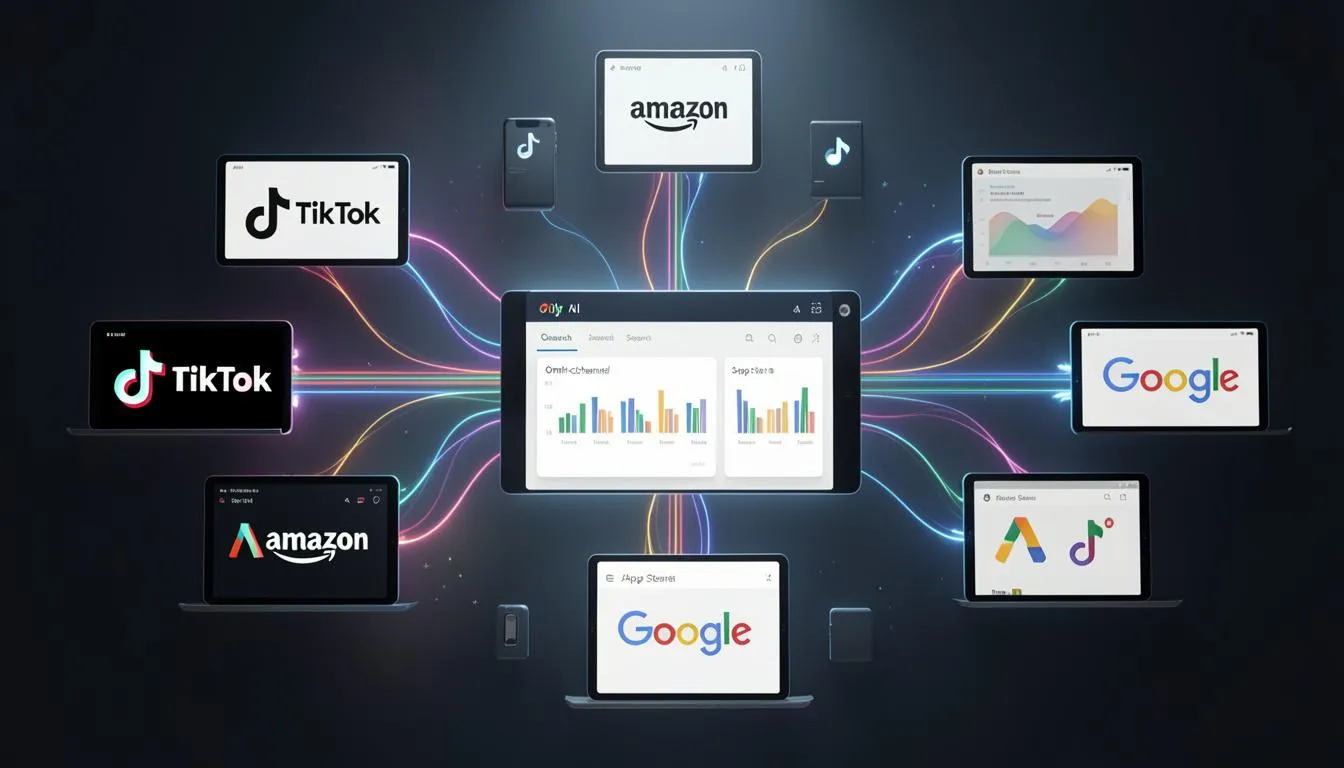
Omni-Channel AI: Why Your SEO Strategy Must Live Outside Google
Key Takeaways
- Search is no longer limited to Google—multi-platform search now includes TikTok, Amazon, and app stores.
- AI recommendations are shaping discovery across platforms, not just traditional SERPs.
- TikTok SEO and Amazon search trends are becoming critical for product visibility.
- App Store Optimization (ASO) is a major growth channel, with hundreds of millions of daily searches.
- Brands that optimize across platforms see significantly higher discovery and engagement rates.
The Day Google Stopped Being Enough
What if your customers never Googled your product?
Sounds unlikely—but it’s already happening.
A Gen Z shopper searches on TikTok.
A buyer compares products on Amazon.
A mobile user discovers apps directly through the App Store.
Google is still powerful—but it’s no longer the only gateway to discovery.
For UI/UX designers, developers, and e-commerce owners, this creates a new challenge:
Your audience is everywhere.
But your SEO strategy is still stuck in one place.
The Problem: Single-Platform SEO Is Failing Modern Businesses
Most companies still focus heavily on traditional SEO:
- Google rankings
- blog content
- keyword optimization
But user behavior has changed dramatically.
Today’s search journey looks like this:
- discovery on TikTok
- validation on YouTube
- comparison on Amazon
- download via App Store
Each platform has its own algorithm—and increasingly, its own AI recommendation engine.
If your strategy only targets Google, you’re missing:
- high-intent buyers on Amazon
- viral discovery on TikTok
- app users searching in marketplaces
The result?
- lower visibility
- missed revenue opportunities
- fragmented customer journeys
In short: you’re optimizing for yesterday’s internet.
The Shift: Welcome to Multi-Platform Search
Search is no longer a single action.
It’s an ecosystem of platforms powered by AI.
This includes:
- TikTok SEO (short-form discovery)
- Amazon search trends (product intent)
- App Store Optimization (ASO)
- YouTube and video search
- AI-driven recommendations across apps
Each platform behaves differently—but they all share one thing:
They rely on AI to recommend content, products, and experiences.
This is where Omni-Channel AI strategy becomes essential.
Case Study: The Yodel Acquisition
Marketing expert :contentReference[oaicite:0]{index=0} made a strategic move that highlights this shift.
His agency acquired Yodel, a mobile app marketing company.
Why?
Because the Apple App Store processes over 500 million searches daily.
That’s a massive discovery channel—often overlooked by traditional SEO strategies.
Even more interesting:
Businesses optimizing for App Store AI and Google Play AI saw a 40% higher discovery rate compared to those relying only on Google search.
This proves a critical point:
Search is no longer centralized—it’s distributed across platforms.
The Solution: How to Build an Omni-Channel SEO Strategy
To succeed in this new landscape, you need to expand your approach.
Here’s how.
1. Optimize for Platform-Specific Search Behavior
Each platform has unique intent patterns.
For example:
- TikTok SEO focuses on trends, hooks, and engagement
- Amazon search is driven by purchase intent
- App Store Optimization (ASO) depends on keywords, ratings, and visuals
Instead of copying the same content everywhere, tailor it for each platform.
2. Leverage AI Recommendations
Modern platforms don’t just show results—they recommend them.
To align with AI systems:
- Create highly engaging content
- Use structured metadata
- Focus on retention and interaction signals
Platforms like SaaSNext help businesses deploy AI marketing agents that optimize content performance across multiple channels.
This ensures your brand stays visible wherever users are searching.
3. Build a Unified Content Ecosystem
Instead of isolated campaigns, think in terms of connected experiences.
For example:
- A TikTok video drives traffic to a product page
- Amazon listings reinforce credibility
- App Store presence captures mobile users
Each platform supports the others.
This creates a compounding effect on visibility.
4. Invest in App Store Optimization (ASO)
ASO is one of the most underutilized growth channels.
To improve discovery:
- Optimize app titles and descriptions
- Use relevant keywords
- Improve ratings and reviews
- Design compelling visuals
With millions of daily searches, app stores are essentially search engines in their own right.
5. Track Multi-Platform Performance
Traditional SEO metrics aren’t enough anymore.
You need to measure:
- cross-platform visibility
- engagement rates
- AI recommendation performance
For deeper insights into AI-driven marketing strategies, explore this guide:
https://saasnext.in/
Platforms like SaaSNext can help unify analytics and automate optimization across channels.
Why This Matters for Designers, Developers, and E-Commerce Teams
Omni-channel AI isn’t just a marketing shift—it impacts how products are built and experienced.
For UI/UX designers:
- Interfaces must adapt to different discovery platforms
- Visual storytelling becomes critical
For developers:
- Integration with multiple platforms becomes essential
- Performance and compatibility affect visibility
For e-commerce teams:
- Product discovery extends beyond your website
- Customer journeys become more complex
In short:
Your product doesn’t live in one place anymore—it exists across an ecosystem.
The Future: Search Everywhere, Not Anywhere
The concept of “searching” is evolving.
Users don’t think:
“I’ll Google this.”
They think:
“I’ll find this.”
And that could happen anywhere.
TikTok. Amazon. App Store. YouTube.
Or even through AI assistants.
The brands that win will be those that show up consistently across all these touchpoints.
Expand Beyond Google or Fall Behind
Google is still important.
But it’s no longer enough.
The rise of multi-platform search and AI recommendations means your SEO strategy must evolve into something bigger—an omni-channel presence.
By optimizing for platforms like TikTok, Amazon, and app stores, you can reach users at every stage of their journey.
And with tools like SaaSNext, businesses can implement AI-driven strategies that ensure consistent visibility across channels.
If this article changed how you think about SEO, share it with your team or subscribe for more insights on AI, growth, and digital strategy.