Physical AI & Embodied Intelligence: When LLMs Get a Body
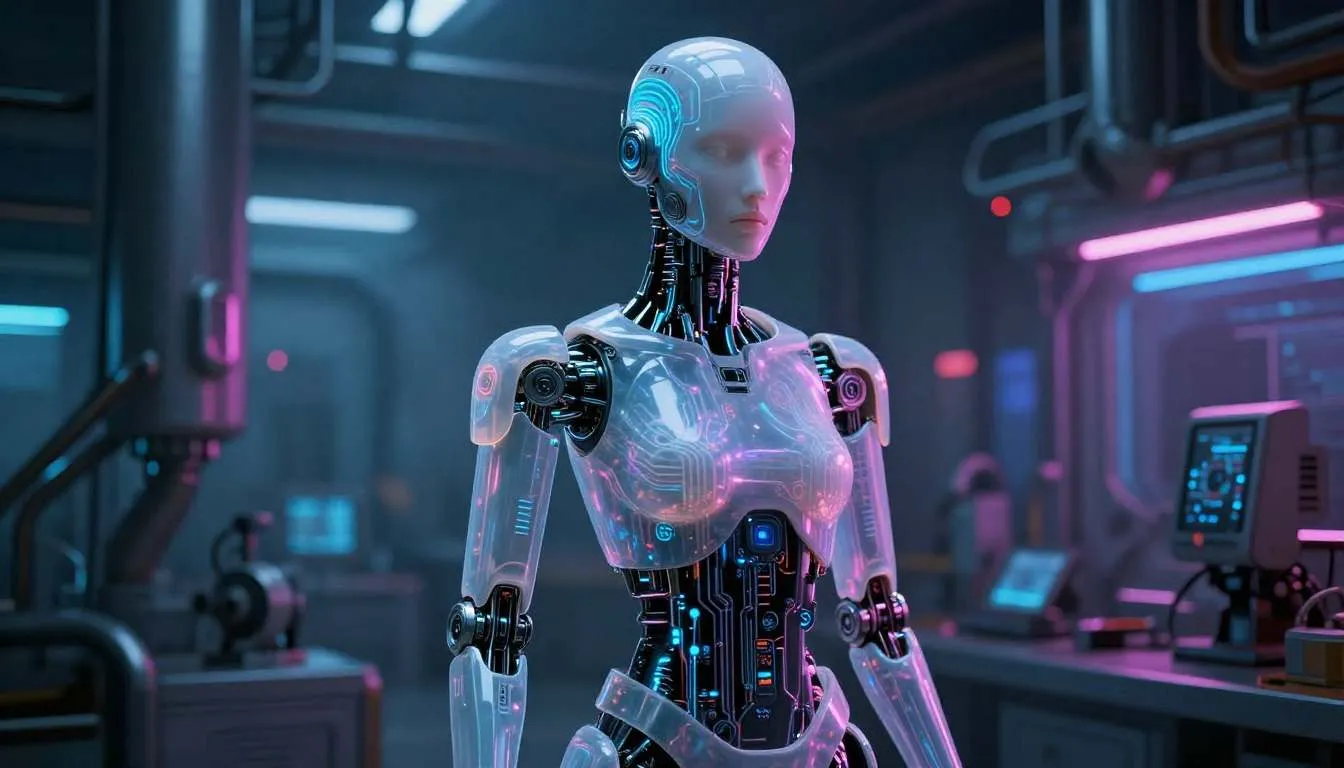
Physical AI: When LLMs Get a Body
Why the next wave of intelligence won’t live in chat windows—but in machines that move, see, and act
What Happens When AI Stops Talking—and Starts Touching the World?
For the last few years, AI progress has felt… cerebral.
Smarter chatbots.
Better copilots.
Faster text, cleaner code, sharper summaries.
Impressive, yes—but also strangely limited.
Because intelligence that only talks still needs humans to act.
Now, something fundamental is shifting.
The fastest-growing AI demos on YouTube aren’t chat interfaces anymore. They’re robots folding clothes, cars navigating chaos, machines learning balance, force, timing, and consequence.
This is Physical AI—also called Embodied AI.
And it marks the moment we move from chatbots to action-bots.
The Problem: Language Alone Was Never Enough
LLMs Are Brilliant—But Disembodied
Large Language Models (LLMs) changed software by:
- Understanding intent
- Generating plans
- Reasoning over abstract knowledge
But they share a blind spot.
They don’t understand physics.
They don’t intuit:
- Friction
- Weight
- Balance
- Cause-and-effect in the real world
Which is why even the smartest chatbot can’t:
- Catch a falling object
- Navigate a cluttered room
- React instantly to a dog running into the street
Why This Matters More Than Most People Realize
Every major industry bottleneck today is physical:
- Manufacturing
- Logistics
- Transportation
- Construction
- Healthcare
We’ve optimized information flows.
But physical workflows remain slow, expensive, and fragile.
If AI never leaves the screen, it never fixes the hardest problems.
The Shift: From Language Models to World Models
What Is Physical (Embodied) AI?
Embodied AI refers to AI systems that:
- Perceive the physical world through sensors
- Understand space, motion, and constraints
- Take actions via motors, actuators, or vehicles
- Learn from real-world interaction, not just text
At the core is a concept called World Models.
World Models Explained (In Plain English)
A world model is an internal simulation of reality.
It allows AI to ask:
- If I move my arm this way, what happens?
- If I accelerate here, will I skid?
- If I grip harder, will it break?
This is how humans operate—constantly predicting outcomes.
Physical AI gives machines the same ability.
Why 2026 Is the Inflection Point
Three forces converged:
-
Cheap Sensors & Actuators
Cameras, LiDAR, force sensors became commodity hardware. -
Massive Self-Supervised Learning
AI learns by watching—not labeling—millions of examples. -
Compute at the Edge
Real-time inference inside cars, robots, and factories.
Together, they unlocked action intelligence.
Case Study: Tesla’s FSD v13 & Optimus—AGI Starts in the Factory
Tesla’s Radical Bet: Every Machine Is a Neural Node
Tesla doesn’t treat AI as software.
They treat:
- Every car
- Every robot
- Every factory
…as part of a single learning organism.
FSD v13: Solving Edge Cases Humans Never Coded For
Traditional self-driving failed because:
- You can’t hand-code every scenario
- Real roads are chaotic
Tesla flipped the approach.
Instead of rules, they use Imitation Learning:
- Watch millions of human drivers
- Learn how humans handle ambiguity
- Absorb instinctive reactions
This allows Tesla’s AI to handle:
- Foggy streets
- Erratic pedestrians
- Animals darting across roads
Situations no rules engine could anticipate.
Optimus: Embodied AI Leaves the Car—and Enters the Factory
Tesla’s Optimus robot uses the same neural foundation as FSD.
It learns by:
- Watching humans perform tasks
- Practicing in simulation
- Transferring skills to the real world
Today, Optimus performs:
- Repetitive assembly tasks
- Material handling
- Factory support roles
Quietly proving something profound:
AGI isn’t starting in the office.
It’s starting on the factory floor.
From Chatbots to Action-Bots: What Changes Technically
1. Perception Is Multimodal and Continuous
Physical AI integrates:
- Vision
- Depth
- Sound
- Touch
- Proprioception (body awareness)
This is far beyond text tokens.
2. Decisions Are Time-Critical
A chatbot can pause.
A robot cannot.
Physical AI operates under:
- Latency constraints
- Safety thresholds
- Real-time feedback loops
Mistakes have consequences.
3. Learning Happens Through Interaction
Embodied AI improves by:
- Acting
- Failing safely
- Adjusting policies
Simulation + real-world feedback form a loop.
The Rise of Hybrid Intelligence: Where Quantum Fits In
Why Classical AI Hits Limits
As world models grow:
- State spaces explode
- Planning becomes combinatorial
- Optimization slows
This is where Quantum-AI Hybrids enter the conversation.
Majorana 1 & Quantum-AI Hybrid Systems
Research into Majorana-based qubits (often referenced as Majorana 1 architectures) suggests:
- More stable quantum computation
- Better optimization for complex systems
For Physical AI, this matters because:
- Robotics planning is NP-hard
- Pathfinding, grasping, coordination benefit from quantum acceleration
We’re not there yet—but the trajectory is clear.
What This Means for Investors and Builders
For Deep Tech Investors
Watch for startups building:
- World-model frameworks
- Simulation-first robotics
- Edge AI inference stacks
- Human imitation learning platforms
The value won’t be in hardware alone—but in learning loops.
For Roboticists
The shift is from:
- Control theory → learning systems
- Deterministic code → probabilistic reasoning
Your competitive edge is no longer mechanics—it’s data.
For Tech Journalists
The story isn’t “robots are coming.”
The real story is:
Intelligence is becoming physical—and irreversible.
Where Platforms Like SaaSNext Fit In
As AI moves from screens to systems, orchestration becomes critical.
Physical AI doesn’t operate alone. It connects to:
- Supply chains
- Operations software
- Analytics layers
- Decision systems
Platforms like SaaSNext (https://saasnext.in/) help organizations:
- Coordinate AI agents across digital and physical workflows
- Manage learning pipelines
- Integrate decision intelligence into operations
The future isn’t one AI—it’s many AIs working together.
Common Questions (AEO-Optimized)
Is Physical AI the same as robotics?
No. Robotics is hardware. Physical AI is intelligence that learns inside hardware.
Will embodied AI replace humans?
It replaces repetitive, dangerous tasks—augmenting human capability.
Why didn’t this happen earlier?
Compute, data, and sensors weren’t mature enough. Now they are.
Is AGI closer because of Physical AI?
Yes. General intelligence requires understanding the real world.
The Hidden Insight: Intelligence Needs Consequences
Language models reason symbolically.
Physical AI reasons causally.
It learns because:
- Actions have outcomes
- Mistakes cost energy, time, or safety
- Reality pushes back
This feedback is what grounds intelligence.
The Next Decade: What to Expect
- Robots trained like humans—not programmed
- Cars that reason, not follow maps
- Factories that self-optimize
- AI systems that understand why, not just what
And eventually:
- Home robots
- Construction automation
- Healthcare assistants with hands, not prompts
Why This Isn’t Hype (And Why It’s Inevitable)
Every major intelligence leap followed embodiment:
- Animals evolved bodies
- Humans evolved tools
- Civilization evolved machines
AI is following the same path.
Intelligence wants a body.
Bringing It All Together
Physical AI marks the end of:
- Purely conversational intelligence
- Disembodied reasoning
- Software-only automation
And the beginning of:
- Action-oriented systems
- World-aware intelligence
- Learning machines that move
From Tesla’s neural fleet to Optimus on factory floors, the signal is unmistakable.
The age of Action-Bots has begun.
If you’re researching, investing, or building in AI:
Start looking beyond chat windows.
Study:
- Embodied AI
- World models
- Learning-by-doing systems
And explore how orchestration platforms like SaaSNext are enabling AI agents to operate across both digital and physical worlds.
The next intelligence revolution won’t type.
It will act.