The Design-to-Code Bridge: How MCP Is Eliminating the Handoff Gap
🔑 Key Takeaways
- The traditional design-to-code handoff is breaking modern solo and lean teams
- MCP (Model Context Protocol) enables AI to understand design intent, not just pixels
- Solo founders can now go from brand → UI → production-ready code in minutes
- Tools like Stitch and Anti-Gravity eliminate translation loss between design and engineering
- MCP-powered workflows reduce cost, speed up launches, and preserve creative integrity
- Platforms like SaaSNext help teams operationalize AI-driven build pipelines without chaos
Why Does Your Product Lose Its Soul Between Figma and Production?
You’ve seen it happen.
The design looks perfect in Figma.
Clean. Expressive. Intentional.
Then it hits development.
Spacing feels off.
Typography gets “approximated.”
Interactions are… close enough.
Somewhere between design and code, your product loses its vibe.
And if you’re a solo founder or a lean startup, that loss hurts more — because you are the designer, the PM, and the developer all at once.
So here’s the real question for 2026:
Why does shipping still feel like translating poetry through three different languages?
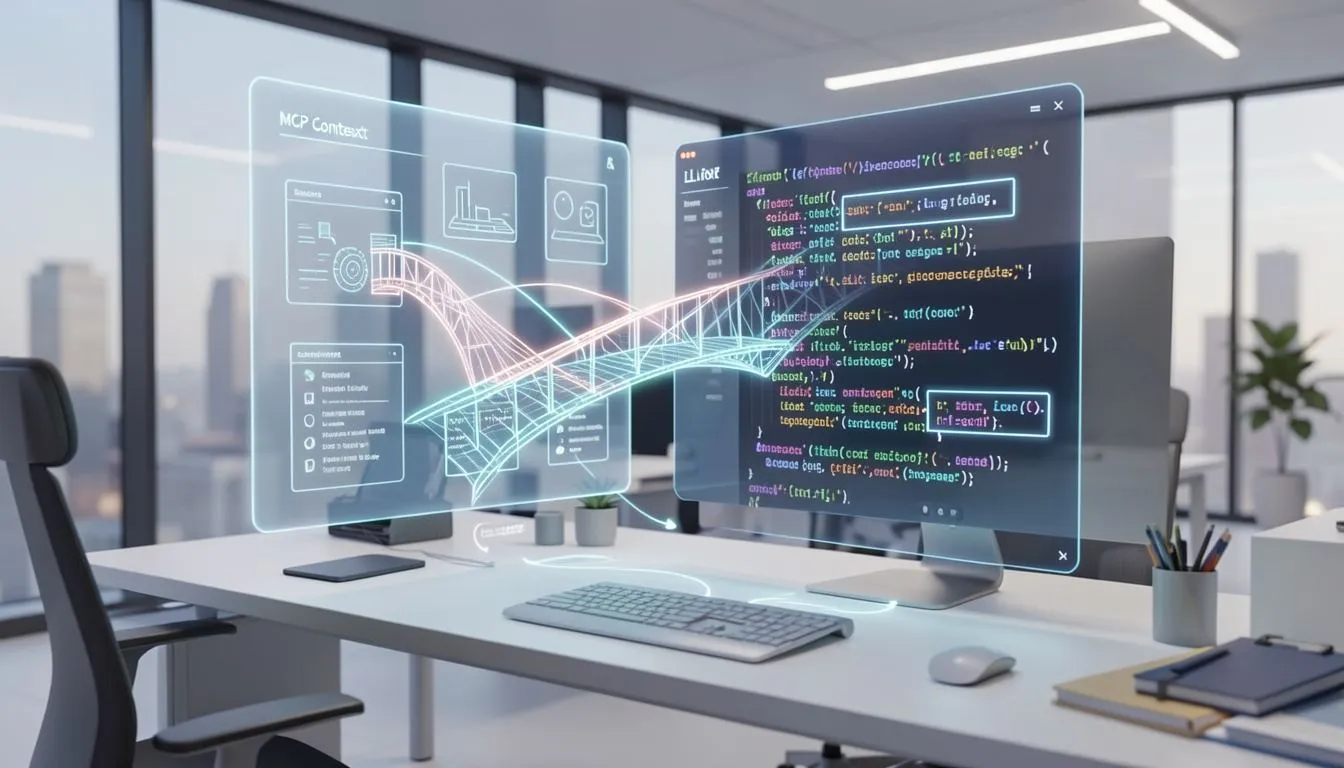
That gap — the design-to-code handoff — is finally collapsing.
And MCP is the reason.
The Problem: The Handoff Gap Was Never a Process Issue — It Was a Context Issue
Why the Design-to-Code Gap Exists
For decades, design and development lived in parallel worlds:
- Designers think in intent, emotion, and systems
- Developers think in logic, constraints, and structure
The handoff tried to bridge that gap with:
- Specs
- Redlines
- Annotations
- Endless Slack messages
But the core problem remained:
Code never understood why a design existed — only what it looked like.
Why This Hurts Solo Founders the Most
If you’re a solo entrepreneur or small team, the handoff gap creates:
- Slower launches
- Inconsistent UI
- Costly rewrites
- Burnout from context-switching
You don’t just lose time — you lose momentum.
And momentum is everything when you’re lean.
What Happens If You Ignore This?
Ignoring the handoff gap leads to:
- Products that feel generic
- Design debt that compounds
- More time fixing UI than validating the market
In a world where speed is leverage, this is a silent killer.
The Shift: From Pixel Translation to Intent Preservation
Enter MCP: Model Context Protocol
MCP changes the rules.
Instead of treating design as static assets, MCP allows AI systems to understand:
- Brand intent
- Design rationale
- Component relationships
- Interaction philosophy
In short, MCP lets machines understand design the way humans do — as context, not files.
What MCP Actually Solves
With MCP-enabled workflows:
- Design is no longer “handed off”
- It’s ingested, interpreted, and executed
- Context survives the journey from idea to code
This is the missing bridge.
The Solution: How the Design-to-Code Bridge Works in Practice
Let’s break this down into a workflow you can actually use.
Step 1: Extract the Design DNA (Not Just Screens)
Traditional tools export:
- SVGs
- Colors
- Fonts
MCP-powered tools extract:
- Brand voice
- Visual rhythm
- Component logic
- Interaction patterns
This is where tools like Stitch shine — they don’t just read designs, they understand them.
Step 2: Codify Intent with AI, Not Templates
Once design intent is captured, tools like Anti-Gravity convert that intent into:
- Structured React components
- Reusable design systems
- Accessible, responsive layouts
No manual “rebuilding” required.
This is not low-code.
This is design-aware code generation.
Step 3: Ship Without the Translation Tax
The result:
- No handoff meetings
- No interpretation loss
- No UI drift
What you design is what ships.
Case Study: Building “Glider” in Under 20 Minutes
The Setup
A solo founder wanted to launch Glider, a speech-to-text startup.
Normally, this would require:
- Hiring a designer
- Waiting on mockups
- Contracting a frontend dev
- Weeks of iteration
Instead, they used an MCP-driven workflow.
The Workflow
- Stitch extracted brand identity from initial design concepts
- MCP preserved layout logic and visual hierarchy
- Anti-Gravity converted the design system directly into React
- The app was live in under 20 minutes
No handoff.
No rewrite.
No compromise.
The Outcome
- Faster launch
- Consistent UI
- Zero design debt
For a solo founder, this wasn’t just faster — it was liberating.
Why This Matters for Lean Startup Teams
Speed Without Sloppiness
Lean teams don’t have time for:
- Endless revisions
- Design drift
- Internal misalignment
MCP enables:
- Faster iteration
- Cleaner systems
- Shared understanding between humans and machines
Design Becomes a Strategic Asset Again
When design survives into production intact:
- Products feel intentional
- Brands feel differentiated
- Users trust faster
This isn’t about aesthetics — it’s about credibility.
Where SaaSNext Fits Into the Picture
Here’s where many teams get stuck.
They can generate code.
They can generate designs.
But they struggle to orchestrate AI systems end-to-end.
This is where SaaSNext comes in.
SaaSNext helps teams:
- Coordinate AI agents
- Standardize MCP-driven workflows
- Maintain governance without slowing down
For solo founders and lean teams, it provides structure without overhead.
Learn more here:
👉 https://saasnext.in/
Strategic Links for Deeper Context
-
Internal: SaaSNext on AI automation and agent workflows
👉 https://saasnext.in/ -
External: Figma on the future of design systems and AI
👉 https://www.figma.com/blog
These reinforce a clear trend: design and code are converging, not collaborating.
Common Questions (AEO-Friendly)
Is MCP replacing designers or developers?
No.
MCP removes translation work — not creative or technical judgment.
Designers focus on vision.
Developers focus on systems.
AI handles the glue.
Is this only for startups?
Not at all.
Enterprises benefit even more — but solo founders feel the impact first.
Does this lock me into specific tools?
MCP is protocol-driven, not vendor-locked.
That’s the point.
The Bigger Shift: Design as Executable Intelligence
In 2026, design is no longer:
- Static
- Interpretive
- Fragile
It’s executable.
Design becomes:
- A source of truth
- A system input
- A living artifact
And MCP is the language that makes this possible.
The Handoff Gap Is Finally Dead
The design-to-code gap survived for decades because machines couldn’t understand intent.
Now they can.
For solo founders and lean teams, this means:
- Faster launches
- Better products
- Less compromise
If you want to move fast without losing your product’s soul, the design-to-code bridge is no longer optional.
And if you want to operationalize this shift with clarity and control, platforms like SaaSNext help you turn MCP-powered workflows into repeatable advantage.
If this resonated:
- Share it with a founder friend
- Experiment with one MCP-driven build this week
- Subscribe for more insights on AI-native product creation
The future isn’t about choosing between design or code.
It’s about finally letting them speak the same language.