The So-So Trap: Why AI Design Tools Are Killing Creative Differentiation
The “So-So” Trap: Why AI Design Generators Are Killing the Middle Class
Key Takeaways
- AI design tools are accelerating production—but also flooding the market with mediocre, “safe” designs.
- The Design Bell Curve is widening: top-tier designers stand out more, while mid-level work gets commoditized.
- Tools like Google Stitch often generate generic, template-like interfaces lacking brand identity.
- Creative differentiation—not speed—is becoming the most valuable design skill in 2026.
- Designers and teams must shift from execution to creative direction, systems thinking, and storytelling.
When Everything Looks Good… Why Does Nothing Stand Out?
Scroll through a few new apps today.
Clean layouts. Soft shadows. Rounded buttons. Neutral color palettes.
Everything looks… fine.
But here’s the problem:
Nothing feels memorable.
This is the “So-So Trap”—a world where AI design generators produce interfaces that are technically correct but emotionally forgettable.
For UI/UX designers, developers, and e-commerce owners, this creates a dangerous illusion:
You think you’re moving faster.
But you might actually be blending into the background.
The Problem: AI Is Flattening the Design Landscape
AI design tools have democratized creation.
With a single prompt, you can generate:
- landing pages
- dashboards
- mobile app interfaces
Tools like Google Stitch are leading this shift, making design more accessible than ever.
But accessibility comes with a cost.
Most AI-generated designs rely on:
- existing design patterns
- popular UI frameworks (like Material Design)
- aggregated visual trends
The result?
A massive surge in mediocre design.
Not bad. Not great.
Just… average.
For businesses, this leads to:
- weak brand identity
- lower user engagement
- poor differentiation in competitive markets
If everyone uses the same tools and prompts, everyone ends up with the same results.
The Design Bell Curve Is Breaking
Traditionally, design quality followed a bell curve:
- a few poor designs
- many average ones
- a handful of exceptional work
AI is reshaping this curve.
Now:
- bad design is disappearing (AI fixes basic mistakes)
- average design is exploding
- great design is becoming rarer—and more valuable
This creates a polarized market:
- Top designers become even more sought after
- Mid-level designers risk becoming irrelevant
This is why we say AI is “killing the middle class” of design.
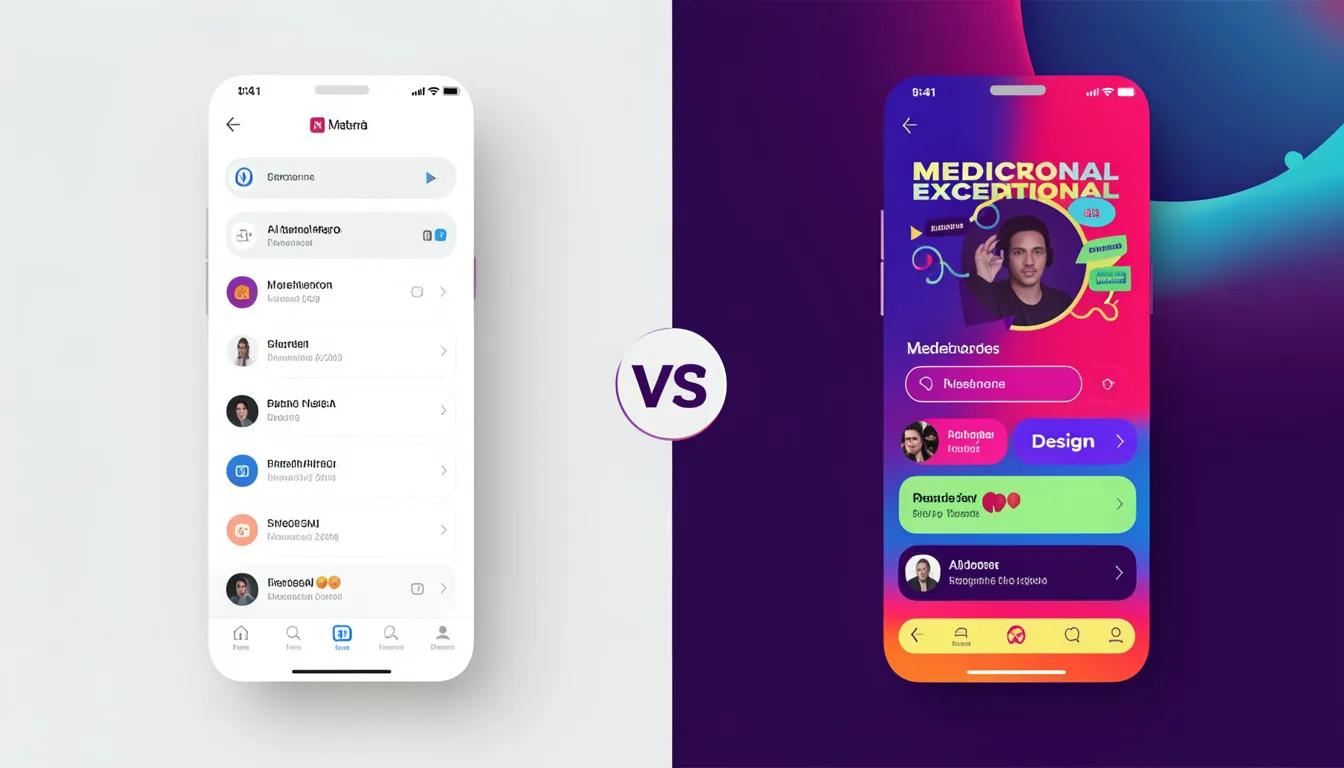
Case Study: Longevity Deck vs. Google Stitch
Designer :contentReference[oaicite:0]{index=0} highlights this gap clearly.
In his comparison:
- A one-shot prompt in Google Stitch generated a clean but generic interface
- His handcrafted Longevity Deck app had a distinct visual identity
The difference wasn’t technical.
It was emotional.
The AI-generated design followed patterns.
The handcrafted design told a story.
Users don’t remember layouts.
They remember experiences.
The Solution: How to Escape the “So-So” Trap
If you want to stay relevant—and valuable—you need to rethink how you use AI.
Here’s how.
1. Use AI as a Starting Point, Not the Final Output
AI is great for:
- rapid prototyping
- layout generation
- idea exploration
But it shouldn’t define your final design.
Instead:
- generate multiple variations
- remix and refine manually
- inject your own creative direction
Think of AI as your assistant—not your designer.
2. Build a Strong Visual Identity
Generic design fails because it lacks personality.
To stand out:
- define unique color systems
- experiment with typography
- create distinctive UI patterns
Your goal is to make your product instantly recognizable.
Platforms like SaaSNext help teams integrate AI into design workflows while maintaining consistent brand identity across digital experiences.
3. Focus on Emotional Design
Users don’t fall in love with “correct” design.
They connect with emotion.
Ask yourself:
- Does this design feel different?
- Does it evoke curiosity or delight?
- Does it reflect the brand’s personality?
AI can optimize usability.
But only humans can create meaning.
4. Develop Taste, Not Just Skills
In the age of AI, execution is easy.
Taste is rare.
To improve your design taste:
- study great products
- analyze what makes them unique
- experiment beyond trends
This is what separates top designers from the rest.
5. Combine AI with System Thinking
The future isn’t about single screens—it’s about design systems and workflows.
Use AI to:
- generate components
- test variations
- scale systems
Then layer human thinking on top.
For more insights into AI-driven workflows, explore this guide:
https://saasnext.in/
Tools like SaaSNext enable teams to combine automation with strategic design thinking—ensuring speed doesn’t come at the cost of quality.
Why This Matters for Designers, Developers, and E-Commerce Teams
The “So-So Trap” affects everyone building digital products.
For UI/UX designers:
- your value shifts from execution to creative direction
For developers:
- you’ll implement more AI-generated interfaces—but must refine them for performance and uniqueness
For e-commerce teams:
- brand differentiation becomes critical for conversions
In crowded markets, average design doesn’t just fail to impress.
It actively loses attention.
The Future: Creativity as the Ultimate Advantage
AI will continue to improve.
Design tools will get faster, smarter, and more accessible.
But one thing won’t change:
Creativity will always be the differentiator.
The designers who win won’t be the ones who generate the most screens.
They’ll be the ones who:
- think differently
- challenge patterns
- create memorable experiences
Don’t Be “Good Enough”
The biggest risk in 2026 isn’t bad design.
It’s forgettable design.
AI has made it easy to be “good enough.”
But “good enough” is invisible.
To stand out, you need to go beyond templates, beyond trends, and beyond automation.
Use AI to accelerate your workflow—but rely on your creativity to define your work.
If you’re looking to combine AI automation with strong design systems and brand consistency, platforms like SaaSNext can help you build smarter, more impactful digital experiences.
If this article resonated with you, share it with your team or subscribe for more insights on AI, design, and the future of digital products.