Warehouse Digital Twins: Designing AI-Driven Automation for Peak Performance
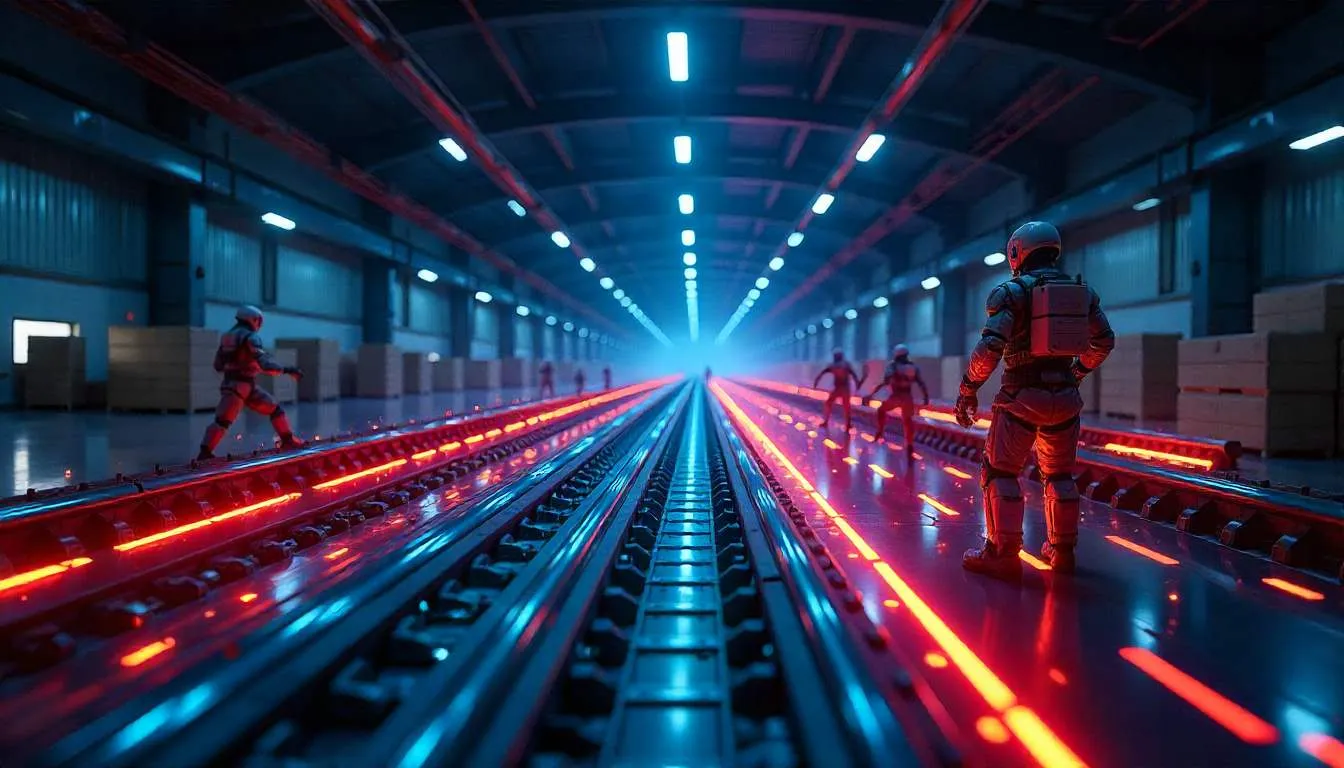
Warehouse Digital Twins—Designing for Peak Performance
Why the smartest warehouses are designed in AI simulations before a single box is moved
What If Your Warehouse Could Fail—Safely—Before It Ever Goes Live?
Every logistics leader knows this feeling.
A new warehouse goes live.
The layout looked perfect on paper.
The robots were tested.
The software passed QA.
And yet—within weeks:
- Pickers are crossing paths
- Robots are bottlenecking at choke points
- Fulfillment times creep up
- Costs quietly spiral
Now imagine this instead:
You watch your warehouse operate months before launch.
Every robot, shelf, conveyor, and human simulated in 3D.
You stress-test Black Friday volumes on a Tuesday afternoon.
You redesign workflows without stopping real operations.
That’s not science fiction.
That’s Warehouse Digital Twins—and they’re redefining what “design” means in logistics.
The Problem: Physical Workflows Were Never Truly Designed
Warehouses Grew. They Were Rarely Engineered.
Most warehouses evolve the same way:
- Add racks when inventory grows
- Add robots when labor tightens
- Add software when visibility breaks
Over time, you get:
- Fragmented automation
- Inefficient paths
- Local optimizations that hurt global performance
The problem isn’t effort.
It’s design blindness.
Why Logistics Teams Struggle to Optimize in the Real World
If you manage operations, you’ve likely faced this:
- Changes require downtime
- Experiments are risky and expensive
- Simulations are simplistic spreadsheets
- Decisions are reactive, not predictive
And when peak season hits?
- Small inefficiencies become massive delays
- Robots wait on robots
- Humans compensate with overtime
Ignore this problem, and the cost shows up as:
- Slower fulfillment
- Higher per-order costs
- Lower SLA reliability
- Burned-out teams and hardware
Physical workflows need the same design rigor as digital products.
The Shift: From Static Warehouses to Living Systems
What Changed?
Three technologies matured at the same time:
- Digital Twins capable of real-time simulation
- AI Robotics that learn instead of follow scripts
- Reinforcement Learning to optimize movement dynamically
Together, they turned warehouses into adaptive systems, not fixed layouts.
What Is a Warehouse Digital Twin?
At its simplest:
A Digital Twin is a real-time, virtual replica of a physical warehouse that mirrors layout, inventory, robots, people, and workflows.
But modern twins go further.
They don’t just mirror reality—they predict it.
They answer questions like:
- What happens if order volume spikes 40%?
- Where will congestion form?
- Which robot paths create hidden delays?
- How should layouts change for next quarter’s demand?
Design Isn’t Just Visual Anymore—It’s Operational
In software, we design:
- User flows
- Interfaces
- Edge cases
In logistics, digital twins let you design:
- Movement flows
- Robot behaviors
- Human-machine interaction
- Failure scenarios
This is design thinking applied to physical workflows.
Case Study: Amazon’s Smart Warehouse Robotics
Coordinating Tens of Thousands of Robots—In Motion
Amazon doesn’t just automate warehouses.
They orchestrate them.
Inside Amazon fulfillment centers:
- Tens of thousands of robots move simultaneously
- Millions of packages navigate dynamic paths
- Layouts adapt to real-time demand
How?
Through Digital Twins + Reinforcement Learning.
How Amazon Uses Digital Twins in the Supply Chain
Amazon’s approach includes:
- Simulating warehouse layouts in 3D
- Running AI models to test robot coordination
- Continuously training systems to find the shortest, safest paths
Each robot learns:
- When to wait
- When to reroute
- When to prioritize speed vs safety
The result?
20% reduction in fulfillment time
Massive gains in throughput without proportional cost increases
This is Amazon Supply Chain AI at scale.
Why Reinforcement Learning Changes Everything
From Rules to Rewards
Traditional automation follows rules:
- If obstacle → stop
- If path blocked → reroute
Reinforcement Learning (RL) works differently.
You define:
- A goal (fast, safe fulfillment)
- Constraints (collision-free, energy-efficient)
The system learns how to achieve it.
Over time:
- Paths shorten
- Congestion reduces
- Systems self-optimize
Digital twins are where this learning happens—safely.
The Real Power: Designing Before You Build
Why Simulation Beats Retrofitting
Changing a live warehouse is painful:
- Downtime
- Retraining
- Hardware constraints
Digital twins let you:
- Test layouts before construction
- Validate robot density
- Optimize conveyor placement
- Predict labor needs
You design once—then execute confidently.
What Warehouse Automation Looks Like in 2026
1. Twin-First Design
Warehouses are:
- Designed digitally
- Stress-tested virtually
- Optimized before physical rollout
No more guesswork.
2. Continuous Optimization
Digital twins stay alive after launch:
- Monitoring flows
- Testing improvements
- Adapting to seasonality
This isn’t a one-time model.
It’s a living system.
3. Human + Robot Co-Design
Digital twins simulate:
- Picker fatigue
- Travel distances
- Safety interactions
Design decisions consider people, not just machines.
Common Questions (AEO Optimized)
Is a digital twin only for large enterprises?
No. Mid-sized warehouses benefit even more due to tighter margins.
Do digital twins replace WMS systems?
No. They sit above WMS, providing intelligence and simulation.
Is this expensive to build?
Costs are falling rapidly, especially with cloud-based simulation platforms.
Can digital twins integrate with robotics vendors?
Yes—most modern twins are hardware-agnostic.
How to Start with Warehouse Digital Twins (Without Overengineering)
Step 1: Map Your Bottlenecks
Identify:
- Congestion zones
- High-travel paths
- Delay-prone processes
Start where pain is visible.
Step 2: Create a Minimal Digital Twin
You don’t need everything at once. Begin with:
- Layout
- Inventory flow
- One robot class
Expand iteratively.
Step 3: Add AI Optimization
Introduce:
- Path optimization
- Load balancing
- Scenario testing
This is where ROI accelerates.
Step 4: Integrate with Operational Systems
Digital twins become powerful when connected to:
- WMS
- Robotics control systems
- Forecasting tools
Platforms like SaaSNext (https://saasnext.in/) help teams orchestrate AI-driven workflows across physical and digital operations—bridging simulation insights with real-world execution.
Beyond Warehouses: The Strategic Advantage
Companies using digital twins gain:
- Faster facility launches
- Higher asset utilization
- Lower operational risk
- Better long-term planning
This isn’t just about speed. It’s about confidence at scale.
The Design Mindset Shift Supply Chains Need
For years, logistics optimized locally:
- Faster picking here
- Cheaper transport there
Digital twins force system-level thinking.
You stop asking:
“How do we make this faster?”
And start asking:
“How does the entire system behave?”
That shift is everything.
Where SaaS Platforms Fit In
As warehouses become more intelligent, coordination matters.
Modern operations require:
- AI agents
- Data pipelines
- Real-time decision systems
This is where platforms like SaaSNext come in—helping organizations:
- Deploy AI agents across operations
- Connect simulations with live data
- Turn insights into automated actions
The future warehouse isn’t just automated. It’s orchestrated.
Strategic Reads & References
- Amazon Robotics overview: https://www.aboutamazon.com
- MIT on Digital Twins in Manufacturing: https://www.mit.edu
- SaaSNext insights on AI-driven automation: https://saasnext.in/blog
These reinforce one theme: Design has moved beyond screens into space, motion, and matter.
Conclusion: Warehouses Are No Longer Built—They’re Designed
In 2026, the most competitive warehouses:
- Are simulated before built
- Learn after launch
- Improve continuously
Warehouse Digital Twins aren’t a “nice to have.” They’re becoming the design layer of physical commerce.
Those who adopt them early gain:
- Speed without chaos
- Scale without fragility
- Automation without blind spots
The rest will keep fixing problems after they happen.
It’s time to stop guessing—and start designing.
Explore how AI-powered platforms like SaaSNext can help you connect digital simulations, intelligent agents, and real-world operations into a single, adaptive system.
Design your warehouse once.
Let it optimize forever.