Work-Life Integration: How AI Automation Enables the 4-Day Workweek
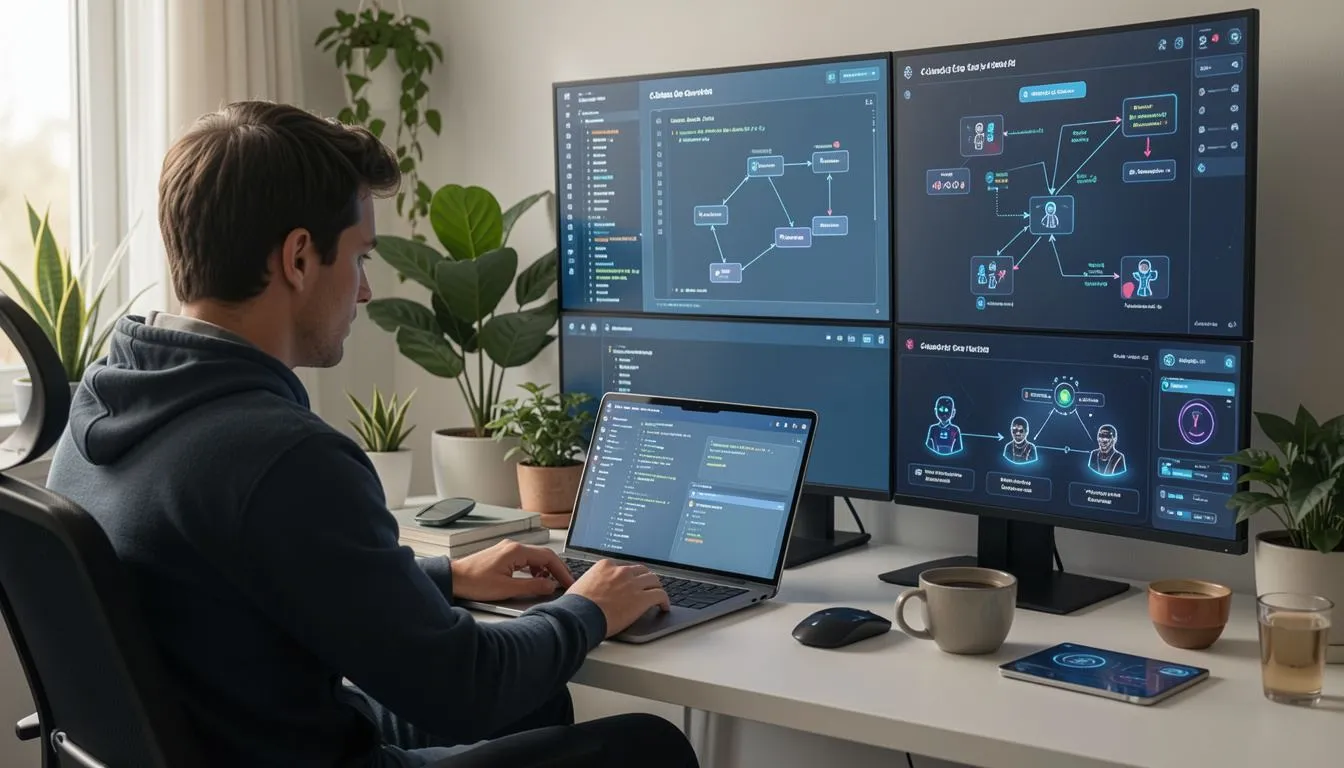
The “Work-Life Integration” Trend: How AI Is Powering the 4-Day Workweek
Key Takeaways
- “Work-life balance” is evolving into work-life integration, where AI automation handles repetitive tasks so professionals reclaim time.
- Tools like Claude Code are enabling rapid prototyping and workflow automation, helping developers and creators build faster with fewer hours.
- Agentic workflows are reducing manual operations in marketing, product development, and e-commerce.
- Specialized communities (Substack newsletters, broadcast groups, niche forums) are replacing massive blogs for deeper engagement.
- AI automation allows professionals to maintain productivity—even revenue—while working 4-day weeks.
- Rapid development workflows are empowering small teams to compete with larger organizations.
The Day Work Finally Stopped Owning Your Life
What if your job didn’t end at 6 p.m. — but it also didn’t control your entire day?
For many Gen Z and Millennial professionals, the goal is no longer “work-life balance.” Balance implies a tug-of-war between productivity and personal time.
Instead, a new philosophy is emerging: work-life integration.
This shift is fueled by something powerful — AI automation.
Developers, designers, and digital entrepreneurs are increasingly using tools like Claude Code to automate repetitive tasks, prototype software faster, and streamline workflows that once consumed hours.
The result?
Some professionals are quietly transitioning to 4-day workweeks without losing income.
And this transformation is happening not through corporate mandates, but through AI-driven efficiency.
The Real Problem: Work Is Still Designed for a Pre-AI World
Despite all the technological progress we’ve seen, most work processes still follow patterns designed decades ago.
Developers still spend hours writing boilerplate code.
Designers still manually build prototypes.
Marketing teams still run repetitive campaigns.
Even when using automation tools like n8n, teams often spend time configuring workflows rather than creating real value.
For UI/UX designers, front-end developers, and e-commerce owners, this creates a frustrating paradox:
You have access to powerful technology — yet you still feel constantly busy.
Ignore this inefficiency, and the consequences compound quickly:
- slower product launches
- delayed marketing campaigns
- developer burnout
- missed growth opportunities
In other words, working harder no longer scales.
What scales instead is automation and intelligent workflows.
The Shift: AI Automation Enables Work-Life Integration
AI isn’t just helping people work faster.
It’s helping them restructure how work fits into their lives.
Instead of doing every task manually, professionals are building agentic workflows — automated systems that complete tasks with minimal human input.
This shift is powered by tools like:
- Claude Code
- AI automation platforms
- vector databases and AI agents
- modern workflow tools that replace traditional automation pipelines
Platforms like SaaSNext are helping businesses implement AI agents that automate marketing operations, customer engagement, and product workflows.
This reduces the time teams spend managing operations — allowing them to focus on strategy and creativity.
Case Study: “The 30-Minute Developer”
A developer recently demonstrated how powerful AI-assisted workflows have become.
Instead of spending hours setting up infrastructure, he used Claude Code to build a working application in under 30 minutes.
The process was surprisingly simple.
He provided:
- documentation URLs
- a high-level description of the system
Claude Code then:
- generated the full project structure
- connected the system to Pinecone
- created a local web interface
- built the ingestion pipeline
No boilerplate code.
No configuration headaches.
Just a working application.
This level of rapid prototyping dramatically changes how developers experiment with ideas.
And when development cycles shrink from days to minutes, productivity gains become massive.
How AI Enables the 4-Day Workweek
For professionals looking to integrate work and life more effectively, AI automation unlocks several opportunities.
1. Automate Repetitive Workflows
Start by identifying tasks that repeat frequently.
Common examples include:
- marketing campaign analysis
- customer support responses
- product documentation generation
- data processing pipelines
Agentic workflows can handle these tasks automatically.
2. Use Rapid Prototyping to Test Ideas Faster
Tools like Claude Code allow teams to build functional prototypes quickly.
Instead of waiting weeks for development cycles, you can validate ideas in hours.
This approach significantly reduces wasted effort.
For deeper insights into automation strategies, you can explore this guide:
3. Replace Complex Automation Tools
Traditional automation platforms often require heavy configuration.
New AI tools act more like software architects.
Instead of wiring workflows manually, you describe your goal and the AI generates the solution.
Many developers now view Claude Code as a modern alternative to n8n for certain automation scenarios.
4. Build Systems, Not Tasks
The most successful professionals today focus on building systems.
Once automated, these systems continue producing results without constant oversight.
For e-commerce teams, this might mean:
- automated product recommendation engines
- AI-generated marketing content
- automated analytics reports
Companies adopting AI-driven automation with platforms like SaaSNext are increasingly seeing these systems reduce operational workload dramatically.
Why Niche Communities Are Replacing Massive Blogs
Another interesting shift accompanying work-life integration is how people consume information.
Massive, generic blogs are losing influence.
Instead, professionals are joining specialized communities, such as:
- Substack newsletters
- Discord groups
- private creator communities
- curated broadcast channels
These smaller networks provide something traditional blogs struggle to deliver:
- deeper expertise
- stronger trust
- meaningful conversations
For developers and creators, these communities often become the fastest place to learn new tools like Claude Code or explore emerging agentic workflow strategies.
In many ways, knowledge is becoming more decentralized and community-driven.
The Future of Work Is AI-Assisted
The traditional idea of productivity was simple:
Work more hours.
Produce more output.
But AI is rewriting that equation.
Now the question is:
How much output can you generate per hour of focused work?
When automation handles repetitive tasks, professionals gain something more valuable than efficiency.
They gain time.
And time is the real foundation of work-life integration.
The Smartest Workers Are Designing Their Freedom
The rise of AI automation isn’t just changing businesses.
It’s changing lifestyles.
Developers, designers, and entrepreneurs who adopt tools like Claude Code and intelligent automation platforms are discovering they can achieve the same results — sometimes better — in fewer hours.
Work no longer has to dominate life.
Instead, the most forward-thinking professionals are designing systems that work for them.
If you’re exploring how AI automation and intelligent workflows can transform your business operations, platforms like SaaSNext are helping teams adopt these capabilities faster than ever.
If this article sparked new ideas about AI-powered productivity, consider sharing it with your team or subscribing for more insights on automation, AI development, and the future of work.